What Could Fremont BART Housing Development Mean for Nearby Property Rental Demand?
A major housing development is moving closer to reality at the Fremont BART Station.
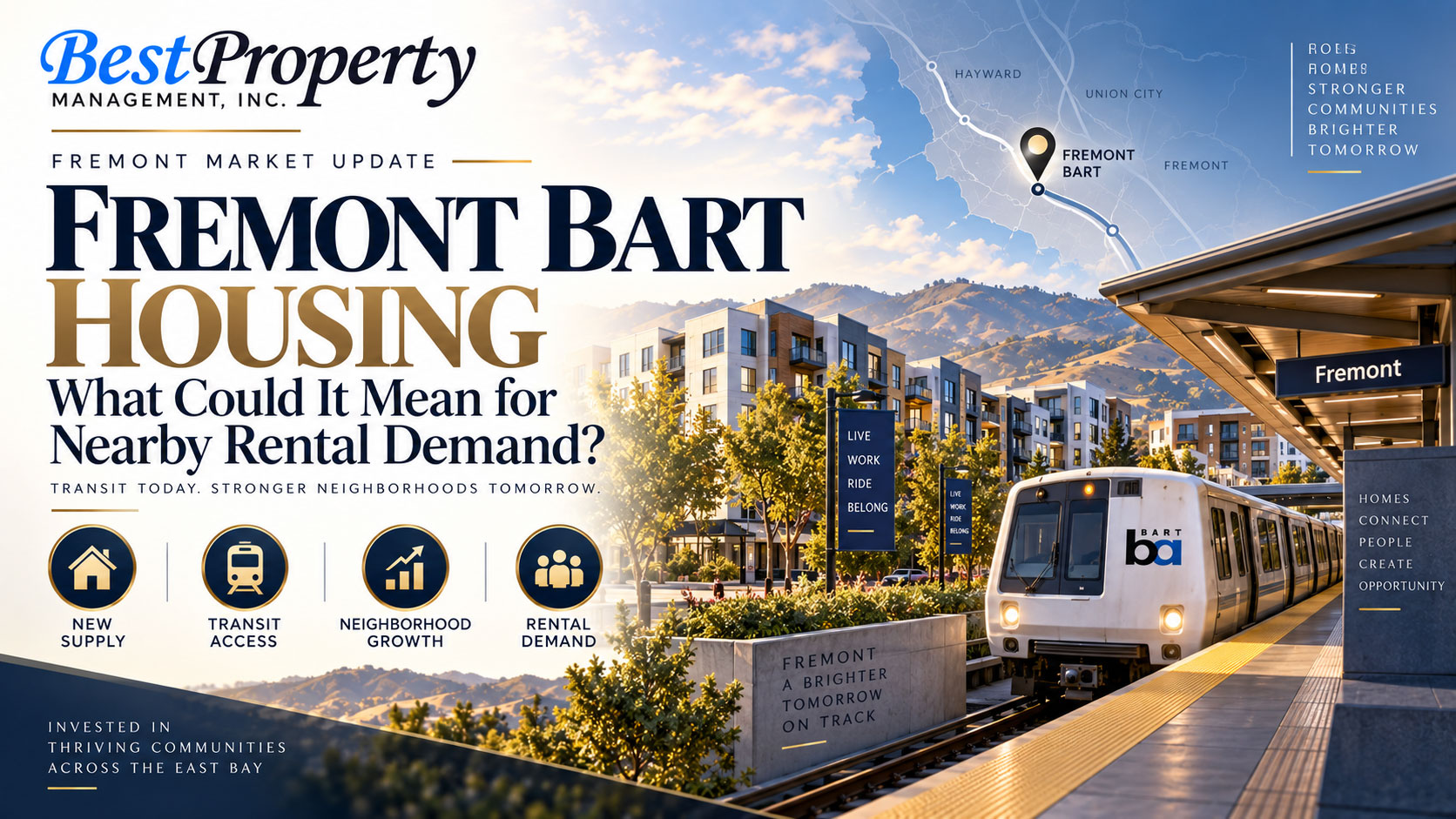
BART is pursuing the first phase of a transit-oriented development on roughly 8 acres of station property near Mowry Avenue, with a predominantly residential project envisioned alongside ground-floor retail or services and potential public open space. BART released its developer request for proposals in April 2026 and currently anticipates selecting a development team in October 2026.
For Fremont rental property owners, the project raises a practical question:
Could hundreds of new homes near BART eventually increase competition for existing rentals, or could a larger transit-oriented neighborhood create more rental demand around the station?
The answer could be both.
Quick Answer: The planned Fremont BART development could eventually add meaningful housing supply near the station while also making the surrounding area more active, walkable and transit-oriented. That could create additional competition for some nearby rentals, particularly apartments and smaller units competing for transit-focused renters. At the same time, new residents, retail, public spaces and improved station-area activity could strengthen the appeal of living near Fremont BART. The project is still in the development-selection stage, so owners should monitor it as a long-term market factor rather than trying to predict an immediate change in rent.
What Is Actually Planned at Fremont BART?
The Fremont BART project is not just a concept on a planning map anymore.
BART approved the project’s goals and objectives in January 2026 and released a formal request for proposals in April. The first phase covers approximately 8 acres on the northeast side of Fremont Station, using land that is currently part of the station’s surface parking.
BART describes the planned first phase as predominantly residential, consistent with Fremont’s City Center Community Plan. It may also include:
- Ground-floor retail and services
- Public open space
- Improved pedestrian connections
- Bicycle access
- Transit-oriented amenities
- A mix of housing opportunities
BART’s development standards for the station area allow residential buildings generally ranging from five to twelve stories, depending on location and design.
One important point is that the final number of homes has not yet been established.
The developer will ultimately work with BART, the City of Fremont and the community to determine a feasible development program.
That makes this different from a project where 500 or 1,000 apartments have already been approved and construction is imminent.
As of September 2026, Fremont BART TOD remains in the developer-selection and predevelopment stage.
BART currently anticipates selecting a developer around October 2026. Design, permitting and community engagement would follow. Earlier BART planning materials suggested construction could occur later in the decade, but the agency specifically notes that project timelines can change.
For owners, that means this is worth watching now, but it is not a reason to change today’s rent based on future housing that has not yet been built.
Owner takeaway: Fremont BART development is becoming more concrete, but it remains a long-term market factor. Owners should separate what is officially planned from assumptions about what the completed project will eventually contain.
Could New Housing Create More Competition for Fremont Rentals?
Yes, potentially.
New rental housing increases the number of homes renters can choose from.
If a future Fremont BART development includes a substantial number of apartments, those units could compete with existing rentals nearby, particularly properties appealing to similar tenants.
The competitive impact would likely depend on factors such as:
| Factor | Why It Matters |
|---|---|
| Number of new rental units | More units can create more renter choice |
| Apartment size and type | Studios and apartments may compete differently from houses |
| Pricing | New construction may target a different rent range |
| Amenities | New buildings may offer features older properties do not |
| BART proximity | Transit-oriented renters may prioritize walkability |
| Timing | Market conditions when units actually open will matter |
A one-bedroom apartment within walking distance of the station could be more directly affected by a new apartment building than a four-bedroom single-family rental several miles away.
Similarly, an established Fremont home with a yard, garage and additional space provides a different product from a new high-density apartment.
This is why owners should avoid broad conclusions such as:
“More apartments mean my rent will fall.”
Rental competition does not work that simply.
Property type matters.
Location matters.
Price matters.
And the amount of new housing reaching the market at the same time matters.
BART itself is actively pursuing transit-oriented housing throughout the system. The agency reports that 22 completed TOD projects or phases have delivered 4,232 homes, while projects in predevelopment are expected to add thousands more.
That makes station-area development an important long-term trend for Bay Area rental owners, not just a Fremont story.
Own a Fremont rental near BART, Central Fremont, Centerville, Irvington or another neighborhood affected by changing housing supply? Best Property Management can help you compare current rental competition and property positioning through a rental market analysis rather than pricing from development headlines alone.
Could Transit-Oriented Development Also Increase Rental Demand?
This is the other side of the equation.
Housing development does not only create supply.
A successful transit-oriented neighborhood can also make the surrounding location more attractive.
BART defines transit-oriented development as higher-density, mixed-use development near frequent transit. Its goals include improving neighborhood vitality, increasing transportation choices, supporting ridership and connecting housing with access to jobs and opportunity.
If Fremont Station eventually gains more residents, retail activity, improved pedestrian connections and public spaces, the area around the station could become more appealing to renters who value transit access.
That can matter in Fremont because the city already connects several major employment and transportation corridors.
A renter might choose Fremont because of access to:
- BART
- I-880
- I-680
- Silicon Valley employment
- East Bay employment centers
- Nearby healthcare employers
- Regional shopping and services
Best Property’s Fremont market guidance also identifies BART access, major employers, schools and proximity to Silicon Valley as important factors in local renter demand.
So new construction can produce two effects at the same time:
More rental competition.
And potentially:
A stronger, more desirable station-area neighborhood.
Which effect becomes more important will depend on what is actually built and what Fremont’s rental market looks like when the project opens.
That is why predicting a specific rent increase or decrease today would be premature.
Which Fremont Rental Properties Could Feel the Impact Most?
Not every Fremont rental would be affected equally.
The properties most sensitive to a large transit-oriented project are likely to be those competing for similar renters.
That could include apartments, condominiums and smaller rental homes near Fremont BART or within easy access of the station.
A newer apartment project might appeal strongly to renters prioritizing:
- Walkability
- Short BART access
- Modern finishes
- On-site amenities
- Lower dependence on a car
- Access to nearby retail and services
Existing owners may therefore need to pay closer attention to how their property compares.
That does not necessarily mean completing an expensive renovation.
It may mean improving the fundamentals:
- Clean, well-maintained condition
- Strong photography
- Competitive rent
- Functional appliances
- Clear parking information
- Good property presentation
- Fast renter communication
- Professional leasing
A single-family rental serves a different renter need.
Families or renters seeking additional bedrooms, private outdoor space, garages or neighborhood living may not view a new BART apartment as a close substitute.
The most useful approach is to identify your property’s actual competitive set.
Owners can review Best Property’s Fremont property management guide for additional local context on neighborhoods, renter expectations and property-management considerations in Fremont.
Owner takeaway: The closer your rental resembles the housing ultimately built at Fremont BART, the more closely you should monitor the project. A nearby single-family home and a station-area apartment may experience very different competitive effects.
What Should Fremont Rental Owners Do Now?
For most owners, the correct answer is not to take immediate action.
It is to start paying attention.
The project still needs a developer, design work, permitting, community engagement and construction.
Those steps take time.
But major development becomes more useful to an owner when it is monitored before hundreds of units appear on the rental market.
A practical owner checklist would include:
Follow the official BART project timeline. BART maintains a dedicated Fremont TOD project page and is the strongest source for confirmed milestones.
Watch what type of housing is proposed. The future unit mix may matter more than the headline number of homes.
Monitor construction timing. The potential rental-market effect becomes more relevant as completion approaches.
Track nearby asking rents and vacancy. Actual renter behavior is more useful than speculation.
Keep the property competitive. Deferred maintenance becomes harder to overlook when renters have newer alternatives.
Review pricing when the property becomes vacant. Do not price a rental today based on housing that may not open for several years.
There is also a larger lesson here.
Fremont BART is part of a Bay Area strategy to locate more housing near major transit stations. BART says its developable property across 27 stations could support significant future transit-oriented development.
For rental property owners, local development news should therefore become part of market awareness.
But it should not replace property-level analysis.
If you own a rental in Fremont and want to understand how changing development, current competition and renter demand affect your property today, contact Best Property Management's Fremont property management team for rental market analysis, leasing and full-service management support.
Related Fremont Rental Resources
- Fremont Property Management: Local Property Managers and Rental Experts
- Best Guide to Choosing a Property Management Company in Fremont
- Rental Market Analysis for East Bay Property Owners
- Residential Leasing Services
Frequently Asked Questions About Fremont BART Housing Development and Rental Demand
What is being built at the Fremont BART Station?
BART is pursuing a first phase of transit-oriented development on approximately eight acres on the east or northeast side of Fremont Station near Mowry Avenue. The project is envisioned as predominantly residential, with possible ground-floor retail, services and public open space. A final development program and specific housing-unit count have not yet been announced because BART is still in the developer-selection process. BART released its request for proposals in April 2026 and currently anticipates selecting a developer around October 2026. Design, permitting and additional community engagement would occur afterward.
Will new apartments near Fremont BART lower nearby rents?
Not necessarily. Additional apartments can increase rental competition, especially for existing properties targeting similar renters. However, the effect depends on how many units are built, their size, pricing, amenities and when they enter the market. New transit-oriented development can also make a neighborhood more attractive by adding residents, retail, public spaces and improved connections to transit. Existing single-family homes may compete much less directly with new apartments than nearby condos or multifamily properties. There is not enough confirmed project information today to predict whether individual Fremont rents will rise or fall because of this development.
When could the Fremont BART housing development be completed?
There is no confirmed completion date yet. BART’s current project page shows the process in the developer-selection stage, with developer selection anticipated in October 2026. Earlier planning materials showed design and permitting following developer selection and illustrated construction as a later-decade activity, but BART explicitly says the timeline is subject to change. Large transit-oriented developments require design work, environmental and planning review, financing, permitting and construction before homes become available. Rental owners should therefore view Fremont TOD as a long-term market development rather than new supply that will affect a vacancy this year.
Are rentals close to BART usually more attractive to Fremont tenants?
BART access can be an important advantage for certain renters, particularly people commuting to employment centers or households that want more transportation options. But proximity to transit is only one factor. Fremont renters may also consider schools, neighborhood character, monthly rent, property size, parking, freeway access, condition and proximity to major employers. A renter looking for a new apartment beside BART may have very different priorities from someone searching for a larger single-family home in Mission San Jose, Ardenwood or another Fremont neighborhood. Owners should evaluate transit access as one component of the property’s overall market position.
What should Fremont landlords do before new BART housing opens?
Owners should monitor the official project rather than making immediate changes based on speculation. Pay attention to the developer selected, proposed housing count, unit types, expected pricing, amenities and construction schedule. As completion gets closer, compare the new project with your own property’s likely renter audience. Existing rentals should also remain well maintained and competitively priced. When your property becomes vacant, use current comparable listings and actual renter demand rather than assuming that nearby development automatically raises or lowers rent. A local rental market analysis can help distinguish long-term development trends from the conditions affecting your property today.
Best Property Management Bay Area Offices
Brentwood 200 Sand Creek Rd., Suite D, Brentwood, CA 94513 925-392-2411 ronventura@bestproperty4u.com Best Property Management contact and office information
Fremont 40069 Mission Blvd., Fremont, CA 94539 510-770-0824 dustinventura@bestproperty4u.com Fremont Office
Livermore 1985 First Street, Suite 209, Livermore, CA 94550 925-292-1785 robertventura@bestproperty4u.com Best Property Management contact and office information
Tracy 672 West 11th Street, Suite 208, Tracy, CA 95376 209-340-2500 brendanreese@bestproperty4u.com Best Property Management contact and office information
This article is provided for general informational purposes only and is not legal, tax, financial or investment advice. Development plans, construction schedules, rental-market conditions and individual property circumstances can change. Rental property owners should verify current project information and consult qualified professionals when appropriate.
Blog
Company News
Landlord Resources
Landlords
Legal
Linkedin
Local Market Insights
Maintenance & Repairs
Market
Owners
Property
Property Law & Compliance
Property Management
Rental Property
Tenants
Video
FILTER BY EASTBAY & TRI-VALLEY CITIES
AB 1482
Antioch Property Management
Applicant Screening
Brentwood
Brentwood property management
California Insurance
California Landlord Laws
California Property Management
California Rent Increase
Central Valley Property Management
Concord Property Management
Danville Property Management
Danville rentals
Desert Hot Springs Property Management
Desert Property Maintenance
Desert Rentals
Dublin property management
East Bay Landlords
East Bay property management
East Bay Rental Market
East Bay Rental Owners
East Bay rental tips
East Bay Rentals
Eviction Notices
Eviction Support
Fair Housing
Fall Leasing
find a property manager
Fremont
Fremont property management
full service property management
Full-Service Property Management
Hayward Property Management
Hayward rentals
hiring a property manager
HOA Compliance
HOA Rental Management
HOA Rentals
Home Insurance Costs
Indian Wells Property Management
Inherited Rental Property
Landlord Compliance
Landlord Insurance
Landlord Resources
Landlord Tips
Lease Renewals
Leasing Fees
Leasing Services
Livermore
Livermore property management
Livermore Rentals
Local Development
Local Market Insights
Local Rental Support
Long-Term Rentals
Luxury Rentals
maintenance coordination
Management Services
Manteca Property Management
Milpitas Property Management
Mountain House Property Management
New Housing San Ramon
Newark CA Property Management
Oakley Property Management
Owner Onboarding
owner reporting
Palm Desert Property Management
Palm Springs Area Property Management
Palm Springs Property Management
Palm Springs Rentals
Pittsburg CA Property Management
Pleasanton property management
Pleasanton rentals
Preventive Maintenance
Property Inspections
Property Management
Property Management Companies
Property Management Fees
Property Management Transition
Property Manager
Rancho Mirage Property Management
Real Estate
real estate investing
Redfin Rentals
Remote Property Management
Rent Collection
Rent Control
Rent Trends
Rental Competition
Rental Fees
Rental Inspections
rental leasing
Rental Market Analysis
Rental Market Trends
Rental Marketing
Rental Pricing
Rental Property
Rental Property Expenses
Rental Property Maintenance
rental property owners
rental property ROI
Repair Coordination
San Lorenzo Property Management
San Ramon Landlords
San Ramon Orchards
San Ramon property management
San Ramon Rental Market
Seasonal Rentals
Security Deposits
Sell or Rent
Silicon Valley Rentals
single family rentals
Single-Family Rentals
Tenant Complaints
Tenant Issues
Tenant Placement
Tenant Protection Act
tenant screening
Tracy Property Management
Tri-Valley
Tri-Valley Housing Market
Tri-Valley property management
Tri-Valley Rentals
Union City Property Management
Vacation Rental Management
Wildfire Risk
Zillow Rentals
 FILTER
 SEARCH BLOG