Brentwood Rent Collection: What Should Owners Do When Rent Is Late?
When rent appears late on a Brentwood rental, an owner needs accurate information before deciding what happens next. A payment may be missing, pending, misapplied or returned. The ledger, communication history and current lease need to be reviewed together. An anxious message is not a substitute for a verified account status.
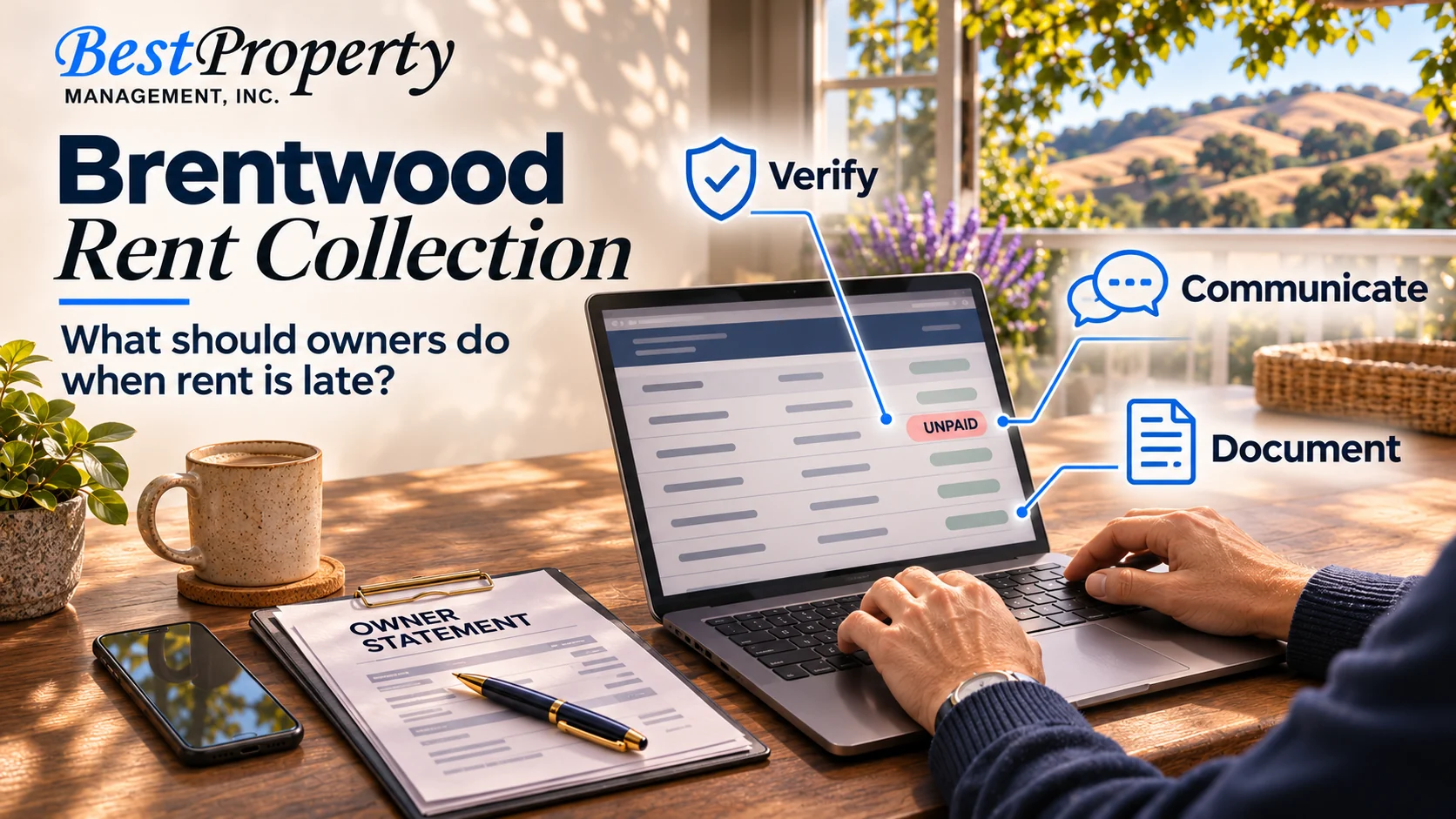
When rent is late, first verify the ledger and payment status, then have the responsible manager communicate through the established process and document the next action. Keep payment follow-up separate from legal notices. Do not change locks, shut off services or improvise an eviction process; property-specific enforcement questions require current legal review.
What Should You Verify Before Contacting the Tenant?
Confirm the amount, rental period and account status. Ask whether a payment was initiated, cleared, returned or assigned to the wrong period. Review the records before describing an amount as unpaid. A portal balance may need explanation from the person managing the ledger.
Check the lease and prior communication for relevant information. The manager should understand what has already been said and whether a payment question remains open. Repeated messages from different people can create conflicting instructions rather than resolve the issue.
Our Brentwood property management guide explains how rent handling fits within ongoing service. The owner should know who monitors exceptions and who communicates with the tenant before a problem occurs.
How Should the Manager Document Payment Status?
Use a clear account record that distinguishes facts from assumptions. Identify the relevant period, amount shown, transaction status and any confirmed explanation. Record the next action and the person responsible for it.
| Status question | Evidence to review | Next operational step |
|---|---|---|
| Was payment initiated? | Payment-system record | Confirm what that status means |
| Did funds clear? | Reconciled transaction record | Update the ledger accurately |
| Was an amount returned? | Return record and account detail | Review and communicate appropriately |
| Is the balance disputed? | Lease, ledger and communication | Resolve facts before further action |
Our East Bay rent collection guide explains why payment systems and owner reporting need to work together. An accurate ledger is useful for routine communication and for any later professional review.
Who Should Communicate With the Tenant?
Follow the agreed management process so the tenant receives consistent instructions. If the manager handles collection, ask the owner to avoid sending a separate message with different terms or an unsupported threat. The manager should record communications and identify any decision that requires owner involvement.
Keep communication factual. Explain the account question and the next appropriate step without making assumptions about motive. If the tenant provides new information, add it to the record and verify it where appropriate.
An illustrative situation is a tenant saying that a transfer was submitted while the ledger shows no cleared funds. The next step is to verify the payment status through the proper process. It is not to promise a legal outcome or treat an unverified screenshot as final proof.
How Are Routine Follow-Up and Legal Notices Different?
An operational message about a payment question is not automatically a legally sufficient notice. The required form, amount, service and timing of an enforcement step can depend on current law and the circumstances. Do not turn a general collection checklist into a do-it-yourself notice procedure.
The California Attorney General's tenant resource page explains that self-help lockouts and utility shutoffs are not lawful eviction methods. For the property-specific next step, use a qualified professional who can review the lease, ledger and facts.
Our California landlord rules guide provides broader context. The manager should explain when a matter moves beyond routine collection and what legal support is needed, without implying that a management fee includes every legal service.
How Should Late Rent Affect Owner Reporting and Cash Planning?
Ask the manager to distinguish received funds from expected funds. An owner should not budget a distribution on the assumption that an unresolved payment will clear. The statement should explain the current position and any expenses or reserves affecting available funds.
Keep repair and other property obligations visible while payment follow-up continues. A rent issue does not make the property’s operational needs disappear. Ask which expenses are upcoming and which owner decisions are needed without mixing them into an inaccurate rent balance.
For owners managing from a distance, our remote rental management guide explains the value of exception reporting. A concise update should state what is known, what remains unresolved and what action is being taken next.
What Can Owners Improve After the Immediate Issue?
Review whether payment instructions, monitoring and escalation were clear. A recurring administrative problem may need a process correction, while a different issue may require another kind of response. Use the records to identify the problem rather than assuming every late-payment event has the same cause.
Ask how future exceptions will be reported and who provides coverage when the usual contact is unavailable. Keep the agreement’s authority and communication boundaries clear. The owner should not need to discover those boundaries during a stressful event.
Discuss Best Property Management’s rent collection services for your property. Owner takeaway: Verify the account, communicate consistently, document the next action and obtain appropriate legal review before an enforcement step.
Frequently Asked Questions About Late Rent in Brentwood
Does a pending online payment count as received rent?
Ask the responsible manager to explain the payment-system status and how it is reflected in the ledger. Initiated and cleared transactions may be different stages. Do not assume an owner distribution is available until the account has been reviewed and the relevant funds are confirmed.
Should I contact the tenant myself if I have a manager?
Follow the agreed communication process. Separate owner and manager messages can create conflicting instructions or commitments. Ask for an update and identify any decision that requires your input. If you do communicate directly, make sure the responsible manager has an accurate record.
Can a text message replace a legal notice?
Do not assume it does. Routine payment communication and legal enforcement documents serve different purposes. Have a qualified professional review the required procedure for the property and circumstances. A general article should not be used to create or serve a notice.
Can I change the locks if rent is unpaid?
Do not attempt a self-help eviction. California’s official tenant resources explain that lockouts and utility shutoffs are not lawful substitutes for the legal process. Obtain qualified guidance about the appropriate next step and preserve the lease, ledger and relevant communications.
What should a late-rent update tell the owner?
It should identify the relevant period, verified balance, payment status, communication already completed and the next action. It should distinguish facts from unconfirmed explanations. The owner should know who is responsible and whether a decision or professional review is required.
Can I assume the next owner distribution will arrive normally?
No. Ask how the unresolved payment affects available funds and upcoming property expenses. A statement should distinguish received money from expected money. Plan from confirmed information rather than treating an anticipated payment as cash already available for distribution.
Does management guarantee that tenants always pay on time?
No operational process eliminates all payment problems. Evaluate how the company monitors, communicates and documents exceptions. Any specific guarantee would need separate written review. A reliable process should explain what happens when an issue occurs rather than promise that it cannot happen.
How can I prepare before a late-payment issue arises?
Clarify who monitors payments, who contacts tenants and when the owner is updated. Ask how the ledger and communication records are maintained. Use the office contact page to discuss the rent collection scope for your Brentwood rental.
Related Articles
Brentwood property management services explains rent handling within ongoing management.
Rent collection and owner reporting covers ledgers, payment systems and exceptions.
California landlord rules provides context for professional compliance review.
Remote rental property management explains oversight when an owner is away.
Blog
Company News
Landlord Resources
Landlords
Legal
Linkedin
Local Market Insights
Maintenance & Repairs
Market
Owners
Property
Property Law & Compliance
Property Management
Rental Property
Tenants
Video
FILTER BY EASTBAY & TRI-VALLEY CITIES
AB 1482
AI Property Management
AI Rental Fraud
Antioch Property Management
Applicant Data Security
Applicant Information
Applicant Screening
Applicant Verification
Bank Statement Fraud
Brentwood
Brentwood property management
California Insurance
California Landlord Laws
California Property Management
California Rent Increase
Central Valley Property Management
Concord Property Management
Credit Reports
Danville Property Management
Danville rentals
Desert Hot Springs Property Management
Desert Property Maintenance
Desert Rentals
Document Fraud
Dublin property management
East Bay Landlords
East Bay Lease Renewals
East Bay property management
East Bay Rental Market
East Bay Rental Owners
East Bay Rental Property Maintenance
East Bay Rental Property Management
East Bay rental tips
East Bay Rentals
EV Charging
Eviction Notices
Eviction Support
Fair Housing
Fake Pay Stubs
Fall Leasing
find a property manager
Fremont
Fremont property management
full service property management
Full-Service Property Management
Good Tenants
Hayward Property Management
Hayward rentals
hiring a property manager
HOA Compliance
HOA Rental Management
HOA Rentals
Home Insurance Costs
Human Oversight
Identity Verification
Income Verification
Indian Wells Property Management
Inherited Rental Property
Landlord Compliance
Landlord Data Security
Landlord Insurance
Landlord Resources
Landlord Tips
Lease Renewal Strategy
Lease Renewals
Leasing Fees
Leasing Services
Livermore
Livermore property management
Livermore Rentals
Local Development
Local Market Insights
Local Rental Support
Long-Term Rentals
Luxury Rentals
maintenance coordination
Maintenance Response
Management Services
Manteca Property Management
Milpitas Property Management
Mountain House Property Management
New Housing San Ramon
Newark CA Property Management
Oakley Property Management
Online Rent Payments
Owner Onboarding
owner reporting
Palm Desert Property Management
Palm Springs Area Property Management
Palm Springs Property Management
Palm Springs Rentals
Pittsburg CA Property Management
Pleasanton property management
Pleasanton rentals
Preventive Maintenance
Property Inspections
Property Maintenance
Property Management
Property Management Companies
Property Management Fees
Property Management Services
Property Management Transition
Property Manager
Rancho Mirage Property Management
Real Estate
real estate investing
Redfin Rentals
Remote Property Management
Rent Collection
Rent Control
Rent Trends
Rental Application Fraud
Rental Application Privacy
Rental Competition
Rental Fees
Rental Fraud
Rental History
Rental Inspections
Rental Internet
rental leasing
Rental Market Analysis
Rental Market Trends
Rental Marketing
Rental Pricing
Rental Property
Rental Property Expenses
Rental Property Maintenance
rental property owners
rental property ROI
Renter Choice
Renter Experience
Repair Coordination
Resident Portal
Residential Leasing
Roommate Management
San Lorenzo Property Management
San Ramon Landlords
San Ramon Orchards
San Ramon property management
San Ramon Rental Market
Screening Red Flags
Seasonal Rentals
Security Deposits
Sell or Rent
Silicon Valley Rentals
single family rentals
Single-Family Rentals
Tenant Background Checks
Tenant Communication
Tenant Complaints
Tenant Expectations
Tenant Issues
Tenant Placement
Tenant Protection Act
Tenant Retention
tenant screening
Tenant Screening Data Security
Tenant Screening Fraud
Tenant Screening Red Flags
Tenant Turnover
Tracy Property Management
Tri-Valley
Tri-Valley Housing Market
Tri-Valley property management
Tri-Valley Rentals
Union City Property Management
Vacation Rental Management
Wildfire Risk
Winter Rental Safety
Zillow Rentals
 FILTER
 SEARCH BLOG