How to Rent Out Your House: What Can a Property Manager Take Off Your Plate?
A property manager can help prepare your house for rent, research asking rent, market the home, arrange showings, administer lawful screening and coordinate lease signing and move-in. Decide what the manager may approve, which costs you will fund and whether you need ongoing management after the tenant gets the keys. Put those decisions in the written scope.
The first rental listing can seem like the obvious starting point. Several decisions should come first. Is the house ready to show? Will the garage be included? Who approves work, and who screens applications? Settling the handoffs before advertising makes it easier to explain the home and honor the terms you publish.
What should happen before you put the house up for rent?
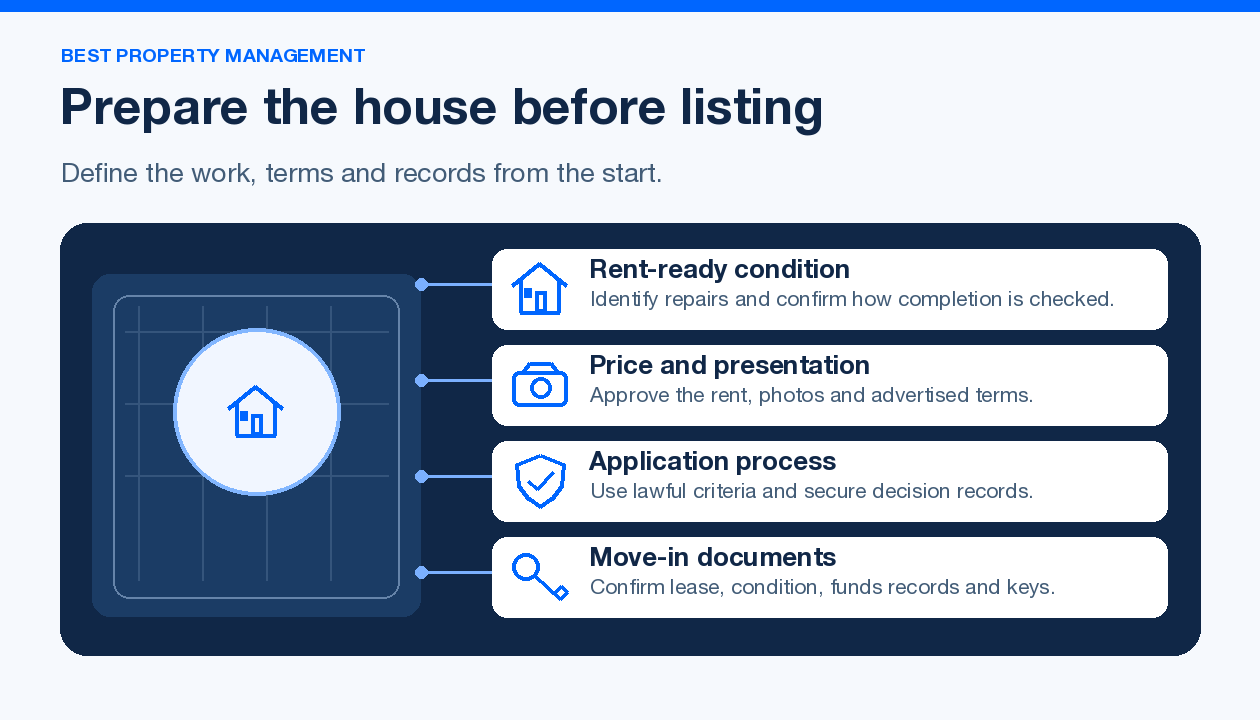
Start with the home’s condition and the obligations that apply to your property. A manager can help coordinate a readiness visit, identify visible issues and arrange qualified vendors where appropriate. Ask what the visit includes and how recommendations, costs and priorities will be documented.
Separate necessary work from choices about appearance and amenities. A broken exterior lock and a new cabinet color call for different decisions. Share known issues and existing warranties. Ask who will approve the work, when it can be completed and who will confirm the home is ready for photography and showings.
Read the California Attorney General’s landlord and tenant resources when checking basic duties and tenant protections. Confirm requirements for your address and property. Our rental maintenance guide provides practical questions for assessing maintenance needs.
How can a manager help you set the asking rent?
Ask the manager to show relevant comparable rentals and explain differences in location, condition, layout, parking, utilities and availability. Current asking rents can give context. They do not show the final terms of every completed lease. An informed estimate includes the information it uses and any gaps.
Decide which property features are included. For example, shared access, a locked storage room or responsibilities for yard care can affect how prospects compare the home. Confirm how these details will appear in the listing and lease. Ask who may make a pricing or terms change after marketing begins.
Use an agreed checkpoint to review actual interest. Look at inquiry quality, appointments and applications. If prospects keep asking the same question about parking, clearing up that detail may be the first adjustment. If comparable homes have better terms or presentation, discuss the options with evidence.
Who should handle the listing and showings?
A manager can coordinate photography, verify listing details and handle the next step when renters respond. Ask where the property will be marketed and how third-party listing information will be kept current. Check the listing on a phone before it goes live. The material facts should be easy to find.
Confirm how showings are scheduled, who is responsible for access and what happens when a prospect asks to reschedule. If the home is still occupied, discuss lawful access and communication for the actual tenancy. Share access information through an appropriate process.
The East Bay leasing and placement guide explains marketing and showing work in more detail. Ask the manager how you will receive progress reports and what information it needs from you when a listing question comes up.
How should tenant applications be handled?
Ask who establishes lawful written criteria, checks application information and communicates the result. Confirm how the manager reviews discrepancies and requests additional information. A manager can administer a process and keep a decision record. The arrangement should clarify who makes decisions and who handles required notices.
Review applicable fair housing requirements with the manager. The California Civil Rights Department’s housing resources explain rules that apply to housing providers and screening firms. Avoid informal exceptions or criteria invented once you see a particular applicant. Keep applicant information limited to the people who need it for the process.
Our tenant screening guide helps owners ask about verification, secure records and consistent treatment. Request a redacted sample or walkthrough. You want to understand how the process works without seeing another applicant’s personal details.
What belongs in a lease and move-in handoff?
Confirm who completes the lease and required documents, records funds, provides keys and documents the starting condition. Compare the final terms with the approved property details. Discuss who helps resolve an issue identified between signing and possession.
| Stage | Work a manager can handle under the agreement | Decision or record to clarify |
|---|---|---|
| Rent-ready | Coordinate visits and vendors. | Scope, cost, timing and who approves. |
| Pricing | Analyze comparable rentals. | Initial asking rent and change authority. |
| Listing | Arrange photos and publish accurate terms. | Included features and availability. |
| Showings and screening | Schedule access and administer the process. | Criteria, decision, notices and records. |
| Move-in | Coordinate signing, condition records and keys. | Completed file and handoff date. |
| Ongoing operation | Handle agreed rent, repair and reporting tasks. | Which party takes over after placement. |
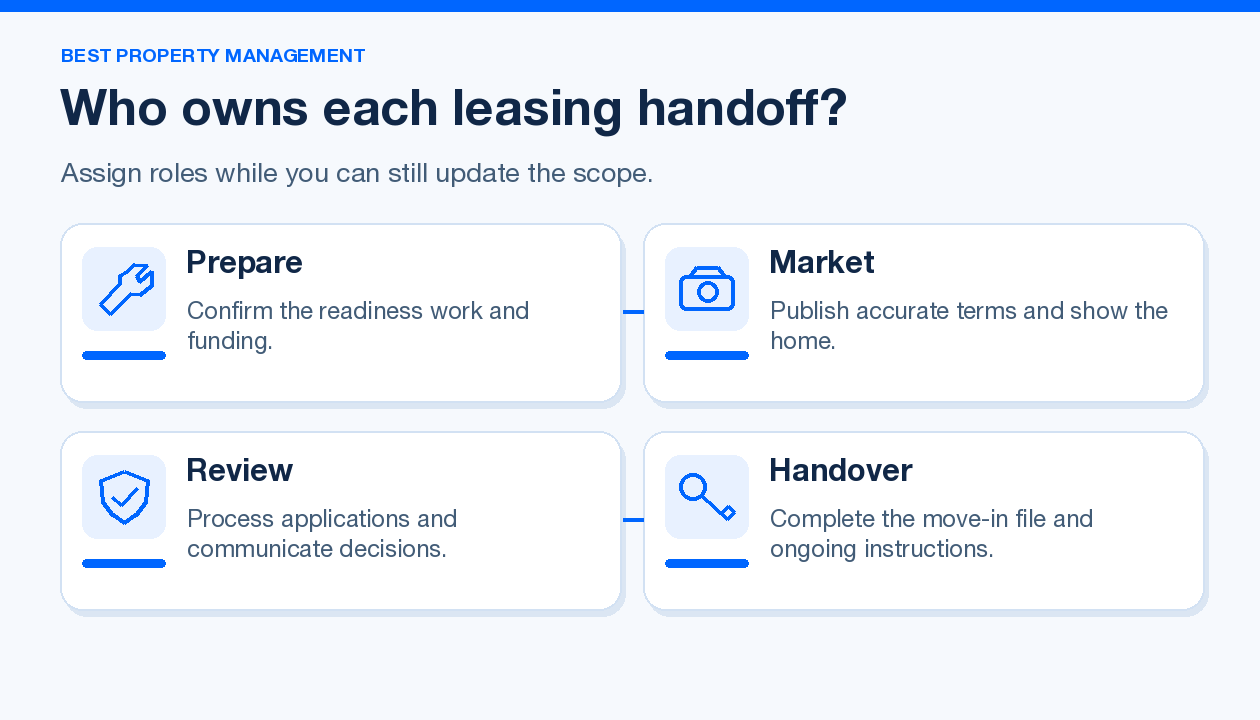
Ask for a reliable handoff. Know where the lease, transaction record, condition documentation and tenant communication history will be available. If you hire only for placement, confirm who handles the first regular rent payment, where the tenant reports maintenance and how you will access the records.
Is leasing-only help enough for your house?
Leasing-only can fit owners who want help finding and placing a tenant and are ready to manage the tenancy afterward. Full-service management can cover rent, reporting and repairs within a wider agreement. Both arrangements need a clear dividing line because prospective tenants may receive instructions before the owner has reviewed the handoff.
Run a practical example. A tenant reports a broken appliance a week after taking possession. Who receives the request and coordinates the next step? If it is the owner, make sure you have a working contact route and records. If it is the manager, confirm the ongoing scope and authority. See the leasing-only versus full management guide for more questions.
Compare the fee and the work you will retain. Include time for handling communication, reviewing reports and arranging vendors. The better fit is the one you can operate reliably after move-in.
What should you bring to the first conversation?
Bring the address, condition, proposed availability and current obligations. Write down the responsibilities you want to delegate. Include which expenses you expect to authorize and who should be contacted if a decision is urgent.
Ask the manager to outline the work through move-in and its expected decision points. Confirm what happens if the home needs more preparation or the listing produces weak interest. A written plan with clear roles makes the first rental easier to manage and gives you a record for comparing other proposals.
What else do rental owners ask?
Can a property manager coordinate repairs before listing?
Ask whether readiness visits and vendor coordination are in scope. Confirm costs, approval authority and how completion is checked.
Who sets the rent?
A manager can research and recommend a rent. The agreement should define the owner’s approval and who can authorize changes.
Does tenant placement include ongoing rent collection?
The answer depends on the agreement. Confirm who collects rent after placement and which party gives the tenant payment instructions.
Should I list before repairs are finished?
Ask whether the home is ready to advertise and show accurately. If a completion date is uncertain, review how the listing and tenant commitments should be handled.
What records should I receive after leasing?
Request the signed agreement and related documents, funds records, condition evidence and access inventory. Confirm what can be shared and how.
Can I hire only for showings and screening?
Ask what service packages are available and where each one ends. Confirm who handles pricing, the lease and move-in if the manager’s work stops earlier.
Related articles for rental property owners
Best Guide to Leasing and Tenant Placement in the East Bay: Marketing, Screening and Move-In
Livermore Tenant Placement: Should You Choose Leasing Only or Full-Service Management?
What should you discuss with Best Property?
Tell Best Property where the home is, when you want it available and which tasks you want to delegate. Ask for the service boundaries and owner approvals in writing. Review Best Property’s residential leasing service or contact the Best Property team.
Editorial cover is AI-assisted and illustrative. Check the agreement and the rules that apply to your property.
Blog
Company News
Landlord Resources
Landlords
Legal
Linkedin
Local Market Insights
Maintenance & Repairs
Market
Owners
Property
Property Law & Compliance
Property Management
Rental Property
Tenants
Video
FILTER BY EASTBAY & TRI-VALLEY CITIES
AB 1482
AI Property Management
AI Rental Fraud
Antioch Property Management
Applicant Data Security
Applicant Information
Applicant Screening
Applicant Verification
Bank Statement Fraud
Battery Recalls
Brentwood
Brentwood property management
California Insurance
California Landlord Laws
California Property Management
California Rent Increase
Central Valley Property Management
Concord Property Management
Credit Reports
Danville Property Management
Danville rentals
Desert Hot Springs Property Management
Desert Property Maintenance
Desert Rentals
Document Fraud
Dublin property management
E-Bike Safety
East Bay Landlords
East Bay Lease Renewals
East Bay property management
East Bay Rental Market
East Bay Rental Owners
East Bay Rental Property Maintenance
East Bay Rental Property Management
East Bay rental tips
East Bay Rentals
EV Charging
Eviction Notices
Eviction Support
Fair Housing
Fake Pay Stubs
Fall Leasing
find a property manager
Fremont
Fremont property management
full service property management
Full-Service Property Management
Good Tenants
Hayward Property Management
Hayward rentals
Heat Pump Water Heaters
hiring a property manager
HOA Compliance
HOA Rental Management
HOA Rentals
Home Insurance Costs
Human Oversight
Identity Verification
Income Verification
Indian Wells Property Management
Inherited Rental Property
Landlord Compliance
Landlord Data Security
Landlord Insurance
Landlord Resources
Landlord Tips
Lease Renewal Strategy
Lease Renewals
Leasing Fees
Leasing Services
Livermore
Livermore property management
Livermore Rentals
Local Development
Local Market Insights
Local Rental Support
Long-Term Rentals
Luxury Rentals
maintenance coordination
Maintenance Response
Management Services
Manteca Property Management
Milpitas Property Management
Mountain House Property Management
New Housing San Ramon
Newark CA Property Management
Oakley Property Management
Online Rent Payments
Owner Onboarding
owner reporting
Palm Desert Property Management
Palm Springs Area Property Management
Palm Springs Property Management
Palm Springs Rentals
Pittsburg CA Property Management
Pleasanton property management
Pleasanton rentals
Preventive Maintenance
Property Inspections
Property Maintenance
Property Management
Property Management Companies
Property Management Fees
Property Management Services
Property Management Transition
Property Manager
Rancho Mirage Property Management
Real Estate
real estate investing
Redfin Rentals
Remote Property Management
Rent Collection
Rent Control
Rent Reporting
Rent Trends
Rental Application Fraud
Rental Application Privacy
Rental Competition
Rental Fee Transparency
Rental Fees
Rental Fraud
Rental History
Rental Inspections
Rental Internet
rental leasing
Rental Market Analysis
Rental Market Trends
Rental Marketing
Rental Pricing
Rental Property
Rental Property Expenses
Rental Property Maintenance
rental property owners
rental property ROI
Renter Choice
Renter Experience
Repair Coordination
Resident Portal
Residential Leasing
Roommate Management
San Lorenzo Property Management
San Ramon Landlords
San Ramon Orchards
San Ramon property management
San Ramon Rental Market
Screening Red Flags
Seasonal Rentals
Security Deposits
Sell or Rent
Silicon Valley Rentals
single family rentals
Single-Family Rentals
Tenant Background Checks
Tenant Communication
Tenant Complaints
Tenant Expectations
Tenant Issues
Tenant Placement
Tenant Protection Act
Tenant Retention
tenant screening
Tenant Screening Data Security
Tenant Screening Fraud
Tenant Screening Red Flags
Tenant Turnover
Tracy Property Management
Tri-Valley
Tri-Valley Housing Market
Tri-Valley property management
Tri-Valley Rentals
Union City Property Management
Vacation Rental Management
Wildfire Risk
Winter Rental Safety
Zillow Rentals
 FILTER
 SEARCH BLOG