Discovery Bay Tenant Placement: Can You Get Help Finding a Tenant Without Full-Time Management?
Discovery Bay rental owners can ask for tenant placement without hiring a full-time property manager. A leasing-only agreement can cover marketing, showings, screening and agreed move-in work. Confirm who takes over rent collection, tenant contact, repairs and recordkeeping when the placement service ends.
You might live close enough to handle repairs yourself but want help getting the home leased. Or you might already have a vendor network and a way to collect rent. Leasing-only help can suit that setup if the first day after placement is as clearly planned as the first day of marketing.
What is tenant placement for a Discovery Bay rental?
Placement is a service with a defined beginning and end. The written scope can include pricing advice, preparing the listing, showing the property, administering screening and documenting the agreement and move-in. Ask which tasks apply to your proposal. Different arrangements can end at different milestones.
Give the provider the property’s actual details. Tell it what parking, outdoor areas and other features are included, and whether access is shared or governed by an association. A Discovery Bay home with a dock or waterfront feature may require additional questions about access, rules and responsibilities. Describe those features only if they apply.
Read the East Bay leasing and placement guide to prepare questions about marketing and screening. Ask how the local proposal handles your home’s actual condition, occupancy and needs.
Which duties should a placement quote list?
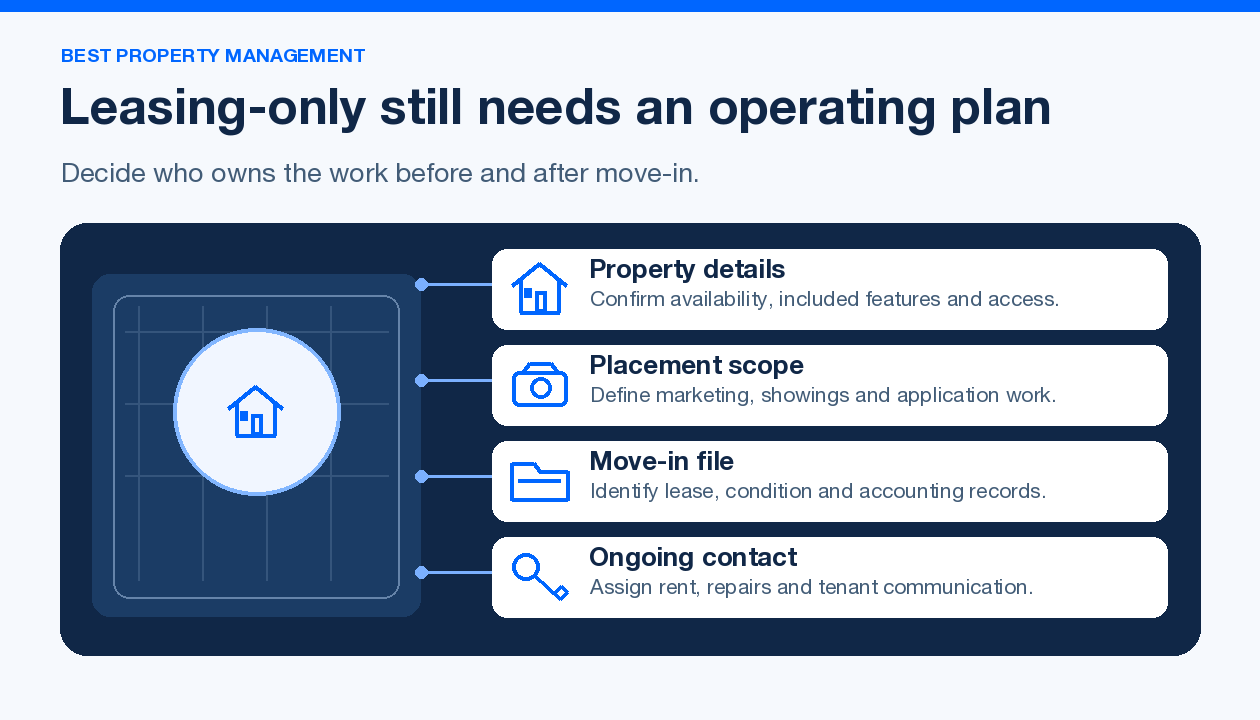
Ask who will evaluate the home’s readiness, recommend an asking rent, arrange photography and publish the listing. Clarify who handles inquiry responses, appointments and changes to the advertised terms. Ask for the trigger, amount and included work for each quoted charge.
Confirm which party approves the price and terms before marketing. If the placement company prepares documents or coordinates move-in, identify the information it needs and who approves it. Ask how screening criteria and any required notices are handled. A proposal should address the actual handoff as well as the work leading up to it.
The placement scope guide for Pleasanton owners provides questions that apply to service comparisons in other locations. Use the Discovery Bay proposal to determine what the company will perform locally. Ask for a written answer if a service description leaves something open.
Where does placement stop and ongoing management begin?
Ask the company to name the milestone and the date when responsibility transfers. It could be signing, possession or another agreed point. Have the manager explain what happens if signing occurs but the move-in date changes. Discuss who communicates with the tenant when a schedule or instruction changes.
| Task | During placement | After the agreed handoff |
|---|---|---|
| Marketing and showings | Confirm who markets the home and coordinates access. | Owner or manager handles any later vacancy. |
| Screening and decision | Set lawful criteria, process, responsibility and notices. | Keep records secure and handle further applications under the chosen arrangement. |
| Lease and move-in | Specify documents, condition evidence and access inventory. | Maintain the records and act on open items. |
| Funds and payment instructions | Document what was received, where it is held and the applicable rules. | Incoming responsible party administers ongoing payments and accounting. |
| Repairs and tenant contact | Identify a contact for issues before possession. | Owner or ongoing manager handles repair requests and communication. |
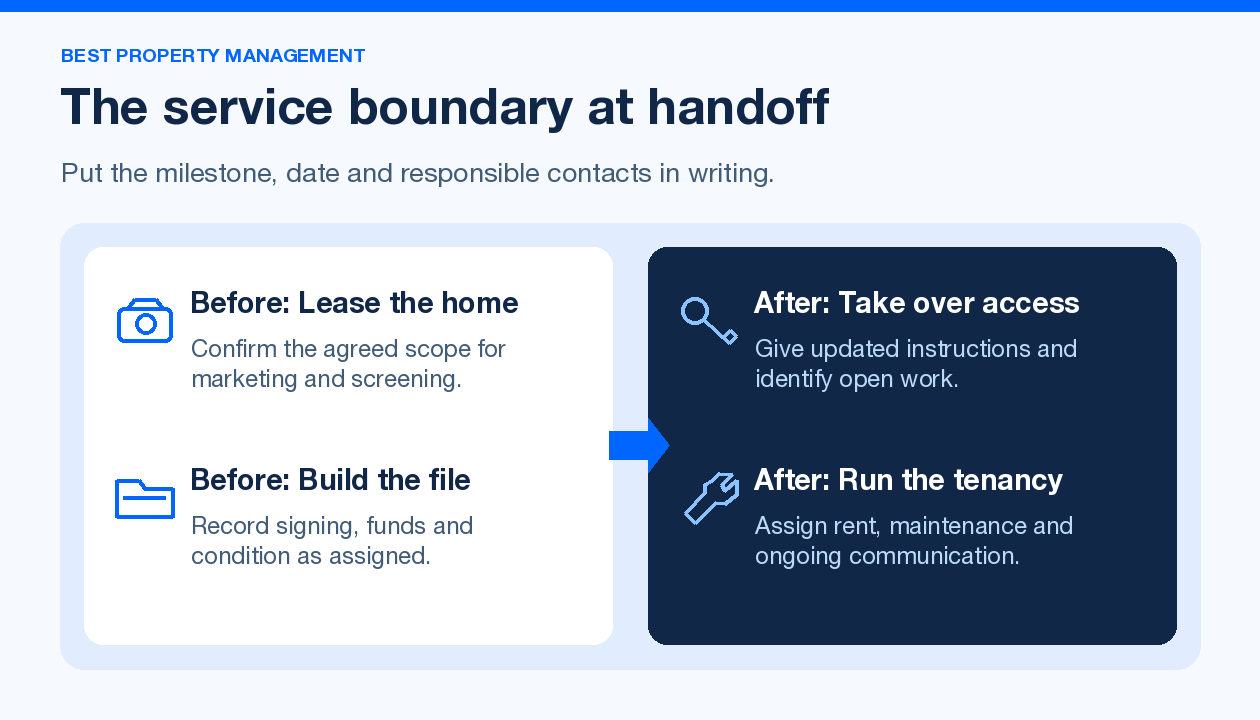
Ask about the first regular rent payment and a maintenance request on the first weekend. Which phone or reporting channel should the tenant use? Who responds and who can approve work? Test the handoff with a concrete scenario. The approval-to-move-in guide outlines records and decisions to check before keys are delivered.
What should the move-in file contain?
Request the signed lease and associated documents, condition records, the key or access inventory and a clear record of funds received and handled. Discuss how sensitive records can appropriately be transferred. Ensure the tenant knows where to direct future requests and make payments after the agreed handoff.
Confirm the intended move-in date, the responsible contact and any open concern. If work remains scheduled, clarify who will verify completion and whether the tenant has been informed. If a key, parking credential or association detail is missing, assign responsibility and follow up.
A useful move-in file is one you can operate from. Ask for a redacted sample or checklist in advance. If you know what the documents should contain, you can resolve missing items before making commitments to the tenant.
When is leasing-only a reasonable fit?
Consider it if you can handle continuing communication, payment records, maintenance and lease administration. Check how you’ll respond to issues when traveling or unavailable. A nearby address helps with certain tasks. A dependable process and backup coverage matter as well.
Try listing your obligations after a successful placement. Who sends instructions for rent, handles a recurring service and responds to a complaint? Can you access the facts and documents needed for each decision? If someone else will manage these tasks, write down their role and confirm the date they take over.
Our leasing-only and full-service comparison offers more questions. Use it to compare your desired workload with each written scope. Include the work you already have covered and identify the duties you want a company to take over.
When might full-service management fit better?
Consider a wider arrangement if you need ongoing rent collection, reporting, repair coordination or local availability. Ask which services are included and how the manager would handle a real issue with your property. If your needs change after placement, confirm whether and how the scope can be revised.
Compare proposals using the same assumptions. Include the leasing phase, then calculate or describe the ongoing resources needed to operate the property. The monthly price and the placement charge answer different questions. You should understand what is delegated in each case before choosing.
For specific property features, discuss access, vendors, insurance and applicable association obligations with the right parties. The owner’s decision is about how the property will operate through the entire tenancy.
What should you ask Best Property before hiring for placement?
Provide the address, availability, home condition and the tasks you plan to manage yourself. Ask whether a leasing-only proposal is available for the home. Clarify which work falls within it, what triggers payment and whether any support continues after the handoff.
Request a simple written statement of who handles rent and repairs starting on the first day after placement. Confirm the records you will receive and how you will access them. That small decision can prevent a gap between a successful lease signing and the start of day-to-day management.
What else do rental owners ask?
Can I hire only to find a tenant in Discovery Bay?
Ask for a leasing-only proposal for your address. Confirm the included tasks, end point and responsibilities that transfer afterward.
Does placement always include marketing and screening?
Packages can vary. Verify which tasks are included, who approves the terms and how applicant verification and notices will be handled.
Who collects rent after move-in?
The party assigned ongoing collection under the applicable arrangement. Confirm the payment instructions, transfer date and tenant contact before handoff.
Can I handle repairs myself after placement?
You can discuss an arrangement where you retain repair coordination. Have the tenant contact information, authority, vendor process and records in place.
What if a home has a dock or shared amenity?
Confirm the rules, access and responsibilities for that specific property. Have the listing and agreement accurately describe what is included.
What should I receive from the placement company?
Ask for the agreed lease records, condition evidence, funds accounting, key inventory and outstanding items, shared through an appropriate process.
Related articles for rental property owners
Best Guide to Leasing and Tenant Placement in the East Bay: Marketing, Screening and Move-In
Livermore Tenant Placement: Should You Choose Leasing Only or Full-Service Management?
Tracy Tenant Placement: What Should Happen Between Applicant Approval and Move-In?
What should you discuss with Best Property?
Bring the Discovery Bay address, availability and a list of the ongoing responsibilities you can handle. Ask for the leasing-only scope and handoff terms for that home. See the Discovery Bay property management page. Review Best Property’s tenant placement services service or contact the Best Property team.
Editorial cover is AI-assisted and illustrative. Check the agreement and the rules that apply to your property.
Blog
Company News
Landlord Resources
Landlords
Legal
Linkedin
Local Market Insights
Maintenance & Repairs
Market
Owners
Property
Property Law & Compliance
Property Management
Rental Property
Tenants
Video
FILTER BY EASTBAY & TRI-VALLEY CITIES
AB 1482
AI Property Management
AI Rental Fraud
Antioch Property Management
Applicant Data Security
Applicant Information
Applicant Screening
Applicant Verification
Bank Statement Fraud
Battery Recalls
Brentwood
Brentwood property management
California Insurance
California Landlord Laws
California Property Management
California Rent Increase
Central Valley Property Management
Concord Property Management
Credit Reports
Danville Property Management
Danville rentals
Desert Hot Springs Property Management
Desert Property Maintenance
Desert Rentals
Document Fraud
Dublin property management
E-Bike Safety
East Bay Landlords
East Bay Lease Renewals
East Bay property management
East Bay Rental Market
East Bay Rental Owners
East Bay Rental Property Maintenance
East Bay Rental Property Management
East Bay rental tips
East Bay Rentals
EV Charging
Eviction Notices
Eviction Support
Fair Housing
Fake Pay Stubs
Fall Leasing
find a property manager
Fremont
Fremont property management
full service property management
Full-Service Property Management
Good Tenants
Hayward Property Management
Hayward rentals
Heat Pump Water Heaters
hiring a property manager
HOA Compliance
HOA Rental Management
HOA Rentals
Home Insurance Costs
Human Oversight
Identity Verification
Income Verification
Indian Wells Property Management
Inherited Rental Property
Landlord Compliance
Landlord Data Security
Landlord Insurance
Landlord Resources
Landlord Tips
Lease Renewal Strategy
Lease Renewals
Leasing Fees
Leasing Services
Livermore
Livermore property management
Livermore Rentals
Local Development
Local Market Insights
Local Rental Support
Long-Term Rentals
Luxury Rentals
maintenance coordination
Maintenance Response
Management Services
Manteca Property Management
Milpitas Property Management
Mountain House Property Management
New Housing San Ramon
Newark CA Property Management
Oakley Property Management
Online Rent Payments
Owner Onboarding
owner reporting
Palm Desert Property Management
Palm Springs Area Property Management
Palm Springs Property Management
Palm Springs Rentals
Pittsburg CA Property Management
Pleasanton property management
Pleasanton rentals
Preventive Maintenance
Property Inspections
Property Maintenance
Property Management
Property Management Companies
Property Management Fees
Property Management Services
Property Management Transition
Property Manager
Rancho Mirage Property Management
Real Estate
real estate investing
Redfin Rentals
Remote Property Management
Rent Collection
Rent Control
Rent Reporting
Rent Trends
Rental Application Fraud
Rental Application Privacy
Rental Competition
Rental Fee Transparency
Rental Fees
Rental Fraud
Rental History
Rental Inspections
Rental Internet
rental leasing
Rental Market Analysis
Rental Market Trends
Rental Marketing
Rental Pricing
Rental Property
Rental Property Expenses
Rental Property Maintenance
rental property owners
rental property ROI
Renter Choice
Renter Experience
Repair Coordination
Resident Portal
Residential Leasing
Roommate Management
San Lorenzo Property Management
San Ramon Landlords
San Ramon Orchards
San Ramon property management
San Ramon Rental Market
Screening Red Flags
Seasonal Rentals
Security Deposits
Sell or Rent
Silicon Valley Rentals
single family rentals
Single-Family Rentals
Tenant Background Checks
Tenant Communication
Tenant Complaints
Tenant Expectations
Tenant Issues
Tenant Placement
Tenant Protection Act
Tenant Retention
tenant screening
Tenant Screening Data Security
Tenant Screening Fraud
Tenant Screening Red Flags
Tenant Turnover
Tracy Property Management
Tri-Valley
Tri-Valley Housing Market
Tri-Valley property management
Tri-Valley Rentals
Union City Property Management
Vacation Rental Management
Wildfire Risk
Winter Rental Safety
Zillow Rentals
 FILTER
 SEARCH BLOG