E-Bike Battery Disposal: Where Can Renters Take a Damaged or Recalled Battery?
You have stopped using the battery. Now what? Leaving it beside the recycling bin, taking it to a store without asking or putting it in a box for ordinary shipping can create a new problem instead of resolving the first one.
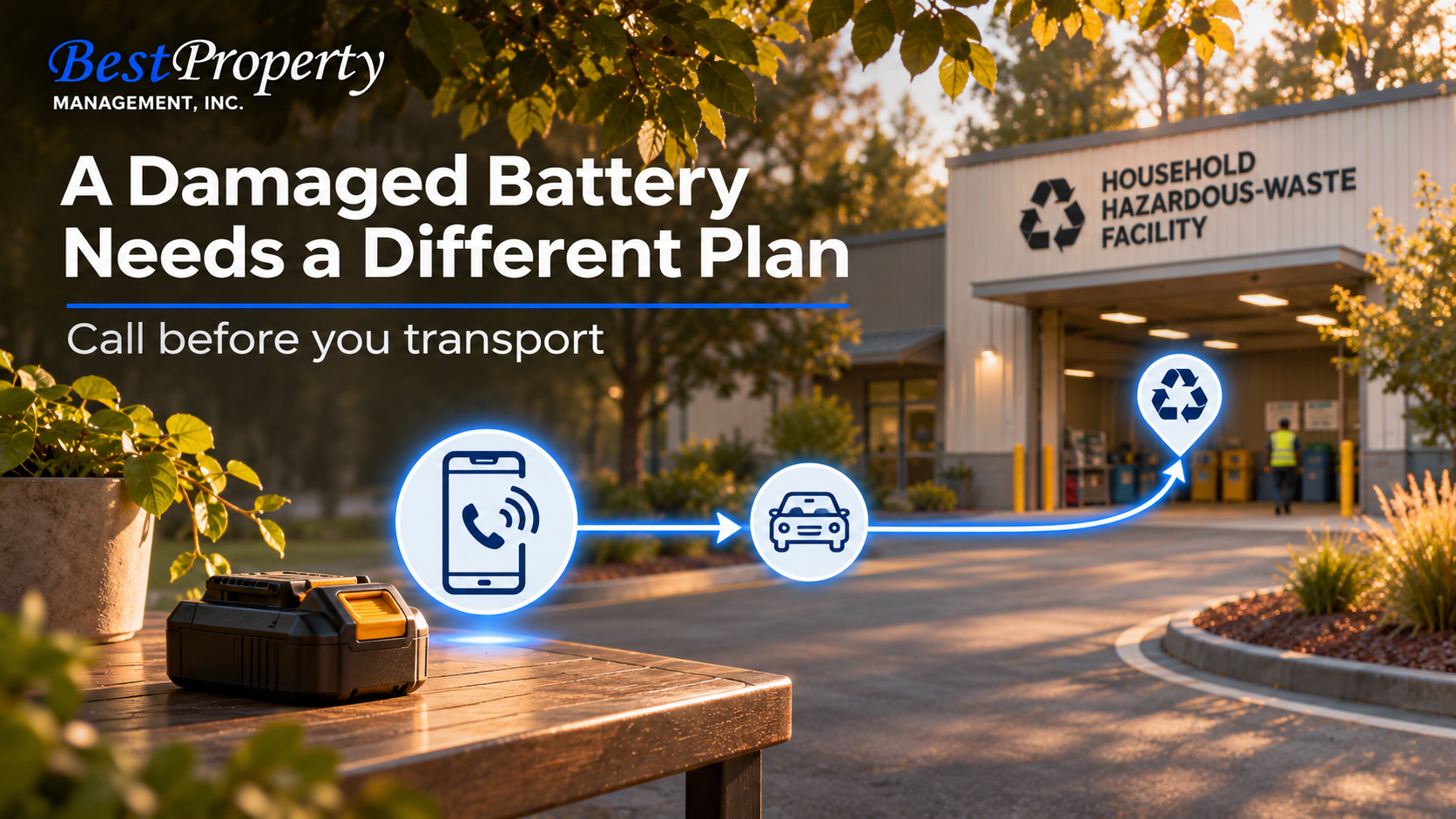
Do not put an e-bike battery in household trash or curbside recycling. For a damaged, defective or recalled pack, contact the manufacturer and your local household hazardous-waste program before transport, confirm acceptance and follow the specific handling instructions. Smoke, fire or immediate danger requires evacuation and 911.
First decide whether this is a disposal question or an emergency
If the battery is smoking, burning or presenting immediate danger, leave the area and call 911. Do not carry it through the building, put it in a car or try to complete a recycling trip.
The U.S. Fire Administration says not to attempt to extinguish a lithium-ion battery fire yourself. Keep others away and follow emergency instructions.
A cool-looking pack can still be damaged or recalled. Once there is no immediate emergency, obtain product-specific advice instead of assuming normal appearance settles the handling question.
An ordinary used battery and a hazardous pack need different routes
The EPA’s lithium-ion battery guidance directs consumers away from household garbage and municipal recycling. Batteries can be damaged or crushed in those waste streams and cause fires.
The same guidance identifies extra transportation concerns for damaged, defective or recalled batteries. A collection option for routine household batteries does not automatically accept a large e-bike pack in a hazardous condition.
Do not open, puncture, crush, drain, repair or attempt to discharge the battery yourself. Ask the manufacturer or qualified receiving program how the specific item should be managed.
Call the receiving program before leaving home
Contact the household hazardous-waste program serving the actual residence. Tell it that the item is an e-bike lithium-ion battery and describe whether it is damaged, defective or recalled. Mention observed problems without handling the pack to investigate.
Ask whether the facility accepts that battery type and condition, whether an appointment or residency requirement applies and what instructions must be followed before any transport.
If it does not accept the item, ask the municipality or responsible program for the appropriate next contact. Do not leave it outside a closed facility or in a general drop-off area.
| Tell the program | Ask the program |
|---|---|
| E-bike battery type and model if safely known | Do you accept this type and condition? |
| Damage, defect or recall status | Is an appointment required? |
| Any observed heat, leaking or other concern | Should emergency services or a specialist respond? |
| Residence location | Which local program or service is responsible? |
| Manufacturer or recall instructions | What handling and transport directions apply? |
A recall notice may have its own disposal instructions
Find the actual notice in the CPSC recall database or product safety warning resources. Match the battery identifiers and use the contact listed in the official notice.
Do not assume the manufacturer wants the pack mailed back. A refund or replacement process may use a specific documentation or disposal procedure. Ordinary shipping materials and postage are not a safe default.
Keep the remedy instructions and completion record. If you are unsure how the recall directions fit with local acceptance rules, ask the listed contacts before moving the battery.
Do not make maintenance staff the default battery collector
A tenant should not leave a damaged pack in a common trash area, office lobby or apartment after move-out. Notify the property of a building concern and coordinate the appropriate disposal advice.
Managers should not instruct untrained staff to open, package or transport a hazardous battery merely because it was found on site. Business-generated or collected waste can also have different requirements from a household disposing of its own battery.
The EPA distinguishes household and commercial responsibilities. A property-level collection program needs its own qualified planning; it is not created safely by placing a box in the office.
Keep a simple closeout record
Save the official instructions, receiving program contact, any appointment confirmation and completion documentation provided. Record what was resolved without publishing serial numbers or resident details unnecessarily.
For an abandoned item, follow the appropriate property, waste and safety procedures rather than treating this article as permission to dispose of someone else’s property.
The important result is not that the battery has disappeared from the apartment. It is that it has reached a route equipped and authorized to receive it.
Questions owners and tenants ask
Can an e-bike battery go in the household recycling bin?
No. Lithium-ion batteries do not belong in trash or curbside recycling.
Can I use a retail battery collection box?
Do not assume it accepts e-bike packs or damaged, defective or recalled batteries. Confirm an appropriate receiving program first.
Should I drive a smoking battery to hazardous waste?
No. Leave the area and call 911 for smoke, fire or immediate danger.
Can I mail the battery back in an ordinary box?
Do not improvise shipping. Follow the official recall, manufacturer and applicable transport instructions.
Who should I call first for a non-emergency damaged pack?
Contact the manufacturer and local household hazardous-waste program, explain the battery and condition and confirm the next step before transport.
Can property staff collect residents’ batteries?
A collection program requires appropriate planning and compliance. Staff should not handle hazardous packs without the right qualifications and procedures.
Explore this article series
E-Bike Battery Safety in Rentals: What Should Owners and Tenants Know?
Charging an E-Bike in an Apartment: 7 Checks Before You Plug In
Is Your E-Bike Battery Recalled? How to Check the Model and Serial Number
E-Bike Storage in California Rentals: Can Landlords Restrict Charging?
Related articles
After-hours rental emergency planning
Talk with your local Best Property team
Notify your local office if the battery creates a property or common-area concern. Use the manufacturer’s and waste program’s specific disposal process, and emergency services for immediate danger. Find your local office.
Research checked November 12, 2026. Disposal and transport depend on battery condition, recall instructions and local acceptance rules. No unverified local drop-off location is recommended. AI-assisted editorial illustration; no actual tenant, client event or property is depicted.
Blog
Company News
Landlord Resources
Landlords
Legal
Linkedin
Local Market Insights
Maintenance & Repairs
Market
Owners
Property
Property Law & Compliance
Property Management
Rental Property
Tenants
Video
FILTER BY EASTBAY & TRI-VALLEY CITIES
AB 1482
AI Property Management
AI Rental Fraud
Antioch Property Management
Applicant Data Security
Applicant Information
Applicant Screening
Applicant Verification
Bank Statement Fraud
Battery Recalls
Brentwood
Brentwood property management
California Insurance
California Landlord Laws
California Property Management
California Rent Increase
Central Valley Property Management
Concord Property Management
Credit Reports
Danville Property Management
Danville rentals
Desert Hot Springs Property Management
Desert Property Maintenance
Desert Rentals
Document Fraud
Dublin property management
E-Bike Safety
East Bay Landlords
East Bay Lease Renewals
East Bay property management
East Bay Rental Market
East Bay Rental Owners
East Bay Rental Property Maintenance
East Bay Rental Property Management
East Bay rental tips
East Bay Rentals
EV Charging
Eviction Notices
Eviction Support
Fair Housing
Fake Pay Stubs
Fall Leasing
find a property manager
Fremont
Fremont property management
full service property management
Full-Service Property Management
Good Tenants
Hayward Property Management
Hayward rentals
Heat Pump Water Heaters
hiring a property manager
HOA Compliance
HOA Rental Management
HOA Rentals
Home Insurance Costs
Human Oversight
Identity Verification
Income Verification
Indian Wells Property Management
Inherited Rental Property
Landlord Compliance
Landlord Data Security
Landlord Insurance
Landlord Resources
Landlord Tips
Lease Renewal Strategy
Lease Renewals
Leasing Fees
Leasing Services
Livermore
Livermore property management
Livermore Rentals
Local Development
Local Market Insights
Local Rental Support
Long-Term Rentals
Luxury Rentals
maintenance coordination
Maintenance Response
Management Services
Manteca Property Management
Milpitas Property Management
Mountain House Property Management
New Housing San Ramon
Newark CA Property Management
Oakley Property Management
Online Rent Payments
Owner Onboarding
owner reporting
Palm Desert Property Management
Palm Springs Area Property Management
Palm Springs Property Management
Palm Springs Rentals
Pittsburg CA Property Management
Pleasanton property management
Pleasanton rentals
Preventive Maintenance
Property Inspections
Property Maintenance
Property Management
Property Management Companies
Property Management Fees
Property Management Services
Property Management Transition
Property Manager
Rancho Mirage Property Management
Real Estate
real estate investing
Redfin Rentals
Remote Property Management
Rent Collection
Rent Control
Rent Reporting
Rent Trends
Rental Application Fraud
Rental Application Privacy
Rental Competition
Rental Fee Transparency
Rental Fees
Rental Fraud
Rental History
Rental Inspections
Rental Internet
rental leasing
Rental Market Analysis
Rental Market Trends
Rental Marketing
Rental Pricing
Rental Property
Rental Property Expenses
Rental Property Maintenance
rental property owners
rental property ROI
Renter Choice
Renter Experience
Repair Coordination
Resident Portal
Residential Leasing
Roommate Management
San Lorenzo Property Management
San Ramon Landlords
San Ramon Orchards
San Ramon property management
San Ramon Rental Market
Screening Red Flags
Seasonal Rentals
Security Deposits
Sell or Rent
Silicon Valley Rentals
single family rentals
Single-Family Rentals
Tenant Background Checks
Tenant Communication
Tenant Complaints
Tenant Expectations
Tenant Issues
Tenant Placement
Tenant Protection Act
Tenant Retention
tenant screening
Tenant Screening Data Security
Tenant Screening Fraud
Tenant Screening Red Flags
Tenant Turnover
Tracy Property Management
Tri-Valley
Tri-Valley Housing Market
Tri-Valley property management
Tri-Valley Rentals
Union City Property Management
Vacation Rental Management
Wildfire Risk
Winter Rental Safety
Zillow Rentals
 FILTER
 SEARCH BLOG