Newark Rental Property Management: Why Is Your Listing Getting Views but No Applications?
If your Newark, California rental listing gets views but no applications, find which step is losing interest. Compare listing views, inquiries, showings booked, showings completed and applications. Fix the first observable problem, such as unclear terms, hard-to-book tours, a mismatch between photos and condition or price compared with similar homes.
A listing can be popular on a rental site and still leave viewers unsure what to do. If people ask about availability but never book, review scheduling and response quality first. If they tour and leave without applying, the property experience, terms or application instructions may deserve a closer look.
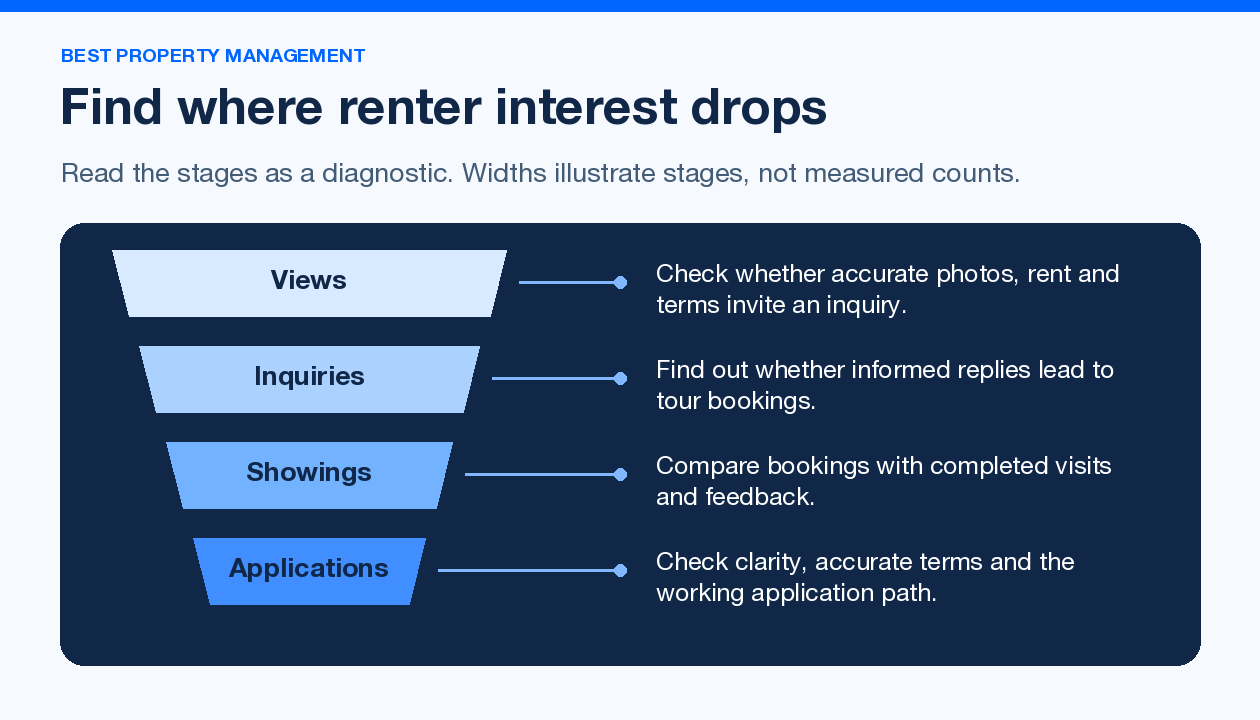
How do you find where prospects stop?
Start with a defined period and record the counts by source. Note views, inquiries, booked tours, completed tours and applications. Keep cancelled appointments separate from completed appointments. Log material changes to the price, photos and availability during the same period.
A view is a measure of exposure on that channel. Platforms can count it differently, and repeated views may come from the same person. The sequence is therefore a way to form a hypothesis. It does not provide a universal conversion rate. Ask the manager what each count measures and where the underlying events are recorded.
Look for a recurring, observable pattern. Several unrelated prospects asking the same question about parking suggests the listing needs to explain parking more clearly. A long gap between inquiry and tour availability points toward access or scheduling. See our Newark rental management pillar for the broader leasing and management context.
Are your rent and terms clear next to comparable listings?
Review a small set of current, reasonably comparable homes. Compare location, size, condition, parking, outdoor space, included utilities, availability and other material terms. A larger or recently renovated home may be useful context without being a close match. Save the examples and the date reviewed.
Check what the prospect sees upfront. Asking rent, the start date and any material obligations should be easy to find, accurate and consistent across listings. Clarify included spaces and features. Ask the manager which terms require owner approval before changing anything.
Our East Bay vacancy pricing guide can help structure the comparison. Ask the manager to show the closest matches and explain what differs. Schedule a review after observing the next period’s inquiry and tour activity under the same counting rules.
Do the listing photos and text match the actual home?
Open the listing on a phone. The first photos should orient a renter and accurately show the most useful features. Include enough views to understand key rooms, outdoor areas and access if relevant. Repair, update the description or replace an image if the current condition differs from what it shows.
For a Newark home, address the details that actually affect the rental. If there is a separate entrance, shared driveway or restricted storage area, describe it explicitly. Avoid assuming those facts apply to every property in the city. Confirm the correct availability date on each platform.
If prospects complete tours but consistently ask about a missing feature, compare the listing and actual visit. A photo can attract attention while leaving room scale or condition ambiguous. Our guide to how renters compare homes provides useful context for reviewing the presentation.
What should you check about inquiries and showing access?
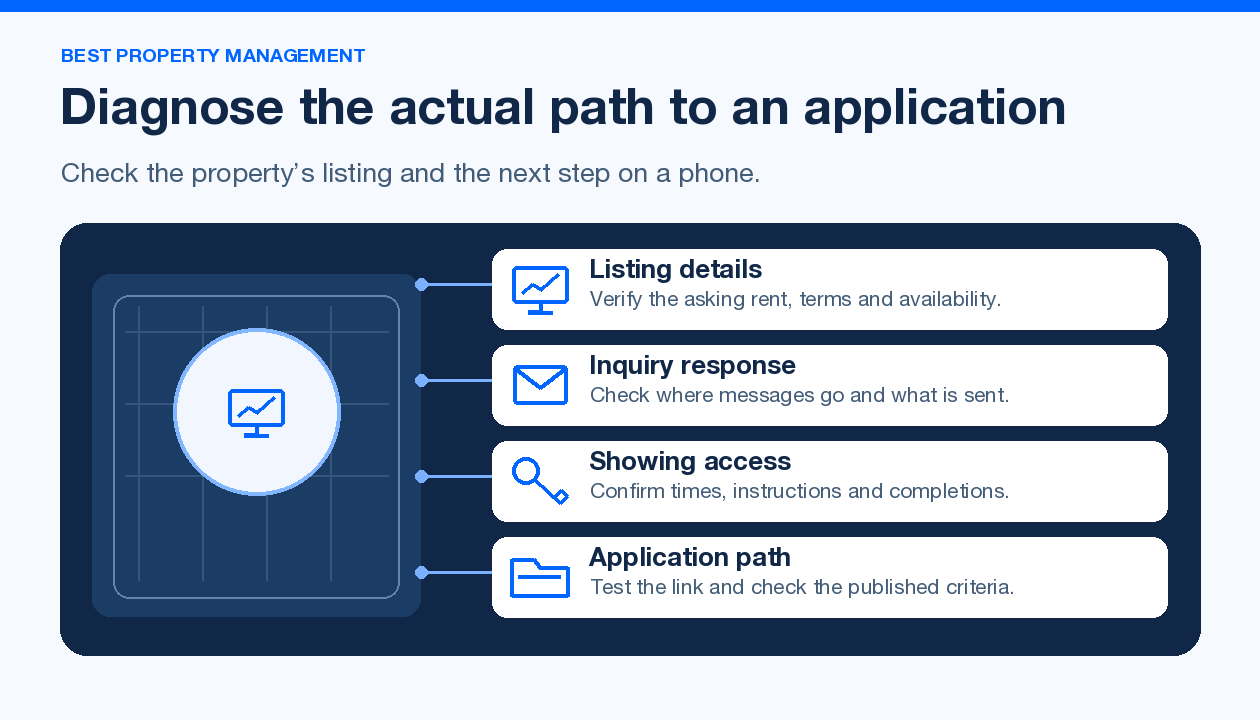
Test the real path a prospect uses to request a tour. Check that the listing contact is correct, times are available and instructions are clear. If the home is occupied, confirm the applicable access arrangements before opening a slot. Ask who is responsible for replies and how handoffs are tracked when that person is unavailable.
| Where prospects stop | What to check first | What to track next |
|---|---|---|
| Views to inquiries | Accurate price, photos, terms and availability. | Questions and inquiries from each source. |
| Inquiries to bookings | Response time, scheduling and available slots. | Bookings and repeat scheduling questions. |
| Bookings to completed tours | Confirmation, access instructions and cancellations. | Completions, reschedules and reported friction. |
| Tours to applications | Condition, price, terms and application clarity. | Post-tour questions and completed applications. |
For example, if most bookings cancel after the same confusing instructions, fix the instructions and confirm access. If tours routinely complete and few people apply, examine the full experience rather than increasing traffic alone. The leasing and tenant placement guide explains how these tasks fit together.
Is the application process easy to understand?
Check whether the application page works on mobile and states the process clearly. Verify contact information and how applicants can ask a question or request an accommodation. Explain the applicable criteria and any charges accurately, and use a consistent lawful review process. Discuss any change in criteria or terms before applying it.
The California Civil Rights Department’s housing resources explain fair housing obligations for housing providers. Use an accessible and consistent process and avoid making informal exceptions or assumptions based on a prospect’s personal characteristics.
Ask the manager which stage is actually reported as an application. Clicks on a link can differ from completed submissions. If you track an application started and an application completed, keep those counts separate. The difference can help identify a broken link or unclear next instruction.
How can you test changes without guessing?
Pick an observable issue and change one material variable where practical. If photos are outdated, update them and record the date. If showings are difficult to schedule, correct the appointment process and track bookings and completed visits. Review price and terms with relevant evidence.
Compare periods carefully. Holidays, listing age, competing inventory and changes to availability can affect activity. A small sample can suggest what to investigate. It cannot establish that one change caused an increase. Keep the raw counts and note what else changed during the test.
Check results at an agreed time. Decide whether to retain the update, collect more information or investigate the next step. If a recurring prospect question points to the same barrier, fix the issue directly and review whether the question continues.
What should a Newark owner ask a property manager to report?
Bring the listing link, dates, terms and available inquiry and tour records. Ask the manager to identify the suspected drop-off, evidence and a practical next change. Request a short update after the next review period. Have it explain who will adjust the listing and whose approval is required.
For an ongoing vacancy, ask what the manager will do if the first change does not help. The answer might involve checking access, condition, price or application instructions in a different order depending on the evidence. A useful report makes each decision traceable so you can evaluate how the leasing service works.
What else do rental owners ask?
Do lots of views mean my Newark rental is priced correctly?
Views measure exposure under the platform’s counting method. Compare inquiries, showings and applications, and review comparable homes and terms.
Should I reduce the rent first?
Start with the evidence. If tours are difficult to arrange, fix access first. If price and terms compare poorly with similar options, discuss a change and track results.
What if people book and then cancel tours?
Check the booking window, confirmation and access instructions. Note cancellations and reschedules separately and ask what prospects reported.
What if people tour the home and do not apply?
Look for repeated feedback on condition, presentation, availability and terms. Test the application link and verify that required information is easy to find.
Can I compare views across rental sites?
Check what each platform counts and compare similar periods. A view on one service may not measure the same thing as a view elsewhere.
How should a manager document a listing change?
Record the date, what changed, who authorized it and which next-step activity will be checked. Note other material changes during the period.
Related articles for rental property owners
Best Guide to Newark, CA Property Management: Rental Fees, Tenant Screening and Rent Collection
Best Guide to Leasing and Tenant Placement in the East Bay: Marketing, Screening and Move-In
How Should East Bay Landlords Price a Vacancy When Bay Area Rents Are Rising?
East Bay Rental Property Management: Top 5 Reasons Renters Choose One Rental Over Another
What should you discuss with Best Property?
Bring the current Newark listing, pricing and available inquiry and tour activity. Ask for a property-specific review of presentation, access and the path to an application. Review Best Property’s property marketing service or contact the Best Property team.
Editorial cover is AI-assisted and illustrative. Check the agreement and the rules that apply to your property.
Blog
Company News
Landlord Resources
Landlords
Legal
Linkedin
Local Market Insights
Maintenance & Repairs
Market
Owners
Property
Property Law & Compliance
Property Management
Rental Property
Tenants
Video
FILTER BY EASTBAY & TRI-VALLEY CITIES
AB 1482
AI Property Management
AI Rental Fraud
Antioch Property Management
Applicant Data Security
Applicant Information
Applicant Screening
Applicant Verification
Bank Statement Fraud
Battery Recalls
Brentwood
Brentwood property management
California Insurance
California Landlord Laws
California Property Management
California Rent Increase
Central Valley Property Management
Concord Property Management
Credit Reports
Danville Property Management
Danville rentals
Desert Hot Springs Property Management
Desert Property Maintenance
Desert Rentals
Document Fraud
Dublin property management
E-Bike Safety
East Bay Landlords
East Bay Lease Renewals
East Bay property management
East Bay Rental Market
East Bay Rental Owners
East Bay Rental Property Maintenance
East Bay Rental Property Management
East Bay rental tips
East Bay Rentals
EV Charging
Eviction Notices
Eviction Support
Fair Housing
Fake Pay Stubs
Fall Leasing
find a property manager
Fremont
Fremont property management
full service property management
Full-Service Property Management
Good Tenants
Hayward Property Management
Hayward rentals
Heat Pump Water Heaters
hiring a property manager
HOA Compliance
HOA Rental Management
HOA Rentals
Home Insurance Costs
Human Oversight
Identity Verification
Income Verification
Indian Wells Property Management
Inherited Rental Property
Landlord Compliance
Landlord Data Security
Landlord Insurance
Landlord Resources
Landlord Tips
Lease Renewal Strategy
Lease Renewals
Leasing Fees
Leasing Services
Livermore
Livermore property management
Livermore Rentals
Local Development
Local Market Insights
Local Rental Support
Long-Term Rentals
Luxury Rentals
maintenance coordination
Maintenance Response
Management Services
Manteca Property Management
Milpitas Property Management
Mountain House Property Management
New Housing San Ramon
Newark CA Property Management
Oakley Property Management
Online Rent Payments
Owner Onboarding
owner reporting
Palm Desert Property Management
Palm Springs Area Property Management
Palm Springs Property Management
Palm Springs Rentals
Pittsburg CA Property Management
Pleasanton property management
Pleasanton rentals
Preventive Maintenance
Property Inspections
Property Maintenance
Property Management
Property Management Companies
Property Management Fees
Property Management Services
Property Management Transition
Property Manager
Rancho Mirage Property Management
Real Estate
real estate investing
Redfin Rentals
Remote Property Management
Rent Collection
Rent Control
Rent Reporting
Rent Trends
Rental Application Fraud
Rental Application Privacy
Rental Competition
Rental Fee Transparency
Rental Fees
Rental Fraud
Rental History
Rental Inspections
Rental Internet
rental leasing
Rental Market Analysis
Rental Market Trends
Rental Marketing
Rental Pricing
Rental Property
Rental Property Expenses
Rental Property Maintenance
rental property owners
rental property ROI
Renter Choice
Renter Experience
Repair Coordination
Resident Portal
Residential Leasing
Roommate Management
San Lorenzo Property Management
San Ramon Landlords
San Ramon Orchards
San Ramon property management
San Ramon Rental Market
Screening Red Flags
Seasonal Rentals
Security Deposits
Sell or Rent
Silicon Valley Rentals
single family rentals
Single-Family Rentals
Tenant Background Checks
Tenant Communication
Tenant Complaints
Tenant Expectations
Tenant Issues
Tenant Placement
Tenant Protection Act
Tenant Retention
tenant screening
Tenant Screening Data Security
Tenant Screening Fraud
Tenant Screening Red Flags
Tenant Turnover
Tracy Property Management
Tri-Valley
Tri-Valley Housing Market
Tri-Valley property management
Tri-Valley Rentals
Union City Property Management
Vacation Rental Management
Wildfire Risk
Winter Rental Safety
Zillow Rentals
 FILTER
 SEARCH BLOG