Property Management Handover Checklist: How Do Owners Protect Rent, Deposits and Records?
A property management handover checklist should identify what must transfer, who provides it, who receives it and what proves completion. Cover the lease file, rent and owner ledgers, deposit accounting, reserves, keys, tenant instructions and open repairs. For an occupied rental, a transfer is not complete until the incoming manager can actually use the records and take responsibility without gaps.
Sending a folder called “property documents” is a beginning. It may contain an old lease, no amendments and a statement that predates the last repair. Owners need a receiving checklist that exposes those gaps before the first rent cycle or maintenance call lands with the new company.
What should transfer before the new manager takes over?
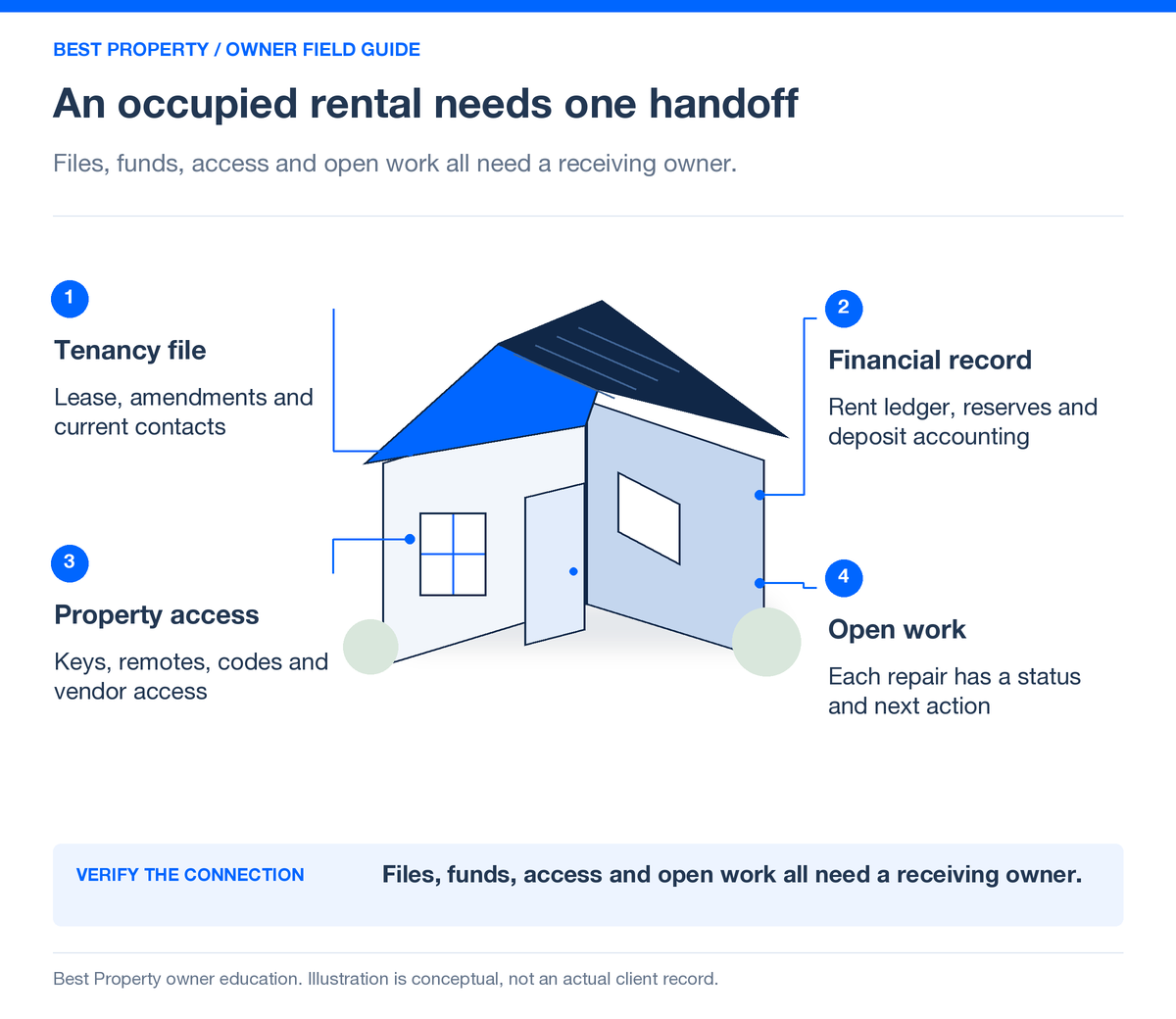
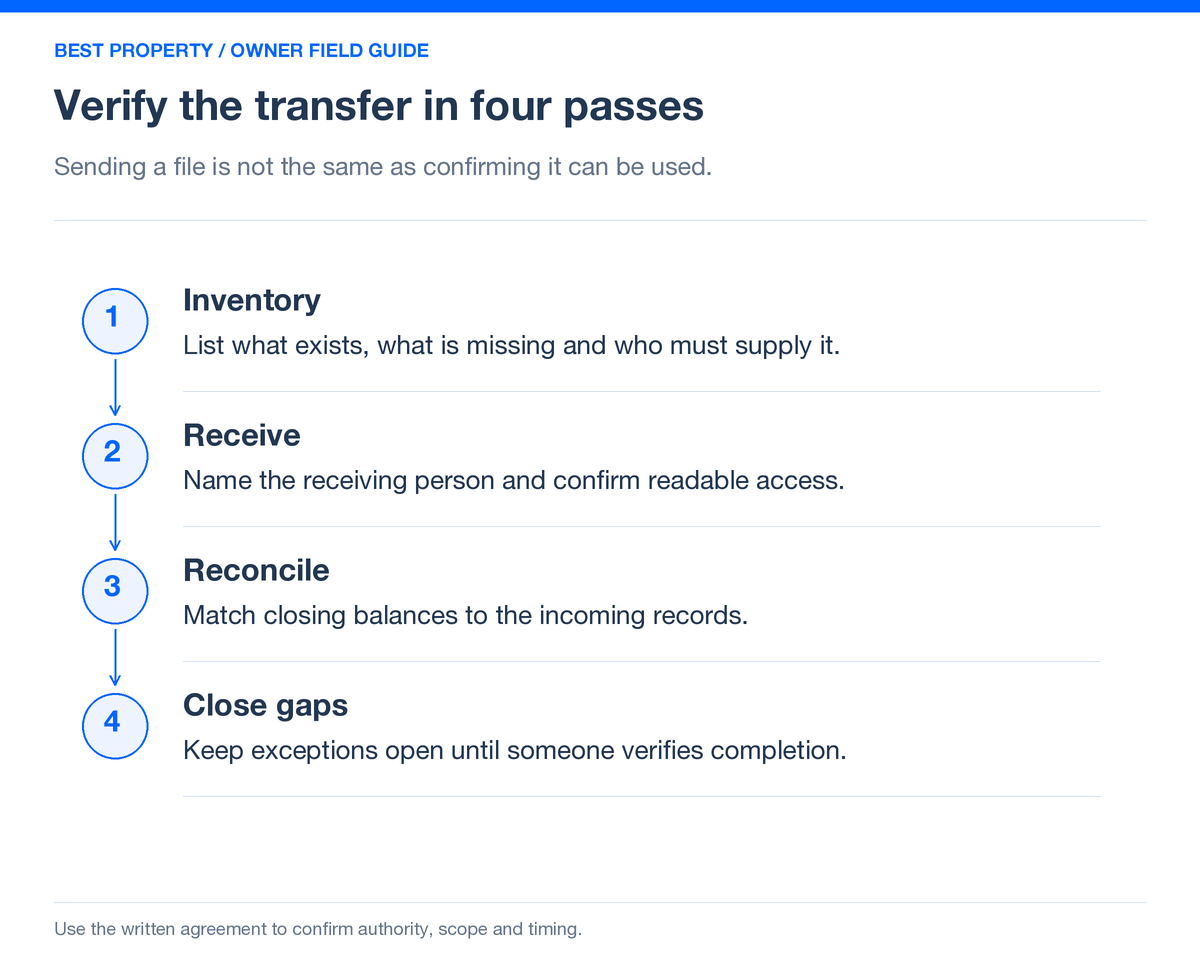
Start with a dated inventory of the information needed to operate the home. Include the signed lease, addenda, tenant contact details, payment history, inspection records, current property information and active maintenance. Record whether each item is current, complete and readable.
Identify the person supplying each group and the receiving person who will verify it. “Sent to the office” is difficult to follow up. “Lease and amendments received by the assigned manager; one missing addendum requested” gives the owner an actionable status.
Use the same property identifier throughout the transfer. Similar street names, an owner with several homes or a folder copied from another property can create avoidable mistakes. Our onboarding document checklist explains the underlying file; this handover adds receiving ownership and verification.
How do you protect rent payments during the change?
Choose an effective date and identify which manager receives each payment. Check recurring payments, pending electronic transfers, credits and any past-due balance. An owner should not discover after the fact that the tenant paid the old company while the new company recorded the same month as unpaid.
Give the tenant clear instructions through an appropriate, verified communication route. Explain when any payment destination changes and whom to contact with questions. Confirm the instructions match the portal configuration and the operating handoff. Avoid distributing unverified bank details in a hurried forwarded message.
After the first collection cycle, compare the tenant ledger and incoming records. If a payment reached the former manager, document the receipt, transfer and ledger correction rather than charging the tenant again simply because the new portal does not show the money. Review rent collection and owner reporting for the distinction between amounts due, received and disbursed.
What must be reconciled for deposits and owner funds?
Keep deposit accounting separate from rent, owner reserves and management compensation. List the amount recorded for the tenancy, the current holder and the receiving arrangement. A number on a checklist is insufficient without a matching ledger and confirmation of where the funds are held.
The California DRE trust-funds guide explains the broker’s responsibility for handling and accounting for client funds. For a management transition, ask for records that connect the closing balances to the incoming file. Do not treat the tenant’s deposit as available money for an owner payout or a repair reserve.
Confirm how pending expenses and later adjustments will be handled. A closing statement can change when an outstanding invoice or payment reversal is resolved. Keep the item identified until the parties can explain the final balance and the receiving records show the appropriate result.
| Financial item | Closing record | Receiving confirmation |
|---|---|---|
| Rent | Tenant ledger and receipt status | Payment posted to the correct period. |
| Deposit | Tenancy deposit record and holder | Amount and custody arrangement acknowledged. |
| Owner reserve | Balance and pending uses | Opening balance agrees with the transfer. |
| Unpaid expenses | Invoice and authorization status | Named party responsible for processing. |
| Owner payout | Statement and payment reference | Receipt or outstanding exception documented. |
Which access details are easy to miss?
Count physical keys, remotes, fobs and other access devices. Identify which lock or shared entry each one serves. Transfer codes and digital permissions securely, and check who can administer them. A working front-door key does not resolve access to an HOA gate, garage, utility area or vendor entrance.
Do not casually change a tenant’s access as part of an administrative handoff. Coordinate any necessary changes through the appropriate tenancy and security process. The incoming manager should understand the current access arrangement and know how emergency entry or a scheduled repair will be handled lawfully.
Include the relevant HOA contact, entry procedure and recurring vendor arrangements where applicable. Identify who currently holds a spare. Close the access item only when the receiving team can use the required devices and the owner understands which former permissions should end.
How should open repairs and vendor commitments transfer?
Treat every open work order as a small handover of its own. Record the reported condition, current status, vendor, approved scope, spending authority, appointment and next action. Include warranty information and work already completed so the new company does not restart the same diagnosis unnecessarily.
A repair described as “approved” may still be awaiting parts or a tenant appointment. A job described as “finished” may still need an invoice or completion check. Use precise status words and attach the supporting record. Our inspection and owner-oversight guide helps distinguish a property observation from verification that work was completed.
Ask recurring vendors where their instructions should come from after the transition. Confirm whether contracts remain with the owner, move to the incoming company’s coordination or end under their own terms. Do not assume a management change automatically cancels a gardening or pool service arrangement.
What should the tenant hear about the management change?
Provide one coherent operational update: effective date, current contact, payment instructions, maintenance route and emergency process. Tell the tenant what to do if a previously submitted request remains open. Keep the message focused on continuity rather than the owner’s disagreement with a former manager.
Ask the incoming company how it will handle questions from tenants who missed the notice or continue using an old portal. A practical fallback avoids treating a communication gap as immediate tenant noncompliance. Keep copies of the instructions and the method used to distribute them.
Our manager-switching guide covers the broader sequence. The handover checklist is the evidence behind that sequence: it tells the owner whether the lease, money, access and open responsibilities actually arrived together.
How do you know the handover is genuinely finished?
Conduct a receiving review after takeover. Confirm the lease and ledger agree, the deposit record is accounted for, required keys work and every open repair has an assigned next step. Then check the first rent collection and owner statement under the new arrangement.
Do not hide exceptions to make the checklist look complete. A missing invoice, disputed balance or unreadable inspection file should remain open with a named person and checkpoint. Separate a serious unresolved issue from a minor administrative item, but keep both visible until resolved.
An organized handover reduces the need to reconstruct history later. It also gives the new manager a realistic starting point: the condition and account records that exist, the work still required and the decisions the owner needs to make.
What else do rental owners ask?
Should I give the new manager the latest statement only?
The statement is useful, but it does not replace the lease, tenant ledger, deposit record, invoices or repair history. Transfer the records needed to understand the balance and operate the tenancy.
Can I combine rent, deposits and reserves into one transfer figure?
Ask for separate accounting by purpose and beneficiary. A combined amount without supporting records makes it harder to confirm that each obligation and balance was transferred correctly.
Who should notify tenants?
Agree on a responsible sender and a coordinated message. The important result is one verified set of contacts, dates and payment and maintenance instructions, rather than competing partial announcements.
What if a payment reaches the former company after takeover?
Document the receipt and coordinate the transfer and ledger treatment. Confirm the tenant receives appropriate credit instead of relying solely on an empty entry in the new system.
Do keys alone prove the property is ready for the new manager?
No. Verify the required physical and digital access, lease and financial records, current tenant instructions and every open maintenance item.
Should unresolved items stop the entire handover?
Evaluate the significance of each item with the managers and appropriate advisers. Keep exceptions assigned and visible. Do not describe the transition as fully reconciled while important balances or responsibilities remain unexplained.
Related articles for rental property owners
How Do You Switch Property Management Companies Without Disrupting Tenants?
What Documents Should Owners Give a New Property Manager?
Best Guide to Rent Collection in the East Bay: Payment Systems, Late Rent and Owner Reporting
Best Guide to Rental Property Inspections in the East Bay: Timing, Reports and Owner Oversight
What should you discuss with Best Property?
Bring the agreement, current property records and your main unanswered questions. Ask Best Property to explain the service scope, responsibilities and reporting for your rental before choosing an arrangement. Discuss the relevant service, then contact the Best Property team about your property.
Sources and published service information checked November 20, 2026. This is general owner education. Confirm the current agreement and rules for the specific property. Original editorial cover is AI-assisted; illustrations do not depict actual clients or private records.
Blog
Company News
Landlord Resources
Landlords
Legal
Linkedin
Local Market Insights
Maintenance & Repairs
Market
Owners
Property
Property Law & Compliance
Property Management
Rental Property
Tenants
Video
FILTER BY EASTBAY & TRI-VALLEY CITIES
AB 1482
AI Property Management
AI Rental Fraud
Antioch Property Management
Applicant Data Security
Applicant Information
Applicant Screening
Applicant Verification
Bank Statement Fraud
Battery Recalls
Brentwood
Brentwood property management
California Insurance
California Landlord Laws
California Property Management
California Rent Increase
Central Valley Property Management
Concord Property Management
Credit Reports
Danville Property Management
Danville rentals
Desert Hot Springs Property Management
Desert Property Maintenance
Desert Rentals
Document Fraud
Dublin property management
E-Bike Safety
East Bay Landlords
East Bay Lease Renewals
East Bay property management
East Bay Rental Market
East Bay Rental Owners
East Bay Rental Property Maintenance
East Bay Rental Property Management
East Bay rental tips
East Bay Rentals
EV Charging
Eviction Notices
Eviction Support
Fair Housing
Fake Pay Stubs
Fall Leasing
find a property manager
Fremont
Fremont property management
full service property management
Full-Service Property Management
Good Tenants
Hayward Property Management
Hayward rentals
Heat Pump Water Heaters
hiring a property manager
HOA Compliance
HOA Rental Management
HOA Rentals
Home Insurance Costs
Human Oversight
Identity Verification
Income Verification
Indian Wells Property Management
Inherited Rental Property
Landlord Compliance
Landlord Data Security
Landlord Insurance
Landlord Resources
Landlord Tips
Lease Renewal Strategy
Lease Renewals
Leasing Fees
Leasing Services
Livermore
Livermore property management
Livermore Rentals
Local Development
Local Market Insights
Local Rental Support
Long-Term Rentals
Luxury Rentals
maintenance coordination
Maintenance Response
Management Services
Manteca Property Management
Milpitas Property Management
Mountain House Property Management
New Housing San Ramon
Newark CA Property Management
Oakley Property Management
Online Rent Payments
Owner Onboarding
owner reporting
Palm Desert Property Management
Palm Springs Area Property Management
Palm Springs Property Management
Palm Springs Rentals
Pittsburg CA Property Management
Pleasanton property management
Pleasanton rentals
Preventive Maintenance
Property Inspections
Property Maintenance
Property Management
Property Management Companies
Property Management Fees
Property Management Services
Property Management Transition
Property Manager
Rancho Mirage Property Management
Real Estate
real estate investing
Redfin Rentals
Remote Property Management
Rent Collection
Rent Control
Rent Reporting
Rent Trends
Rental Application Fraud
Rental Application Privacy
Rental Competition
Rental Fee Transparency
Rental Fees
Rental Fraud
Rental History
Rental Inspections
Rental Internet
rental leasing
Rental Market Analysis
Rental Market Trends
Rental Marketing
Rental Pricing
Rental Property
Rental Property Expenses
Rental Property Maintenance
rental property owners
rental property ROI
Renter Choice
Renter Experience
Repair Coordination
Resident Portal
Residential Leasing
Roommate Management
San Lorenzo Property Management
San Ramon Landlords
San Ramon Orchards
San Ramon property management
San Ramon Rental Market
Screening Red Flags
Seasonal Rentals
Security Deposits
Sell or Rent
Silicon Valley Rentals
single family rentals
Single-Family Rentals
Tenant Background Checks
Tenant Communication
Tenant Complaints
Tenant Expectations
Tenant Issues
Tenant Placement
Tenant Protection Act
Tenant Retention
tenant screening
Tenant Screening Data Security
Tenant Screening Fraud
Tenant Screening Red Flags
Tenant Turnover
Tracy Property Management
Tri-Valley
Tri-Valley Housing Market
Tri-Valley property management
Tri-Valley Rentals
Union City Property Management
Vacation Rental Management
Wildfire Risk
Winter Rental Safety
Zillow Rentals
 FILTER
 SEARCH BLOG