
Property Management Hidden Fees: Which Charges Should Owners Ask About Before Signing?
The best way to spot an unexpected property management fee is to ask what triggers each charge, how it is calculated and exactly what work it buys. Review the monthly fee, leasing, renewals, inspections, maintenance coordination and ending the agreement under the same property scenario. Ask for written answers where a quote leaves a price or responsibility open.
The quote looks simple until you ask what happens when a lease renews or the water heater fails. Those events can bring a separate service, a third-party bill or work that is already included. A line-by-line review helps you budget for all three and avoid counting one expense twice.
Which details belong next to every property management fee?
Put four notes next to each line in the fee schedule. Record the event that triggers it, the amount or formula, the scope of work and the party that pays. Then mark where the manager documented those answers. “Additional services may apply” is a reason to ask a question before comparing totals.
Use the proposal and agreement together. If the salesperson describes an inspection as included but the agreement prices additional visits separately, ask which visit is included and which circumstances count as extra. A written example can make a vague distinction clear. Our California property management fee guide puts these questions in the wider context of service scope.
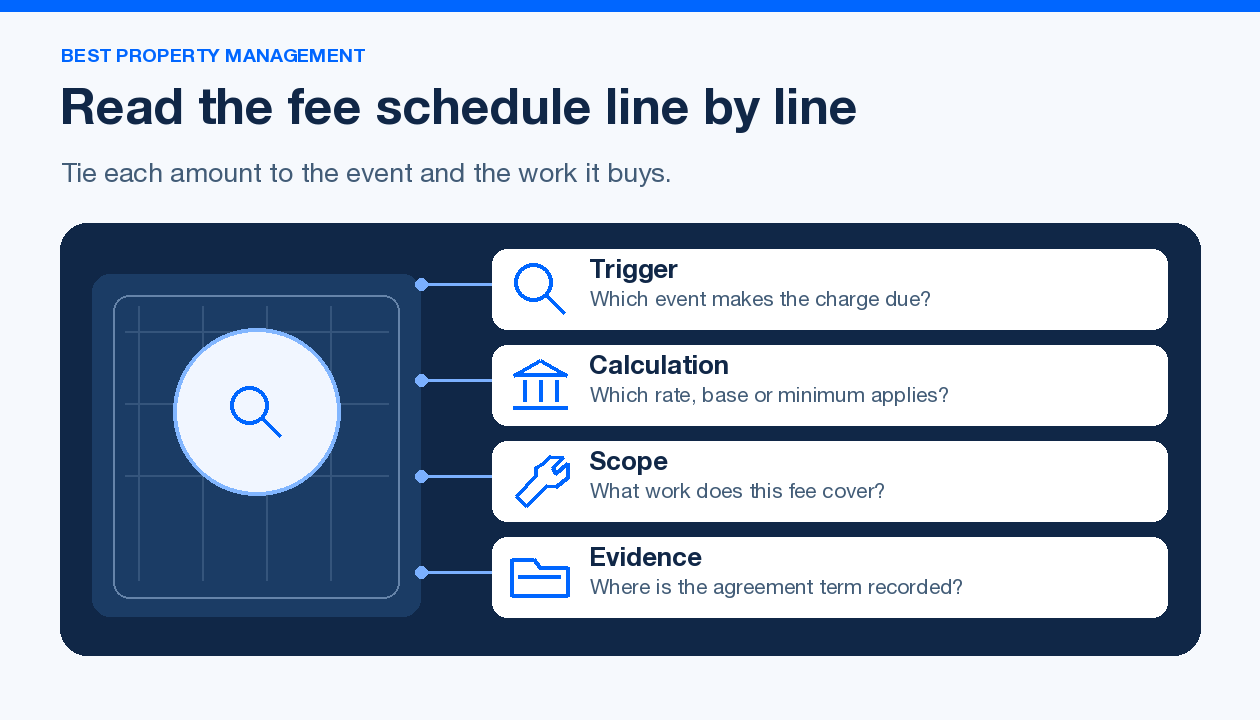
Is the monthly charge calculated on rent due or rent collected?
Find the defined fee base. If a quote uses a percentage, ask which amounts are included when rent is paid late, partially paid, credited or reversed. Ask whether a minimum, flat fee or another charge applies while the unit is vacant. The important detail is the billing rule in your proposal.
For example, a quote may specify a monthly minimum even when no rent is collected. Another quote may charge for particular vacancy services. Comparing them requires the same vacancy scenario and a clear list of the work each manager would do. If you change the assumptions for only one quote, the comparison stops being useful.
Ask for a redacted statement showing how the monthly fee appears. An ordinary statement can reveal whether the billing process makes it easy to check an invoice later. Use our Fremont fee-inclusion article to prepare follow-up questions about included work.
When can leasing, renewal and inspection charges apply?
Leasing and renewal are separate events. Ask whether the leasing charge becomes due at lease signing, move-in or another agreed milestone. Confirm whether photography, advertising, showings and move-in documentation are included. If an approved applicant does not move in, ask how the agreement handles payment and any repeat marketing.
For renewals, identify the work the manager will do. Will they review the property’s rent and tenure, contact the tenant, prepare paperwork and report the result? Ask which steps are routine and which situations require additional work or legal help.
For inspections, ask for the purpose, frequency, report scope and charge for any extra visit. A move-in record, periodic review and vendor follow-up are different tasks. If the report matters to you, request a redacted example. The resulting work product is easier to evaluate than a promise of “regular inspections.”
How do you separate repair costs from coordination fees?
Start with the vendor’s scope and invoice. Then ask whether the manager charges separately for arranging quotes, scheduling work, checking completion or administering an unusually large project. If a quote uses a markup or percentage, ask what it applies to and whether the agreement defines the trigger. Confirm who approves the total and how an emergency is documented.
Consider a hypothetical repair needing two visits. The vendor could bill for both visits, while the manager’s coordination could fall under regular service or a separate term. Ask how the statement will show the distinction. The charge can be easier to understand when the line item carries a work order or invoice reference.
Our Tracy rental budget guide explains how to separate management compensation from property expenses. Use that distinction when you decide which costs depend on the company and which you would incur under either proposal.
What can a side-by-side fee review tell you?
Run two scenarios for the same property. In the first, the tenant stays and pays rent routinely. In the second, the tenant leaves and the property needs a new lease. Ask both firms to use the same assumptions about rent, vacancy and expected work. Leave unknowns visible until the manager provides an answer.
| Event | What to ask | Evidence to request |
|---|---|---|
| Rent is received | How is the regular fee calculated? | Percentage base, minimum and sample statement. |
| Home is vacant | Which charges or services continue? | Vacancy provision and published scope. |
| Lease renews | What triggers a renewal charge? | Written trigger and included tasks. |
| Repair is approved | Is there a separate coordination fee? | Fee basis, authorization and invoice example. |
| Additional visit | Does this inspection cost extra? | Visit definition and redacted report. |
| Agreement ends | What does closeout cost and include? | Notice terms, final records and transfer duties. |
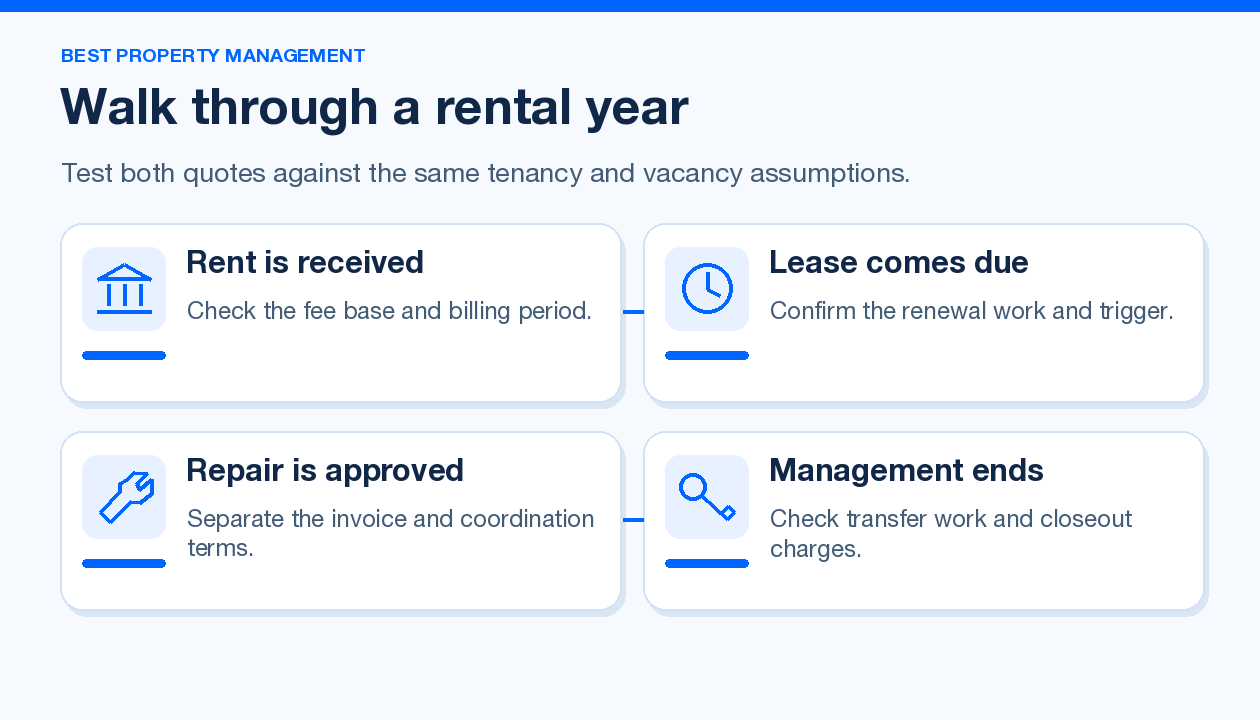
Then add the costs that reasonably belong in each scenario. Treat “to be quoted” as an open item. Our Brentwood comparison guide shows how to compare the whole arrangement when proposal formats differ.
What charges or obligations can matter when you leave?
Read the duration, renewal, notice and termination provisions before you sign. Ask what happens if the owner sells, changes managers or takes over management. Identify any agreed closeout charge and what it includes. Pay particular attention to the end date when another firm will begin handling rent and maintenance.
Confirm how you will receive the lease records, current balances, open work and final accounting. A proposal that names a fee without explaining what happens next leaves a gap in the handover. Ask who will deal with an approved repair that is still unfinished at the transfer date.
Keep a copy of the actual fee schedule and any agreed revision. If a specific legal obligation or disputed charge is unclear, get advice on the agreement before acting on assumptions.
What should you ask before choosing a manager?
Ask the manager to walk through a typical statement and explain one exception. Try a renewal, a vacancy or a large repair. A good answer should identify the relevant agreement provision, the person responsible and where the record will appear. That gives you something concrete to compare with the other firms.
A low monthly rate may still suit the property if the scope matches your needs. Another proposal may cost more and handle work you otherwise would do yourself. Compare the written terms and your likely annual workload alongside the cost. When an answer changes your decision, ask to have it reflected in the signed documents.
What else do rental owners ask?
Are all additional management charges hidden fees?
A separately listed charge can be legitimate. The comparison depends on knowing when it applies, what it covers and whether it was disclosed in your agreement.
Can a manager charge a fee while a rental is vacant?
Check the written vacancy and billing provisions. Ask what service continues, whether the regular fee changes and whether leasing work is separately priced.
What is the difference between a vendor bill and a maintenance coordination fee?
The vendor bill covers the service or repair. A coordination charge, if the agreement provides one, pays for defined management work such as arranging or overseeing the project.
Should I count a placement fee every year?
Include it in a scenario that calls for a new tenancy. Run a separate continuing-tenancy scenario to compare recurring management and renewal costs.
What if a proposal says an item will be quoted later?
Mark it as open and ask who decides the price, what triggers it and when your approval is required. Keep the uncertainty visible in your estimate.
How can I check a charge after signing?
Compare the statement line with the agreement and supporting record. Request the calculation, invoice or work reference for that specific charge.
Related articles for rental property owners
Fremont Property Management Fees: What Is Included and What Costs Extra?
Brentwood Property Management Fees: How Do You Compare Quotes Beyond the Monthly Rate?
Tracy Property Management Fees: What Should You Budget Beyond the Monthly Fee?
What should you discuss with Best Property?
Bring a current quote or fee schedule and tell us whether the home is currently occupied. Ask for the written scope, billing triggers and any responsibilities you will keep. Review Best Property’s property management services service or contact the Best Property team.
Editorial cover is AI-assisted and illustrative. Check the agreement and the rules that apply to your property.
Blog
Company News
Landlord Resources
Landlords
Legal
Linkedin
Local Market Insights
Maintenance & Repairs
Market
Owners
Property
Property Law & Compliance
Property Management
Rental Property
Tenants
Video
FILTER BY EASTBAY & TRI-VALLEY CITIES
AB 1482
AI Property Management
AI Rental Fraud
Antioch Property Management
Applicant Data Security
Applicant Information
Applicant Screening
Applicant Verification
Bank Statement Fraud
Battery Recalls
Brentwood
Brentwood property management
California Insurance
California Landlord Laws
California Property Management
California Rent Increase
Central Valley Property Management
Concord Property Management
Credit Reports
Danville Property Management
Danville rentals
Desert Hot Springs Property Management
Desert Property Maintenance
Desert Rentals
Document Fraud
Dublin property management
E-Bike Safety
East Bay Landlords
East Bay Lease Renewals
East Bay property management
East Bay Rental Market
East Bay Rental Owners
East Bay Rental Property Maintenance
East Bay Rental Property Management
East Bay rental tips
East Bay Rentals
EV Charging
Eviction Notices
Eviction Support
Fair Housing
Fake Pay Stubs
Fall Leasing
find a property manager
Fremont
Fremont property management
full service property management
Full-Service Property Management
Good Tenants
Hayward Property Management
Hayward rentals
Heat Pump Water Heaters
hiring a property manager
HOA Compliance
HOA Rental Management
HOA Rentals
Home Insurance Costs
Human Oversight
Identity Verification
Income Verification
Indian Wells Property Management
Inherited Rental Property
Landlord Compliance
Landlord Data Security
Landlord Insurance
Landlord Resources
Landlord Tips
Lease Renewal Strategy
Lease Renewals
Leasing Fees
Leasing Services
Livermore
Livermore property management
Livermore Rentals
Local Development
Local Market Insights
Local Rental Support
Long-Term Rentals
Luxury Rentals
maintenance coordination
Maintenance Response
Management Services
Manteca Property Management
Milpitas Property Management
Mountain House Property Management
New Housing San Ramon
Newark CA Property Management
Oakley Property Management
Online Rent Payments
Owner Onboarding
owner reporting
Palm Desert Property Management
Palm Springs Area Property Management
Palm Springs Property Management
Palm Springs Rentals
Pittsburg CA Property Management
Pleasanton property management
Pleasanton rentals
Preventive Maintenance
Property Inspections
Property Maintenance
Property Management
Property Management Companies
Property Management Fees
Property Management Services
Property Management Transition
Property Manager
Rancho Mirage Property Management
Real Estate
real estate investing
Redfin Rentals
Remote Property Management
Rent Collection
Rent Control
Rent Reporting
Rent Trends
Rental Application Fraud
Rental Application Privacy
Rental Competition
Rental Fee Transparency
Rental Fees
Rental Fraud
Rental History
Rental Inspections
Rental Internet
rental leasing
Rental Market Analysis
Rental Market Trends
Rental Marketing
Rental Pricing
Rental Property
Rental Property Expenses
Rental Property Maintenance
rental property owners
rental property ROI
Renter Choice
Renter Experience
Repair Coordination
Resident Portal
Residential Leasing
Roommate Management
San Lorenzo Property Management
San Ramon Landlords
San Ramon Orchards
San Ramon property management
San Ramon Rental Market
Screening Red Flags
Seasonal Rentals
Security Deposits
Sell or Rent
Silicon Valley Rentals
single family rentals
Single-Family Rentals
Tenant Background Checks
Tenant Communication
Tenant Complaints
Tenant Expectations
Tenant Issues
Tenant Placement
Tenant Protection Act
Tenant Retention
tenant screening
Tenant Screening Data Security
Tenant Screening Fraud
Tenant Screening Red Flags
Tenant Turnover
Tracy Property Management
Tri-Valley
Tri-Valley Housing Market
Tri-Valley property management
Tri-Valley Rentals
Union City Property Management
Vacation Rental Management
Wildfire Risk
Winter Rental Safety
Zillow Rentals
 FILTER
 SEARCH BLOG