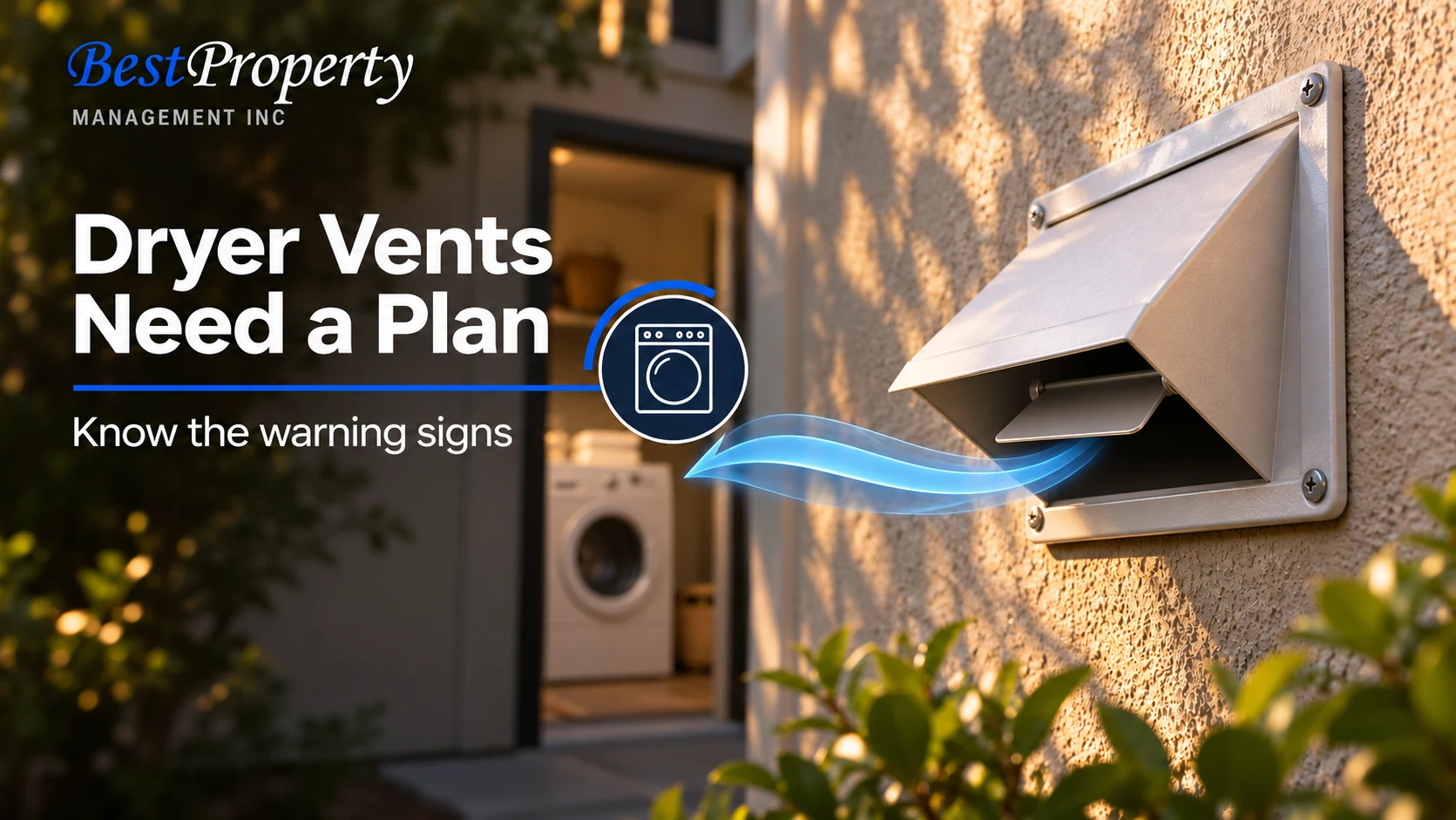
Dryer Vents in Rentals: Who Checks Them and Which Warning Signs Matter?
The dryer still runs, but a normal load now needs another cycle. It is tempting to keep pressing start. In a rental, that change deserves a clearer question: is the issue with the appliance, the vent, the load or something else that needs assessment?
Report unusual drying performance, heat or warning messages and confirm who maintains both the machine and its exhaust path. Do not assume that cleaning the lint filter proves the entire system is clear.
This article is part of our indoor winter rental guide. It covers observations and responsibility questions, not instructions to disconnect a gas dryer, open electrical equipment or dismantle a building duct.
Notice a change from normal operation
Useful observations include longer drying times, a warning message, unusual heat or a change in the machine’s behavior. Record when the change started and whether it happens across ordinary loads.
Those symptoms do not prove a blocked vent. The appliance, load, controls or installation may need review. A factual report lets the appropriate service provider investigate instead of inheriting an unsupported diagnosis.
If there is smoke, fire, a burning smell or another immediate hazard, stop treating the problem as a routine performance issue. Move to safety and use the appropriate emergency route. Do not keep operating the machine to collect more evidence.
Separate routine lint care from vent service
The U.S. Fire Administration’s clothes dryer safety guidance emphasizes lint-filter care, suitable installation and attention to the vent. These are connected responsibilities, but they are not the same task.
Residents should follow the manufacturer’s instructions for permitted routine care, including the lint filter. A filter that looks clean does not establish the condition of concealed ducting or an exterior termination.
Duct cleaning, appliance movement, gas connections and electrical work may require a qualified service provider. Do not pull out a heavy machine or disconnect equipment just because an online checklist describes vent maintenance.
Clarify the ownership and responsibility boundary
A resident may own the dryer while the home supplies the vent connection. An owner may supply both. In a condominium, a shared or association-controlled component can add another responsibility layer.
| Component | Question to ask | Why the answer matters |
|---|---|---|
| Dryer appliance | Who owns and services it? | Determines the correct repair contact |
| Flexible connection | Who inspects or replaces it? | Requires an appropriate installation plan |
| Building duct | Who maintains the exhaust route? | May involve the owner or association |
| Exterior outlet | Who has safe, authorized access? | May be inaccessible to a resident |
The lease, property documents and actual installation need to be considered together. Do not infer that a resident-owned machine makes all building vent maintenance the resident’s job.
Our HOA responsibility guide helps owners frame the shared-building questions before authorizing work. The service plan should also address access rather than assuming someone can reach a roof or high exterior wall safely.
Send a report that helps schedule the right visit
Describe the change, the appliance and the relevant history. If the machine displays a code, quote it accurately or supply a safe photo. Include whether the dryer is owner- or resident-supplied if you know.
A practical example is: “The dryer has needed two cycles for the last three normal loads. This is a change from its usual operation. The display shows the attached message. Please confirm who should assess the appliance and vent.”
Do not copy details into a report unless they are true. Keep private belongings or unrelated personal records out of photos. If there was prior service, include the case number so that the next person can see what was already checked.
Our recurring repair guide explains how a connected history helps when the symptom returns after an initial visit.
What an owner should ask the service provider
Ask what was inspected, what was found and whether the recommendation concerns the appliance, its connection or the building vent. A statement that a machine was reset does not explain every recurring drying problem.
If work requires access to a common area or association-controlled component, obtain the appropriate authorization. If another trade is needed, keep that recommendation visible rather than marking the whole concern resolved.
A maintenance record should also say what residents may resume using and whether a follow-up is needed. Avoid inventing a universal cleaning interval for every installation. Use the manufacturer guidance, actual conditions and qualified service recommendations to set the property’s plan.
Keep ordinary use within the instructions
Do not overload the machine or use it contrary to the manufacturer’s directions. Follow the instructions for fabrics and any items that need special handling. A rental checklist is not a substitute for the appliance manual.
Keep the area accessible and do not store items in a way that blocks appropriate service access. Residents should not alter a vent route or terminate exhaust indoors to avoid an inconvenient maintenance appointment.
If the machine is not to be used pending inspection, follow that instruction and ask the property contact about the next step. Do not assume that a temporary pause establishes a particular reimbursement or rent remedy without reviewing the actual arrangement and applicable law.
Make dryer care part of the seasonal plan
A useful plan identifies the routine resident instructions, the qualified service contact and the responsible party for the building vent. It also records the last relevant assessment and any open recommendation.
That is more useful than a checkbox reading “laundry checked.” The record should allow a different person to understand what was actually reviewed.
Best Property’s property maintenance services can be discussed with the office serving the home. Confirm the property’s actual service arrangement. Our winter safety pillar connects this task to indoor heating and moisture reporting so that the quieter maintenance issues receive attention before repeated use hides a growing problem.
Frequently Asked Questions
Does a clean lint filter mean the dryer vent is clear?
No. The filter and exhaust path are separate parts of the system. Follow routine filter-care instructions and report changes that may need an appropriate assessment.
What should I report if drying takes longer?
Record the change from normal operation, affected loads, any displayed message and relevant service history. Do not assume a single cause.
Can a tenant pull out the dryer to inspect the vent?
Do not move or disconnect equipment to investigate unless an authorized, appropriate process specifically permits it. Gas, electrical and heavy-appliance work may require qualified service.
Who maintains the vent if I own the dryer?
Confirm the lease, property documents and actual installation. Appliance ownership does not automatically settle responsibility for a building or association-controlled exhaust route.
Is there one cleaning interval for every rental dryer vent?
No universal interval is established here. Use manufacturer instructions, the installation’s conditions and qualified service recommendations to plan maintenance.
What if the dryer smells like burning?
Treat a possible hazard seriously. Stop use if safe, move away from danger and contact emergency services or the appropriate urgent property route as circumstances require.
What should a completed service record include?
The components assessed, findings, work performed and any remaining recommendation. It should distinguish an appliance issue from a vent or building-system concern.
Can a dryer vent be redirected indoors?
Do not improvise changes to the exhaust arrangement. Follow the manufacturer’s instructions and obtain the appropriate authorization and qualified installation advice.
Related Articles
Brentwood Preventive Maintenance: Which Rental Repairs Should You Schedule Before They Become Emergencies? For building a useful preventive-maintenance record.
Fremont Rental Property Maintenance: Should You Repair, Replace or Monitor a Recurring Problem? For handling a performance problem that returns after service.
Fremont Condo Property Management: Who Handles Tenant Repairs and HOA Responsibilities? For condominium and association responsibility questions.
Best Guide to Rental Property Inspections in the East Bay: Timing, Reports and Owner Oversight For distinguishing an inspection record from a completed repair.
Blog
Company News
Landlord Resources
Landlords
Legal
Linkedin
Local Market Insights
Maintenance & Repairs
Market
Owners
Property
Property Law & Compliance
Property Management
Rental Property
Tenants
Video
FILTER BY EASTBAY & TRI-VALLEY CITIES
AB 1482
AI Property Management
AI Rental Fraud
Antioch Property Management
Applicant Data Security
Applicant Information
Applicant Screening
Applicant Verification
Bank Statement Fraud
Brentwood
Brentwood property management
California Insurance
California Landlord Laws
California Property Management
California Rent Increase
Central Valley Property Management
Concord Property Management
Credit Reports
Danville Property Management
Danville rentals
Desert Hot Springs Property Management
Desert Property Maintenance
Desert Rentals
Document Fraud
Dublin property management
East Bay Landlords
East Bay Lease Renewals
East Bay property management
East Bay Rental Market
East Bay Rental Owners
East Bay Rental Property Maintenance
East Bay Rental Property Management
East Bay rental tips
East Bay Rentals
EV Charging
Eviction Notices
Eviction Support
Fair Housing
Fake Pay Stubs
Fall Leasing
find a property manager
Fremont
Fremont property management
full service property management
Full-Service Property Management
Good Tenants
Hayward Property Management
Hayward rentals
hiring a property manager
HOA Compliance
HOA Rental Management
HOA Rentals
Home Insurance Costs
Human Oversight
Identity Verification
Income Verification
Indian Wells Property Management
Inherited Rental Property
Landlord Compliance
Landlord Data Security
Landlord Insurance
Landlord Resources
Landlord Tips
Lease Renewal Strategy
Lease Renewals
Leasing Fees
Leasing Services
Livermore
Livermore property management
Livermore Rentals
Local Development
Local Market Insights
Local Rental Support
Long-Term Rentals
Luxury Rentals
maintenance coordination
Maintenance Response
Management Services
Manteca Property Management
Milpitas Property Management
Mountain House Property Management
New Housing San Ramon
Newark CA Property Management
Oakley Property Management
Online Rent Payments
Owner Onboarding
owner reporting
Palm Desert Property Management
Palm Springs Area Property Management
Palm Springs Property Management
Palm Springs Rentals
Pittsburg CA Property Management
Pleasanton property management
Pleasanton rentals
Preventive Maintenance
Property Inspections
Property Maintenance
Property Management
Property Management Companies
Property Management Fees
Property Management Services
Property Management Transition
Property Manager
Rancho Mirage Property Management
Real Estate
real estate investing
Redfin Rentals
Remote Property Management
Rent Collection
Rent Control
Rent Trends
Rental Application Fraud
Rental Application Privacy
Rental Competition
Rental Fees
Rental Fraud
Rental History
Rental Inspections
Rental Internet
rental leasing
Rental Market Analysis
Rental Market Trends
Rental Marketing
Rental Pricing
Rental Property
Rental Property Expenses
Rental Property Maintenance
rental property owners
rental property ROI
Renter Choice
Renter Experience
Repair Coordination
Resident Portal
Residential Leasing
Roommate Management
San Lorenzo Property Management
San Ramon Landlords
San Ramon Orchards
San Ramon property management
San Ramon Rental Market
Screening Red Flags
Seasonal Rentals
Security Deposits
Sell or Rent
Silicon Valley Rentals
single family rentals
Single-Family Rentals
Tenant Background Checks
Tenant Communication
Tenant Complaints
Tenant Expectations
Tenant Issues
Tenant Placement
Tenant Protection Act
Tenant Retention
tenant screening
Tenant Screening Data Security
Tenant Screening Fraud
Tenant Screening Red Flags
Tenant Turnover
Tracy Property Management
Tri-Valley
Tri-Valley Housing Market
Tri-Valley property management
Tri-Valley Rentals
Union City Property Management
Vacation Rental Management
Wildfire Risk
Winter Rental Safety
Zillow Rentals
 FILTER
 SEARCH BLOG