Rental Property Inspection Reports: What Photos and Findings Should Owners Receive?
A rental property inspection report should identify the date and visit type, show each relevant condition in context and close up, describe what was observed and assign a priority and next action. Owners should be able to tell where the issue is, who will follow up and what will count as resolution.
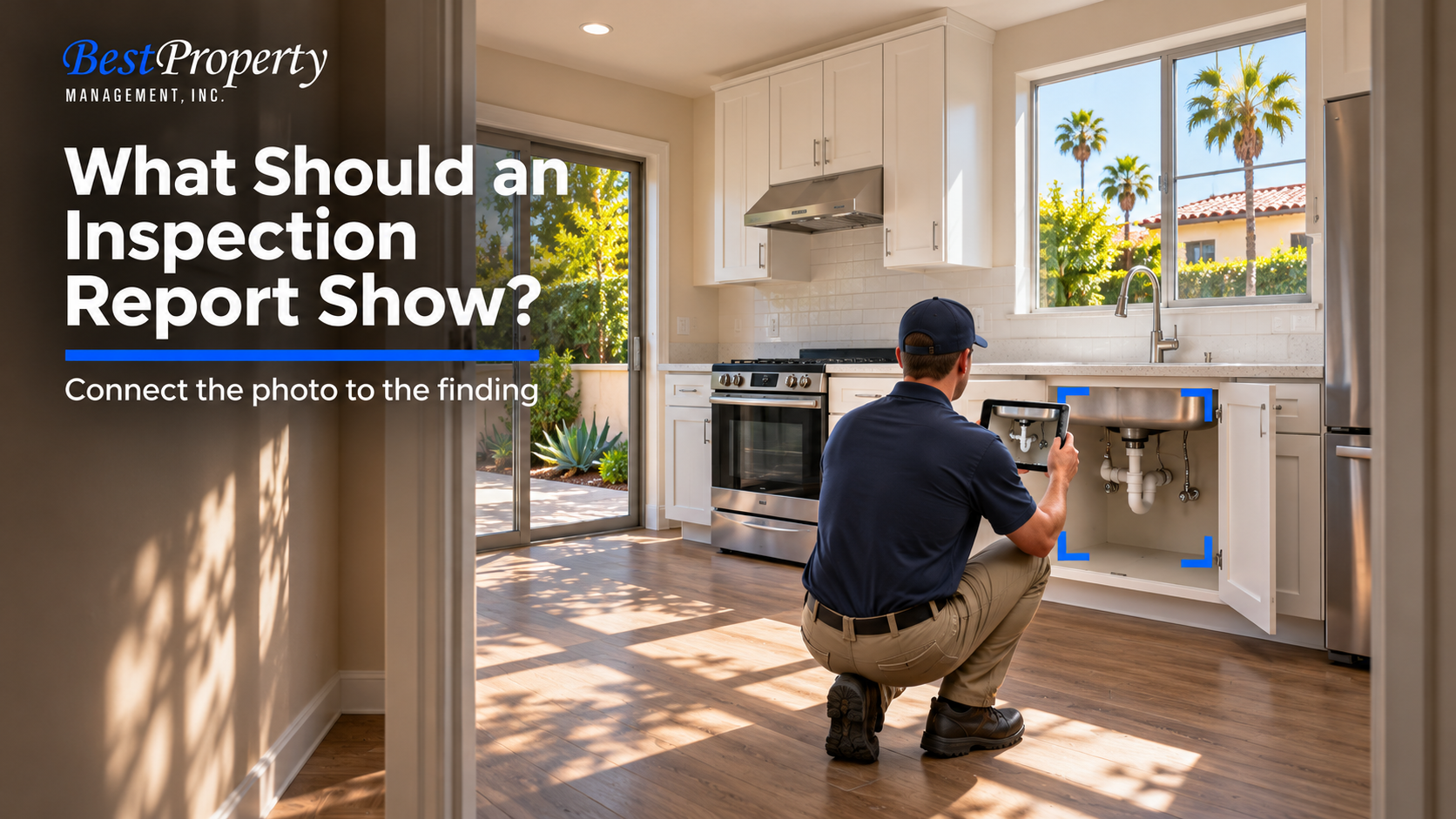
A photo labeled “kitchen” might show a dark mark under a sink. Is it under the drain, beside the dishwasher or on the cabinet floor? Was there active moisture during the visit? Does anyone need to return? A useful report puts those details beside the image so the next person can act on it.
What photos should an owner receive from an inspection?
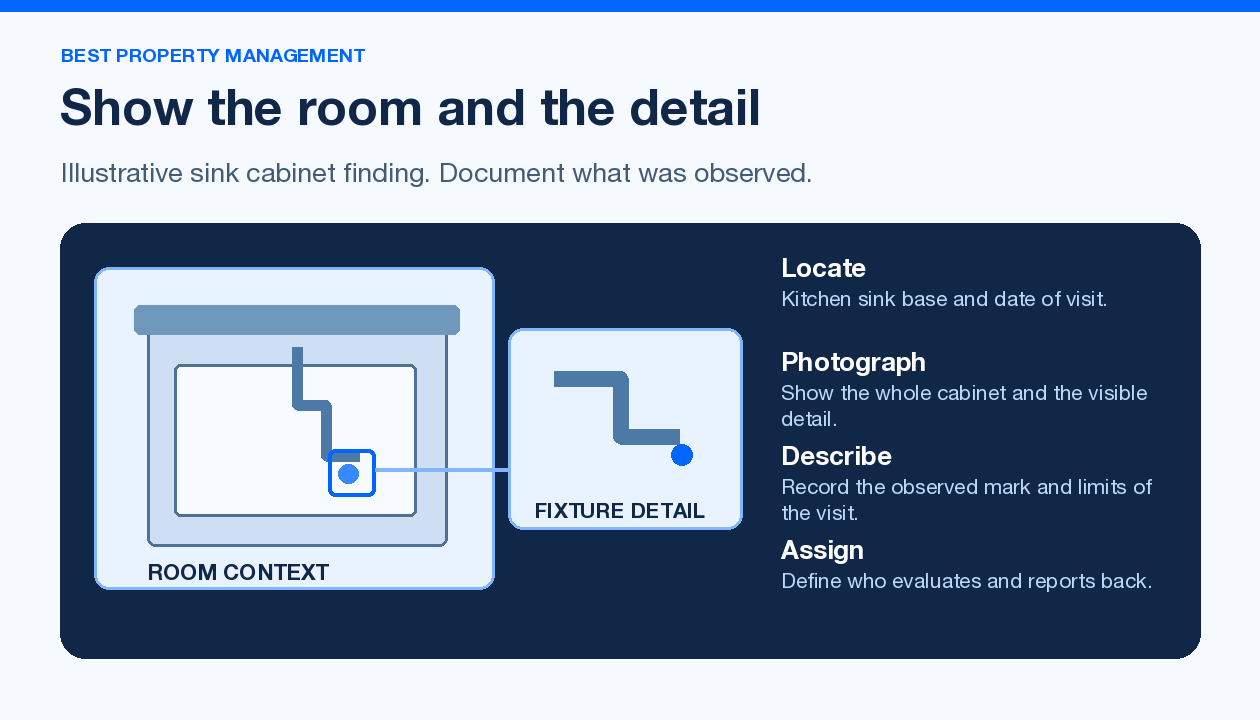
Ask for a wide view establishing the room or exterior area and a detail view where condition matters. Each photo should have enough context to identify the fixture, surface or point of access. Label it by location and date and link it to the corresponding finding. Comparable viewpoints can help when the same condition is documented on more than one visit.
In a kitchen, a wide image of the sink cabinet locates the issue. A close view can show where a mark or visible moisture was found. The note should identify what could be observed and any access limitation. Avoid casually attributing cause, timing or responsibility from one picture.
Review what the manager can appropriately photograph and share under the circumstances. An occupied home has different privacy and access considerations from an empty turnover. Discuss the protocol, how tenant information is protected and who will have access. Our rental inspection guide explains how the visit and report can fit into routine oversight.
What should the report say next to each finding?
Ask for the room or area, the specific feature, an observation and a photo reference. Add whether the item calls for immediate attention, normal follow-up or monitoring based on the actual circumstances and responsible person’s assessment. Document any reason the report cannot establish the full condition.
For example, “water marks visible on the cabinet base beneath the kitchen sink, see photo K-04” provides a more useful starting point than “plumbing bad.” If no active leak was observed, say what was checked and when. The next step could be evaluation by an appropriate contractor if the condition warrants it.
The goal is to separate observation from explanation. If a vendor later identifies the cause, add that finding to the record with the date and source. Our repair, replace or monitor guide helps owners think through the decision that may follow a recurring condition.
How should findings be prioritized?
Ask which issues the manager considers urgent under its role, what it has already done and who is expected to act next. A safety or habitability concern should reach the appropriate person through the established process. A routine wear observation may simply establish a baseline. For specialized conditions, ask about qualified evaluation.
| Report field | Example entry | Why it matters |
|---|---|---|
| Date and visit type | Scheduled condition visit with date. | Establishes the purpose and timing. |
| Location | Kitchen sink base, right side. | Helps another person find the condition. |
| Observation | Visible mark on cabinet shelf. | Distinguishes the record from a diagnosis. |
| Photo links | K-03 wide view and K-04 detail. | Connects evidence with the finding. |
| Next action | Manager to request evaluation and report back. | Identifies responsibility and a checkpoint. |
| Closeout | Work order, completion note and follow-up date. | Shows what happened after the inspection. |
Ask the manager how it separates a routine report from an issue that requires a faster update. If an observation is actionable, it should identify who takes the next step. The maintenance pillar provides related guidance for planning a response.
How do inspection findings turn into completed work?
When a finding warrants action, link it to a work order. Ask for the responsible person, proposed scope and approval status. After the visit, retain what the contractor found, what was done and whether anything remains open. Match the invoice to the work when the cost is posted.
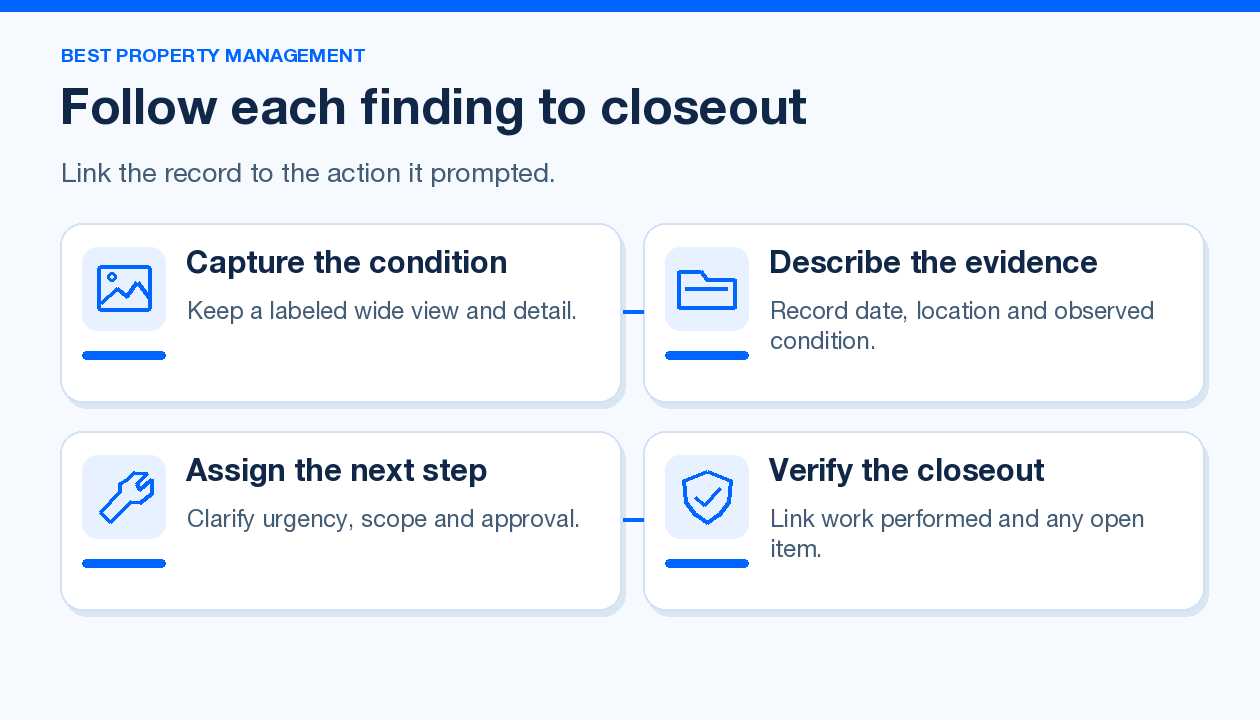
As an example, a cabinet observation could lead to a qualified plumbing evaluation. The eventual report might identify a fitting that was repaired and whether further monitoring is warranted. Attach that update to the original finding. The owner can then follow the sequence through the invoice without piecing together unrelated images and messages.
For any owner decision, ask what evidence supports it and what will be supplied after authorization. A status of “work ordered” is useful. Clarify when it should become “work verified” or receive a follow-up date.
Do move-in, periodic and move-out reports serve different purposes?
A move-in record generally documents starting condition. A periodic condition visit can flag visible maintenance needs and access limitations. A move-out file can document condition at the end of the tenancy and help plan turnover work. Ask how the manager defines each inspection and when it is available.
If comparing move-in and move-out images, look for the same room and feature. Changes in lighting and angle can make comparisons harder. Ask the manager to explain what it can verify from the materials and what remains uncertain. Our move-out documentation guide has more detail on organizing a turnover record.
Handle security deposit decisions under the applicable rules and documented facts. The California Attorney General’s tenant resources describe general protections and obligations. A report helps document condition and does not determine the legal treatment of a particular charge on its own.
How do you compare reporting quality between managers?
Request redacted reports from the same visit type. Check whether you can locate each issue, understand the evidence and see its next step. Ask how access limitations and tenant communications are handled and whether work records remain linked after the visit.
Ask who prepares the report, when the owner receives it and what happens when a serious issue cannot wait. Check whether reports remain accessible after a management transition. A frequency promise is easier to evaluate when you know exactly what each completed visit produces.
What should you discuss before the next property visit?
Write down the decisions the report needs to support. That might be whether to obtain a vendor evaluation, which work to approve or what condition to document before a new tenancy. Share known issues and ask which items can appropriately be observed.
Confirm the scope and access arrangement. Ask who takes the photos, how findings are prioritized and how you will know a follow-up was completed. If a full technical evaluation is needed, discuss the right professional and what information the management report can provide to that person.
What else do rental owners ask?
How many photographs should a report include?
Ask for enough evidence to orient the reader and document relevant conditions. A wide view and a detail view are often more helpful than several unlabeled images.
What if an area could not be inspected?
The report should identify the area and limitation. Ask whether a follow-up is appropriate and who will arrange it.
Is a routine inspection a technical diagnosis?
Routine management observations document visible conditions within the visit scope. Some concerns require qualified evaluation beyond that scope.
Should photos be taken from the same angle each time?
Comparable angles can help when tracking a condition. Label the date and location, and add detail images where they help explain what changed.
What if a report shows a potentially urgent concern?
Ask who is responsible for assessing and acting under the appropriate process. Request an update and keep the work and communication records linked.
How can I tell whether a finding was resolved?
Ask for the work order, completion evidence, invoice and any limitations or monitoring needs. Keep the information with the original report.
Related articles for rental property owners
Best Guide to Rental Property Inspections in the East Bay: Timing, Reports and Owner Oversight
Livermore Move-Out Inspections: What Should Owners Document Before Repairs Begin?
Fremont Rental Property Maintenance: Should You Repair, Replace or Monitor a Recurring Problem?
What should you discuss with Best Property?
Ask to see a redacted report from the type of visit you need. Confirm the report scope, photo handling, update timing and process for assigning follow-up. Review Best Property’s move in inspections service or contact the Best Property team.
Editorial cover is AI-assisted and illustrative. Check the agreement and the rules that apply to your property.
Blog
Company News
Landlord Resources
Landlords
Legal
Linkedin
Local Market Insights
Maintenance & Repairs
Market
Owners
Property
Property Law & Compliance
Property Management
Rental Property
Tenants
Video
FILTER BY EASTBAY & TRI-VALLEY CITIES
AB 1482
AI Property Management
AI Rental Fraud
Antioch Property Management
Applicant Data Security
Applicant Information
Applicant Screening
Applicant Verification
Bank Statement Fraud
Battery Recalls
Brentwood
Brentwood property management
California Insurance
California Landlord Laws
California Property Management
California Rent Increase
Central Valley Property Management
Concord Property Management
Credit Reports
Danville Property Management
Danville rentals
Desert Hot Springs Property Management
Desert Property Maintenance
Desert Rentals
Document Fraud
Dublin property management
E-Bike Safety
East Bay Landlords
East Bay Lease Renewals
East Bay property management
East Bay Rental Market
East Bay Rental Owners
East Bay Rental Property Maintenance
East Bay Rental Property Management
East Bay rental tips
East Bay Rentals
EV Charging
Eviction Notices
Eviction Support
Fair Housing
Fake Pay Stubs
Fall Leasing
find a property manager
Fremont
Fremont property management
full service property management
Full-Service Property Management
Good Tenants
Hayward Property Management
Hayward rentals
Heat Pump Water Heaters
hiring a property manager
HOA Compliance
HOA Rental Management
HOA Rentals
Home Insurance Costs
Human Oversight
Identity Verification
Income Verification
Indian Wells Property Management
Inherited Rental Property
Landlord Compliance
Landlord Data Security
Landlord Insurance
Landlord Resources
Landlord Tips
Lease Renewal Strategy
Lease Renewals
Leasing Fees
Leasing Services
Livermore
Livermore property management
Livermore Rentals
Local Development
Local Market Insights
Local Rental Support
Long-Term Rentals
Luxury Rentals
maintenance coordination
Maintenance Response
Management Services
Manteca Property Management
Milpitas Property Management
Mountain House Property Management
New Housing San Ramon
Newark CA Property Management
Oakley Property Management
Online Rent Payments
Owner Onboarding
owner reporting
Palm Desert Property Management
Palm Springs Area Property Management
Palm Springs Property Management
Palm Springs Rentals
Pittsburg CA Property Management
Pleasanton property management
Pleasanton rentals
Preventive Maintenance
Property Inspections
Property Maintenance
Property Management
Property Management Companies
Property Management Fees
Property Management Services
Property Management Transition
Property Manager
Rancho Mirage Property Management
Real Estate
real estate investing
Redfin Rentals
Remote Property Management
Rent Collection
Rent Control
Rent Reporting
Rent Trends
Rental Application Fraud
Rental Application Privacy
Rental Competition
Rental Fee Transparency
Rental Fees
Rental Fraud
Rental History
Rental Inspections
Rental Internet
rental leasing
Rental Market Analysis
Rental Market Trends
Rental Marketing
Rental Pricing
Rental Property
Rental Property Expenses
Rental Property Maintenance
rental property owners
rental property ROI
Renter Choice
Renter Experience
Repair Coordination
Resident Portal
Residential Leasing
Roommate Management
San Lorenzo Property Management
San Ramon Landlords
San Ramon Orchards
San Ramon property management
San Ramon Rental Market
Screening Red Flags
Seasonal Rentals
Security Deposits
Sell or Rent
Silicon Valley Rentals
single family rentals
Single-Family Rentals
Tenant Background Checks
Tenant Communication
Tenant Complaints
Tenant Expectations
Tenant Issues
Tenant Placement
Tenant Protection Act
Tenant Retention
tenant screening
Tenant Screening Data Security
Tenant Screening Fraud
Tenant Screening Red Flags
Tenant Turnover
Tracy Property Management
Tri-Valley
Tri-Valley Housing Market
Tri-Valley property management
Tri-Valley Rentals
Union City Property Management
Vacation Rental Management
Wildfire Risk
Winter Rental Safety
Zillow Rentals
 FILTER
 SEARCH BLOG