Tracy Remote Property Management: How Can You Track Rent, Repairs and Inspections From Out of Town?
Remote ownership of a Tracy rental works better when reporting separates routine activity from decisions that need your attention. A portal can store documents, but it does not automatically explain an unfamiliar expense or show which repair remains open. The owner needs a usable view of money, condition and pending actions.
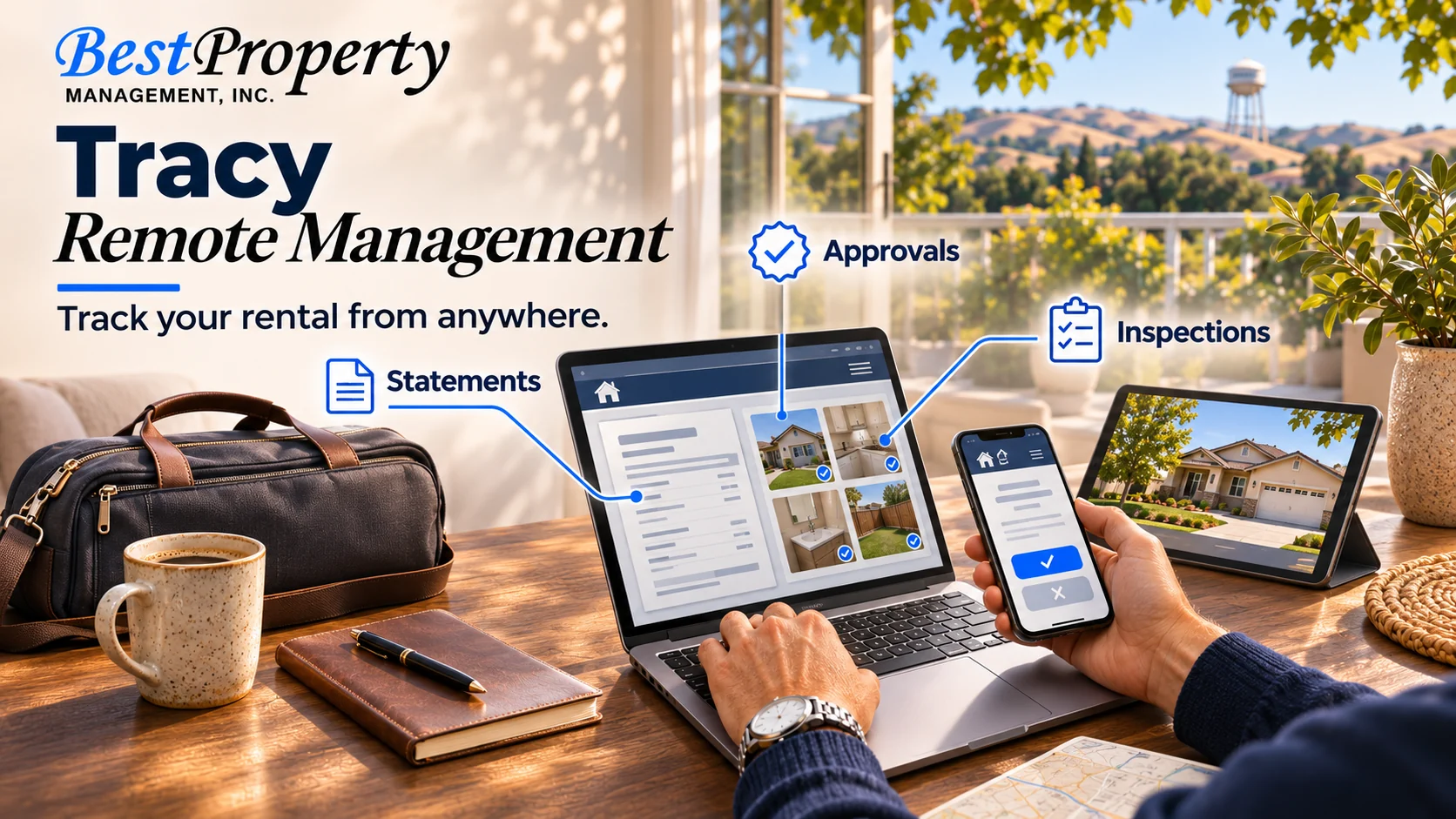
To oversee a Tracy rental from out of town, establish a clear reporting process for rent, expenses, maintenance approvals, inspection findings and upcoming lease decisions. Agree on the usual contact, escalation coverage and the records supporting each decision. Remote management should reduce the need to reconstruct events from scattered messages, not simply create more notifications.
Which Information Should a Remote Owner Receive?
Start with the questions you need answered: what happened, what remains open and what decision is needed? Apply them to income, expenses, repair work and the next tenancy event. This creates a more useful reporting structure than asking for every message the manager sends.
Different records answer different questions. A statement explains transactions. A work order explains a repair. An inspection report records observed condition. Ask how those records connect when one issue affects more than one area.
Our Tracy property management guide explains the overall service relationship. The remote rental management guide adds broader questions for owners overseeing a home from another location.
How Can You Track Rent and Expenses Without Guessing?
Ask the manager to distinguish funds received from funds expected. The owner statement should let you follow rent, management charges, property expenses and retained funds through to the distribution. An unexplained balance should trigger a question, not an assumption about missing money.
| Record | Owner question it answers | Useful follow-up |
|---|---|---|
| Owner statement | What money moved during the period? | Reconcile an unfamiliar line item |
| Tenant ledger | What is the payment status? | Verify an exception before acting |
| Work order | What repair was requested and approved? | Review scope and completion |
| Inspection report | What condition was observed? | Assign evaluation or further work |
The rent collection and reporting guide explains the underlying process. Request a sample statement before hiring so you can judge whether the information is understandable from a distance.
What Should a Remote Repair Approval Include?
An approval request should explain the issue, relevant findings, proposed scope and decision needed. Photographs can help provide context, but they do not replace diagnosis where qualified assessment is necessary. The owner should know what is uncertain before approving a solution.
Agree on spending authority and escalation before a problem occurs. Ask what happens when you are unavailable or in a different time zone. A process that depends on an immediate reply to every message may not fit your circumstances.
Our East Bay maintenance guide explains work history and follow-up. An illustrative Tracy update might connect a tenant’s report, a vendor’s findings and a proposed repair in one record, allowing the remote owner to decide without piecing together separate conversations.
How Should Inspection Findings Become Actions?
Ask for reports that distinguish observations, limitations and recommendations. A photograph shows a condition at a point in time; it does not establish the cause of every concern. Where further evaluation is needed, the report should say so.
Transfer follow-up items into an action list with a responsible person. The owner should be able to see whether an item is awaiting assessment, approval or completion. A delivered report is not the same as a completed repair plan.
Our rental inspection guide covers the reporting framework. For a remote owner, the connection between a report and the next action is especially important because you may not be able to visit the home yourself.
How Can You Keep Communication and Records Secure?
Use the agreed channel for approvals and confirm unfamiliar requests through a known contact. Avoid sending sensitive documents or payment changes in response to an unexpected message without appropriate verification. The Federal Trade Commission's phishing guidance provides official information about deceptive messages.
Limit access to the information needed for the task. A vendor does not need a full tenant application packet to repair a fixture. Our applicant data security guide explains why record handling deserves attention even when the owner is far from the property.
Ask how the manager provides coverage and verifies changes to contact or payment instructions. Clear procedures help protect continuity without requiring the owner to inspect every routine communication.
What Should You Agree on Before Leaving Management to a Local Team?
Confirm the service scope, reporting process, approval authority and escalation contact. Explain the decisions you want to retain and when you are usually unavailable. Ask for an example showing how an unresolved issue moves forward when the regular manager is away.
Provide organized records at onboarding. The documents-for-a-new-manager guide can help you prepare leases, condition information and open-work history. A local team cannot fill every gap simply because it is physically near the home.
Discuss Best Property Management’s management services for your rental. Owner takeaway: Remote oversight works through clear evidence, assigned decisions and dependable follow-up, not a promise that the owner will never need to be involved.
Frequently Asked Questions About Remote Tracy Property Management
Is a portal enough to manage a rental remotely?
A portal can help store records, but the process matters more than the interface. Ask how transactions are explained, approvals are tracked and unresolved work is escalated. You should understand the next action without searching through unrelated files or assuming a status label tells the whole story.
How often should I receive updates?
Agree on a reporting arrangement that fits the service and property. Routine accounting and exception updates may serve different purposes. Rather than choosing a universal frequency, ask how important issues reach you and how you can identify decisions that require attention.
What if I cannot respond to a repair request immediately?
Set approval authority and escalation procedures in advance. The agreement should explain what the manager can do and how urgent conditions are handled. Provide a reliable contact arrangement and discuss coverage when you are away or unavailable, rather than improvising during the event.
Can photos replace an inspection or specialist assessment?
No. Photos provide context but have limits. Ask what was actually observed, what the visit covered and when qualified assessment is needed. A remote owner should not be encouraged to diagnose a hidden condition or approve a technical solution from a picture alone.
Should I keep all tenant documents on my own computer?
Ask which records you need and how they can be stored securely. Avoid unnecessary copies of sensitive applicant information. A controlled, organized file and a clear retention process are more useful than automatically downloading every document into an unsecured personal folder.
What should I do with an unexpected payment-change email?
Verify it through an established contact and the agreed process before acting. Do not rely solely on a familiar-looking name or logo. Official FTC phishing resources explain common warning signs. The management relationship should include a clear way to confirm unusual instructions.
Can I remain involved in major decisions?
Yes, define the decisions you retain and the information you need to make them. Ongoing management can coordinate operations while preserving agreed owner approvals. The arrangement should be documented so the manager understands when to act independently and when to request your input.
How do I prepare for remote management in Tracy?
Organize the lease, statements, repair history, access information and open issues. Explain your location, availability and preferred decision process. Use the office contact page to discuss a scope that supports practical oversight from out of town.
Related Articles
Tracy property management services explains the full operating arrangement.
Remote rental management provides broader owner-oversight guidance.
Rental inspection reports explains evidence and follow-up.
Documents for a new manager helps organize the onboarding record.
Blog
Company News
Landlord Resources
Landlords
Legal
Linkedin
Local Market Insights
Maintenance & Repairs
Market
Owners
Property
Property Law & Compliance
Property Management
Rental Property
Tenants
Video
FILTER BY EASTBAY & TRI-VALLEY CITIES
AB 1482
AI Property Management
AI Rental Fraud
Antioch Property Management
Applicant Data Security
Applicant Information
Applicant Screening
Applicant Verification
Bank Statement Fraud
Brentwood
Brentwood property management
California Insurance
California Landlord Laws
California Property Management
California Rent Increase
Central Valley Property Management
Concord Property Management
Credit Reports
Danville Property Management
Danville rentals
Desert Hot Springs Property Management
Desert Property Maintenance
Desert Rentals
Document Fraud
Dublin property management
East Bay Landlords
East Bay Lease Renewals
East Bay property management
East Bay Rental Market
East Bay Rental Owners
East Bay Rental Property Maintenance
East Bay Rental Property Management
East Bay rental tips
East Bay Rentals
EV Charging
Eviction Notices
Eviction Support
Fair Housing
Fake Pay Stubs
Fall Leasing
find a property manager
Fremont
Fremont property management
full service property management
Full-Service Property Management
Good Tenants
Hayward Property Management
Hayward rentals
hiring a property manager
HOA Compliance
HOA Rental Management
HOA Rentals
Home Insurance Costs
Human Oversight
Identity Verification
Income Verification
Indian Wells Property Management
Inherited Rental Property
Landlord Compliance
Landlord Data Security
Landlord Insurance
Landlord Resources
Landlord Tips
Lease Renewal Strategy
Lease Renewals
Leasing Fees
Leasing Services
Livermore
Livermore property management
Livermore Rentals
Local Development
Local Market Insights
Local Rental Support
Long-Term Rentals
Luxury Rentals
maintenance coordination
Maintenance Response
Management Services
Manteca Property Management
Milpitas Property Management
Mountain House Property Management
New Housing San Ramon
Newark CA Property Management
Oakley Property Management
Online Rent Payments
Owner Onboarding
owner reporting
Palm Desert Property Management
Palm Springs Area Property Management
Palm Springs Property Management
Palm Springs Rentals
Pittsburg CA Property Management
Pleasanton property management
Pleasanton rentals
Preventive Maintenance
Property Inspections
Property Maintenance
Property Management
Property Management Companies
Property Management Fees
Property Management Services
Property Management Transition
Property Manager
Rancho Mirage Property Management
Real Estate
real estate investing
Redfin Rentals
Remote Property Management
Rent Collection
Rent Control
Rent Trends
Rental Application Fraud
Rental Application Privacy
Rental Competition
Rental Fees
Rental Fraud
Rental History
Rental Inspections
Rental Internet
rental leasing
Rental Market Analysis
Rental Market Trends
Rental Marketing
Rental Pricing
Rental Property
Rental Property Expenses
Rental Property Maintenance
rental property owners
rental property ROI
Renter Choice
Renter Experience
Repair Coordination
Resident Portal
Residential Leasing
Roommate Management
San Lorenzo Property Management
San Ramon Landlords
San Ramon Orchards
San Ramon property management
San Ramon Rental Market
Screening Red Flags
Seasonal Rentals
Security Deposits
Sell or Rent
Silicon Valley Rentals
single family rentals
Single-Family Rentals
Tenant Background Checks
Tenant Communication
Tenant Complaints
Tenant Expectations
Tenant Issues
Tenant Placement
Tenant Protection Act
Tenant Retention
tenant screening
Tenant Screening Data Security
Tenant Screening Fraud
Tenant Screening Red Flags
Tenant Turnover
Tracy Property Management
Tri-Valley
Tri-Valley Housing Market
Tri-Valley property management
Tri-Valley Rentals
Union City Property Management
Vacation Rental Management
Wildfire Risk
Winter Rental Safety
Zillow Rentals
 FILTER
 SEARCH BLOG