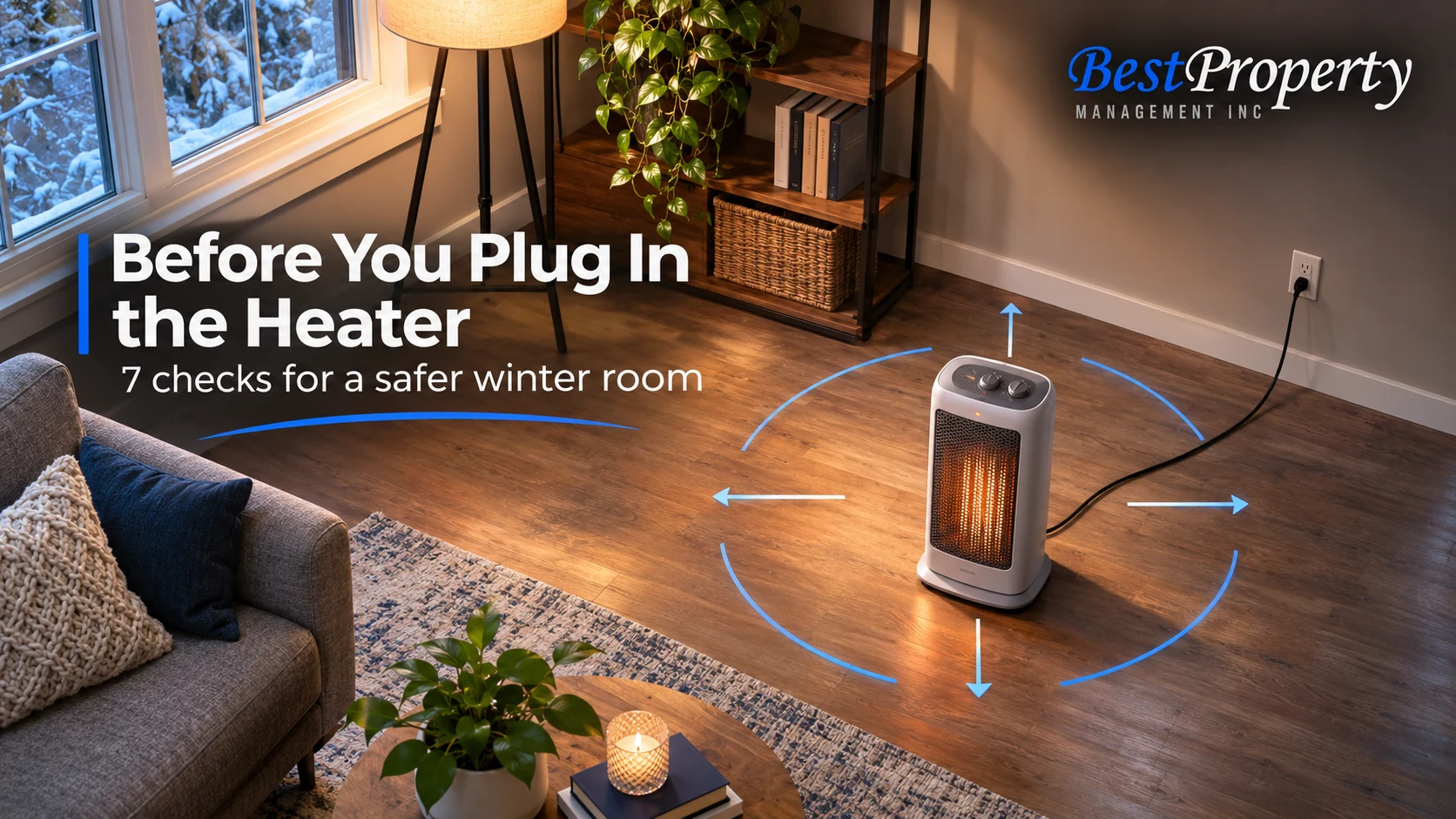
Portable Heaters in Rental Homes: 7 Checks Before You Plug One In
A cold bedroom can make a portable electric heater feel like the fastest answer. Before turning it on, look at the whole setup: the outlet, nearby fabrics, the route people walk and whether the heater will be left running when everyone goes to bed.
Use a portable heater only within the manufacturer’s safety instructions, keep it away from combustible materials and report problems with the home’s installed heat separately. A small appliance should not quietly become a substitute for an unresolved maintenance issue.
This checklist is part of our indoor winter rental safety guide. It concerns portable electric heaters, not DIY repair of furnaces, gas equipment or electrical systems.
1. Check the heater itself
Read the instructions for the actual model, including intended location, clearances and operating restrictions. Check for visible cord or plug damage without opening the appliance.
If the heater is damaged, behaves abnormally or has been recalled, do not continue using it while hoping the problem settles. Use the Consumer Product Safety Commission’s safety and recall resources and manufacturer information for the particular product.
A low price or a familiar brand is not proof that an old or damaged heater is safe. Keep the model information available so that a concern can be checked accurately.
2. Give it clear space
The CPSC’s winter safety guidance advises at least three feet between a portable heater and combustible materials. Follow any greater clearance required by the product.
Look beyond curtains. Bedding, a laundry basket, upholstered furniture, papers and a pet bed can enter the space later. A heater that had clearance in the morning may not have it after someone drops a coat beside it.
Use the stable surface and placement specified by the manufacturer. Do not put a heater where it can be knocked into a walkway or where a child or pet can easily overturn or contact it.
3. Plug it directly into an appropriate wall outlet
CPSC guidance advises plugging electric space heaters directly into a wall outlet rather than an extension cord or power strip. Do not improvise an adapter chain to reach a convenient location.
If the heater cannot be used safely where an appropriate outlet is available, choose another plan. Do not move a heater into a risky position just to keep its cord out of sight.
Residents should not open outlets, test wiring or alter circuits. If an outlet or plug shows concerning heat, damage, sparking or a burning smell, stop use if it is safe to do so and obtain appropriate help. Immediate danger calls for emergency action, not a routine online maintenance report.
4. Keep cords visible and protected
A cord under a rug may look tidier while hiding damage or heat. Follow the appliance instructions and keep the cord arrangement away from pinch points, doorways and places where it could be damaged.
Do not position furniture so that it crushes a plug or cord. Do not use a damaged cord while waiting for a more convenient replacement date.
This is an observation checklist, not an electrical inspection. A licensed professional should evaluate an outlet or circuit concern when needed. The resident’s role is to report what they saw and stop treating an abnormal condition as normal use.
5. Stay awake and present
CPSC advises turning portable heaters off before sleeping. Do not leave one operating unattended because a timer, smart plug or app appears to offer supervision.
A heater’s built-in protective feature is not permission to ignore its instructions. The room and its contents can change while the device is running, and a remote command is not the same as being present.
Plan warmth before bedtime using the home’s appropriate heating system and safe arrangements. If the installed system is not working adequately, report it promptly and ask for the next repair or safety step. Do not use an oven, grill or outdoor fuel-burning device as indoor space heating.
6. Treat alarms and warning signs seriously
Do not disable a smoke or carbon monoxide alarm to make a nuisance stop. Follow the device instructions and the applicable emergency guidance. Carbon monoxide cannot be ruled out by the absence of a smell.
For smoke, fire, a suspected gas leak or another immediate danger, move to safety and contact emergency services or the appropriate utility emergency line. Do not stay to collect evidence for a maintenance ticket.
For a non-emergency equipment concern, record the symptoms and affected room through the property’s current reporting process. Our emergency versus routine repair guide helps explain why a clear description matters.
7. Keep the underlying heating repair open
If a room is cold because the installed heating system is malfunctioning, the maintenance history should show that issue. A resident saying “I bought a heater” should not be mistaken for confirmation that the home’s system has been repaired.
Report when the problem occurs, which rooms are affected and any error message you can observe safely. Do not dismantle the system or adjust equipment outside the resident instructions.
| Situation | Practical next step | Avoid |
|---|---|---|
| Room remains cold | Report the installed heating concern | Treating portable heat as the completed repair |
| Heater cord is damaged | Stop using the appliance | Improvised cord repair |
| No safe outlet location | Ask about a safer heating plan | Extension cords or power strips |
| Immediate fire or electrical danger | Move to safety and seek emergency help | Waiting for a portal reply |
What owners should clarify
Owners and managers can explain the home’s heating controls, the service contact and how a temporary arrangement will be handled while an appropriate repair is coordinated. Avoid promises about response times or reimbursement that are not part of the actual arrangement.
Ask service providers for a finding and a next step, especially when the concern recurs. Our recurring repair guide and maintenance-response article explain why the history matters.
For a Best Property-managed rental, use the appropriate office for current instructions and the property’s emergency repair coordination arrangement. Safe portable-heater use and a functioning home heating system belong in the same conversation, but they are separate tasks.
Frequently Asked Questions
How far should a portable heater be from curtains and bedding?
CPSC advises at least three feet from combustible materials. Follow the product’s instructions, including any greater clearance, and recheck the area as belongings move.
Can I plug a space heater into a power strip?
CPSC advises plugging electric space heaters directly into a wall outlet rather than a power strip or extension cord. Do not improvise a longer connection.
Can I leave a portable heater on while sleeping?
CPSC advises turning it off before sleeping. A timer, app or built-in protective feature is not a substitute for following the operating instructions.
Should I hide the heater cord under a rug?
No. Follow the manufacturer instructions and keep the cord protected from damage. A hidden cord can conceal a problem and should not be used to make an unsafe location appear tidy.
What if an outlet sparks or smells like burning?
Stop using the equipment if safe, avoid the hazard and obtain appropriate help. If there is immediate danger, move to safety and contact emergency services.
Does buying a heater close my heating maintenance request?
It should not be treated as proof that the installed heating system is repaired. Keep the underlying symptoms and repair follow-up documented.
Can I repair a damaged heater cord myself?
Do not improvise electrical repairs. Stop using damaged equipment and follow the manufacturer’s service or replacement instructions.
Who should I contact about a cold room in my rental?
Use the property’s current maintenance or urgent reporting process as the situation requires. Describe the installed system’s symptoms and ask for the appropriate next step.
Related Articles
Who Handles Rental Emergencies When the Office Is Closed for the Holidays? For separating an urgent hazard from a routine repair request.
Fremont Rental Property Maintenance: Should You Repair, Replace or Monitor a Recurring Problem? For keeping repeated heating symptoms connected in the service record.
East Bay Rental Property Maintenance: Does Faster Response Help Reduce Tenant Turnover? For understanding the role of communication in maintenance response.
Top 10 Storm-Season Checks for East Bay Rental Homes For the wider winter and storm preparation checklist.
Blog
Company News
Landlord Resources
Landlords
Legal
Linkedin
Local Market Insights
Maintenance & Repairs
Market
Owners
Property
Property Law & Compliance
Property Management
Rental Property
Tenants
Video
FILTER BY EASTBAY & TRI-VALLEY CITIES
AB 1482
AI Property Management
AI Rental Fraud
Antioch Property Management
Applicant Data Security
Applicant Information
Applicant Screening
Applicant Verification
Bank Statement Fraud
Brentwood
Brentwood property management
California Insurance
California Landlord Laws
California Property Management
California Rent Increase
Central Valley Property Management
Concord Property Management
Credit Reports
Danville Property Management
Danville rentals
Desert Hot Springs Property Management
Desert Property Maintenance
Desert Rentals
Document Fraud
Dublin property management
East Bay Landlords
East Bay Lease Renewals
East Bay property management
East Bay Rental Market
East Bay Rental Owners
East Bay Rental Property Maintenance
East Bay Rental Property Management
East Bay rental tips
East Bay Rentals
EV Charging
Eviction Notices
Eviction Support
Fair Housing
Fake Pay Stubs
Fall Leasing
find a property manager
Fremont
Fremont property management
full service property management
Full-Service Property Management
Good Tenants
Hayward Property Management
Hayward rentals
hiring a property manager
HOA Compliance
HOA Rental Management
HOA Rentals
Home Insurance Costs
Human Oversight
Identity Verification
Income Verification
Indian Wells Property Management
Inherited Rental Property
Landlord Compliance
Landlord Data Security
Landlord Insurance
Landlord Resources
Landlord Tips
Lease Renewal Strategy
Lease Renewals
Leasing Fees
Leasing Services
Livermore
Livermore property management
Livermore Rentals
Local Development
Local Market Insights
Local Rental Support
Long-Term Rentals
Luxury Rentals
maintenance coordination
Maintenance Response
Management Services
Manteca Property Management
Milpitas Property Management
Mountain House Property Management
New Housing San Ramon
Newark CA Property Management
Oakley Property Management
Online Rent Payments
Owner Onboarding
owner reporting
Palm Desert Property Management
Palm Springs Area Property Management
Palm Springs Property Management
Palm Springs Rentals
Pittsburg CA Property Management
Pleasanton property management
Pleasanton rentals
Preventive Maintenance
Property Inspections
Property Maintenance
Property Management
Property Management Companies
Property Management Fees
Property Management Services
Property Management Transition
Property Manager
Rancho Mirage Property Management
Real Estate
real estate investing
Redfin Rentals
Remote Property Management
Rent Collection
Rent Control
Rent Trends
Rental Application Fraud
Rental Application Privacy
Rental Competition
Rental Fees
Rental Fraud
Rental History
Rental Inspections
Rental Internet
rental leasing
Rental Market Analysis
Rental Market Trends
Rental Marketing
Rental Pricing
Rental Property
Rental Property Expenses
Rental Property Maintenance
rental property owners
rental property ROI
Renter Choice
Renter Experience
Repair Coordination
Resident Portal
Residential Leasing
Roommate Management
San Lorenzo Property Management
San Ramon Landlords
San Ramon Orchards
San Ramon property management
San Ramon Rental Market
Screening Red Flags
Seasonal Rentals
Security Deposits
Sell or Rent
Silicon Valley Rentals
single family rentals
Single-Family Rentals
Tenant Background Checks
Tenant Communication
Tenant Complaints
Tenant Expectations
Tenant Issues
Tenant Placement
Tenant Protection Act
Tenant Retention
tenant screening
Tenant Screening Data Security
Tenant Screening Fraud
Tenant Screening Red Flags
Tenant Turnover
Tracy Property Management
Tri-Valley
Tri-Valley Housing Market
Tri-Valley property management
Tri-Valley Rentals
Union City Property Management
Vacation Rental Management
Wildfire Risk
Winter Rental Safety
Zillow Rentals
 FILTER
 SEARCH BLOG