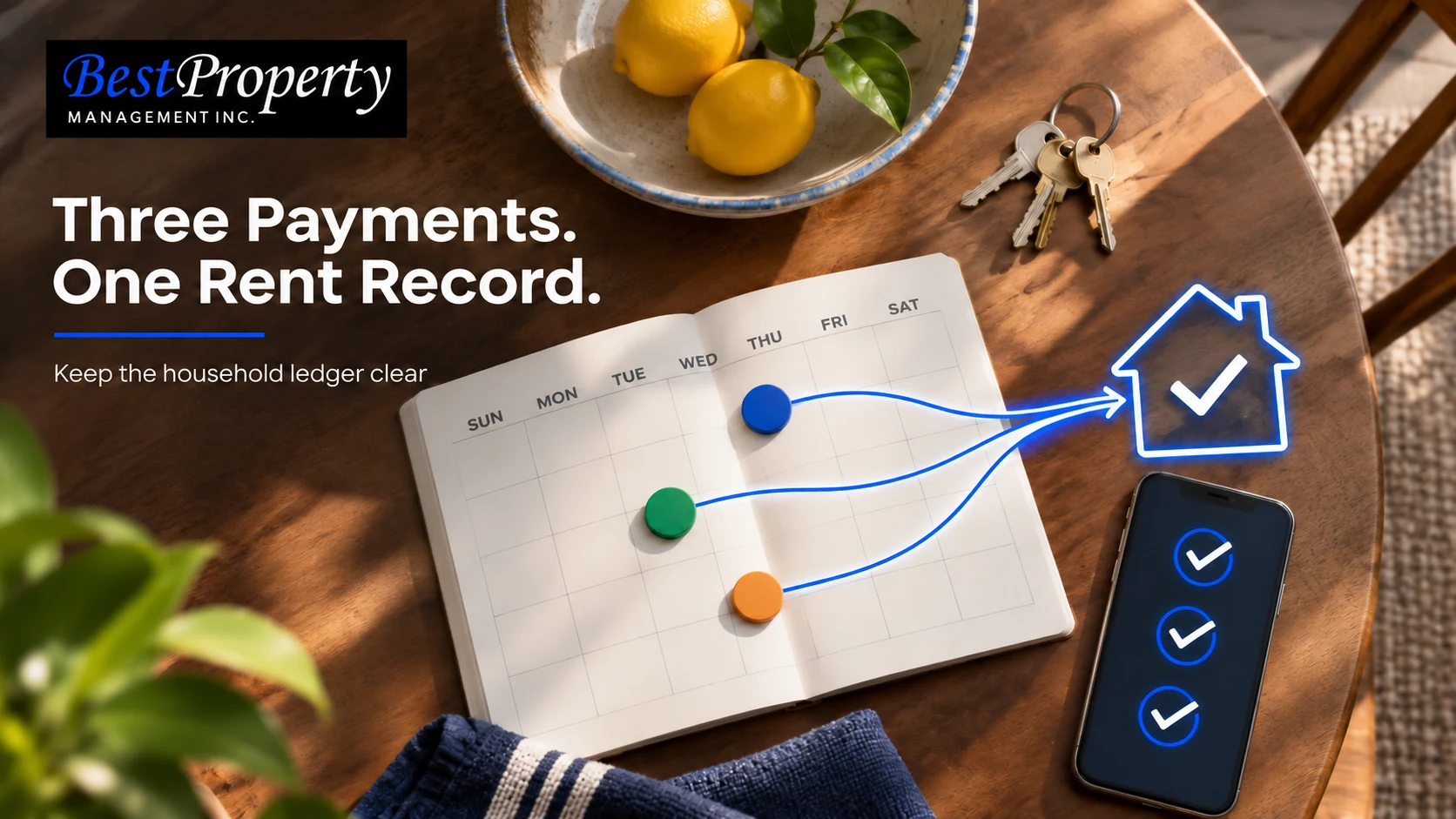
Roommate Rent Payments: Who Keeps the Record When Everyone Pays Separately?
One roommate sends a bank transfer. Another pays through the portal. A third says their payment is pending. The household has three screenshots and still cannot tell whether the full rent reached the property.
Keep one household reconciliation record, but verify it against the property’s actual rent ledger and permitted payment process. Money moved between roommates is not automatically money received by the landlord.
This is part of our shared-rental household guide. It concerns records and communication, not a recommendation to use a financing service or a claim that every property accepts separate payments.
Confirm whether separate payments are actually permitted
Start with the lease and current payment instructions. Ask whether the property accepts multiple payments, how they are identified and how the account shows the total.
A portal offering several logins does not automatically create separate leases or separate legal obligations. The actual agreement still determines the tenancy responsibilities.
The California Department of Real Estate’s rental-living guide is a useful background resource for why the tenancy arrangement matters. For the actual property process, ask the responsible management contact.
Our rent collection pillar explains the broader account-management side.
Distinguish the stages of a payment
A household record should say what happened, not merely mark a box “paid.” The stages can include a transfer to another roommate, a payment submitted to a provider and confirmation on the property account.
| Status | What it means | What to verify |
|---|---|---|
| Sent to roommate | Internal household transfer initiated or completed | Did the agreed onward payment occur? |
| Submitted to property system | Payment initiated through the permitted route | Is it pending, completed or returned? |
| Recorded by property | Amount appears in the property ledger | Does the account reconcile for the period? |
| Reversed or disputed | Earlier record may no longer be complete | What correction or review is needed? |
Do not invent processing times or promise that a screenshot eliminates a balance. Use the actual provider and property records.
If a transaction changes status, update the household record. A stale “paid” note can hide a returned or misapplied transaction.
Build a small ledger that answers the next question
A practical household ledger can include the rent period, agreed private share, transfer date, payment route, status and a reference to supporting confirmation.
It should not contain full account numbers, bank passwords or authentication codes. A reference number and a securely stored receipt are usually more appropriate than copying an entire bank statement into a shared file.
Keep private household expenses separate from rent. Groceries, utility reimbursements and a deposit buyout can matter to the roommates without changing the property’s rent account.
The person maintaining the record should have a backup so the household is not dependent on one phone or one person’s availability.
Reconcile before an unresolved balance becomes a surprise
Compare the household total with the property account using the approved method. If there is a discrepancy, identify the rent period and transactions involved.
A useful inquiry says: “Our household record shows these payments for November. The property account shows this different total. Please help us identify whether a transaction is pending, returned or applied elsewhere.”
Send sensitive details only through the verified private route. Avoid including unrelated personal purchases or another roommate’s full financial information.
For an owner or manager, a clear response should explain the property record without claiming to settle every private reimbursement dispute. Our owner financial reporting service concerns the property-side record, not a household’s entire personal budget.
Verify payment-instruction changes independently
A message asking everyone to use a new account deserves verification through a trusted official contact. Do not rely on the message’s logo, urgency or familiar-looking sender alone.
Our rent-payment scam guide explains the importance of confirming changes. A household can reduce confusion by agreeing that no one will redirect the rent based only on a forwarded chat.
If the usual portal is unavailable, use the property’s documented backup process. Do not send money to an improvised destination because a deadline feels close. Our portal outage guide covers communication when the normal digital route fails.
Keep separate payments separate from rent financing
Several roommates each paying their own contribution is different from a third-party service paying rent and collecting installments from one resident later. Those arrangements can have different fees, approvals and consequences.
Our rent-splitting services article covers the financing question. This article does not endorse a provider or imply that separate roommate payments are available at every rental.
Whatever method is used, the household should understand the actual due date and obligations. A private plan does not automatically change the landlord’s terms.
Update the record when the household changes
A departing roommate or newly approved occupant can change the private contribution plan. It does not automatically amend the property’s lease or payment instructions.
Use the roommate departure guide and adding-a-roommate guide before treating a new name in the ledger as a completed tenancy change.
Archive the relevant period’s confirmations, remove unnecessary access to private records and preserve any unresolved question clearly. Do not delete the shared history simply because a person has moved.
Make the record useful to both sides
The household needs a clear view of what it has contributed and what reached the property. The owner needs an accurate property ledger and a straightforward way to investigate discrepancies.
Those goals work together when each record is labeled honestly. A private transfer can remain a private transfer until the onward rent payment is confirmed.
For Best Property rentals in Livermore, Fremont, Brentwood or Tracy, contact the appropriate office about the current rent collection process. Confirm the permitted method before building a household system around separate payments.
Frequently Asked Questions
Can every roommate pay rent separately?
Only if the property’s current process permits it. Confirm the instructions and do not assume separate payments create separate leases or obligations.
Does sending my roommate money prove the landlord received rent?
No. It proves an internal transfer at most. The household should separately verify the onward payment and property account record.
Is a pending payment the same as completed rent?
Not necessarily. Follow the actual provider and property status, and update the household record if a transaction is returned, reversed or corrected.
What should a household rent ledger contain?
Use the rent period, private contribution, relevant dates, payment route, status and a reference to supporting confirmation. Keep passwords and full financial credentials out.
Who should investigate a difference in the property balance?
Send the specific period and relevant transaction references to the verified property contact. The manager can explain the property ledger without resolving every private roommate dispute.
What if someone sends new payment instructions by text?
Verify the change independently through a trusted official contact before redirecting money. A familiar logo or urgent message is not enough.
Is paying separately the same as rent-splitting financing?
No. Multiple household payments differ from a third-party service financing or collecting installments. Confirm the actual arrangement and any applicable terms.
Does adding a name to the ledger add a tenant to the lease?
No. Follow the lawful approval and executed-document process for a tenancy change. A private record does not automatically amend the lease.
Related Articles
Best Guide to Rent Collection in the East Bay: Payment Systems, Late Rent and Owner Reporting For the property-side rent collection process.
Rent Now, Pay Later: Helpful Flexibility or Another Monthly Bill? For the different question of third-party rent installment services.
Was That Really Your Property Manager? 5 Checks Before Sending Money For verifying payment changes and avoiding redirection scams.
Online Rent Payment: What Should You Do When the Portal Is Down? For a backup communication route when the payment portal is unavailable.
Blog
Company News
Landlord Resources
Landlords
Legal
Linkedin
Local Market Insights
Maintenance & Repairs
Market
Owners
Property
Property Law & Compliance
Property Management
Rental Property
Tenants
Video
FILTER BY EASTBAY & TRI-VALLEY CITIES
AB 1482
AI Property Management
AI Rental Fraud
Antioch Property Management
Applicant Data Security
Applicant Information
Applicant Screening
Applicant Verification
Bank Statement Fraud
Brentwood
Brentwood property management
California Insurance
California Landlord Laws
California Property Management
California Rent Increase
Central Valley Property Management
Concord Property Management
Credit Reports
Danville Property Management
Danville rentals
Desert Hot Springs Property Management
Desert Property Maintenance
Desert Rentals
Document Fraud
Dublin property management
East Bay Landlords
East Bay Lease Renewals
East Bay property management
East Bay Rental Market
East Bay Rental Owners
East Bay Rental Property Maintenance
East Bay Rental Property Management
East Bay rental tips
East Bay Rentals
EV Charging
Eviction Notices
Eviction Support
Fair Housing
Fake Pay Stubs
Fall Leasing
find a property manager
Fremont
Fremont property management
full service property management
Full-Service Property Management
Good Tenants
Hayward Property Management
Hayward rentals
hiring a property manager
HOA Compliance
HOA Rental Management
HOA Rentals
Home Insurance Costs
Human Oversight
Identity Verification
Income Verification
Indian Wells Property Management
Inherited Rental Property
Landlord Compliance
Landlord Data Security
Landlord Insurance
Landlord Resources
Landlord Tips
Lease Renewal Strategy
Lease Renewals
Leasing Fees
Leasing Services
Livermore
Livermore property management
Livermore Rentals
Local Development
Local Market Insights
Local Rental Support
Long-Term Rentals
Luxury Rentals
maintenance coordination
Maintenance Response
Management Services
Manteca Property Management
Milpitas Property Management
Mountain House Property Management
New Housing San Ramon
Newark CA Property Management
Oakley Property Management
Online Rent Payments
Owner Onboarding
owner reporting
Palm Desert Property Management
Palm Springs Area Property Management
Palm Springs Property Management
Palm Springs Rentals
Pittsburg CA Property Management
Pleasanton property management
Pleasanton rentals
Preventive Maintenance
Property Inspections
Property Maintenance
Property Management
Property Management Companies
Property Management Fees
Property Management Services
Property Management Transition
Property Manager
Rancho Mirage Property Management
Real Estate
real estate investing
Redfin Rentals
Remote Property Management
Rent Collection
Rent Control
Rent Trends
Rental Application Fraud
Rental Application Privacy
Rental Competition
Rental Fees
Rental Fraud
Rental History
Rental Inspections
Rental Internet
rental leasing
Rental Market Analysis
Rental Market Trends
Rental Marketing
Rental Pricing
Rental Property
Rental Property Expenses
Rental Property Maintenance
rental property owners
rental property ROI
Renter Choice
Renter Experience
Repair Coordination
Resident Portal
Residential Leasing
Roommate Management
San Lorenzo Property Management
San Ramon Landlords
San Ramon Orchards
San Ramon property management
San Ramon Rental Market
Screening Red Flags
Seasonal Rentals
Security Deposits
Sell or Rent
Silicon Valley Rentals
single family rentals
Single-Family Rentals
Tenant Background Checks
Tenant Communication
Tenant Complaints
Tenant Expectations
Tenant Issues
Tenant Placement
Tenant Protection Act
Tenant Retention
tenant screening
Tenant Screening Data Security
Tenant Screening Fraud
Tenant Screening Red Flags
Tenant Turnover
Tracy Property Management
Tri-Valley
Tri-Valley Housing Market
Tri-Valley property management
Tri-Valley Rentals
Union City Property Management
Vacation Rental Management
Wildfire Risk
Winter Rental Safety
Zillow Rentals
 FILTER
 SEARCH BLOG