Rental Utility Fees: What Should Your Bill Explain?
A water bill rises sharply. Is it a longer billing period, a leak, a rate change, a shared allocation or a new fee? The total alone cannot answer the question.
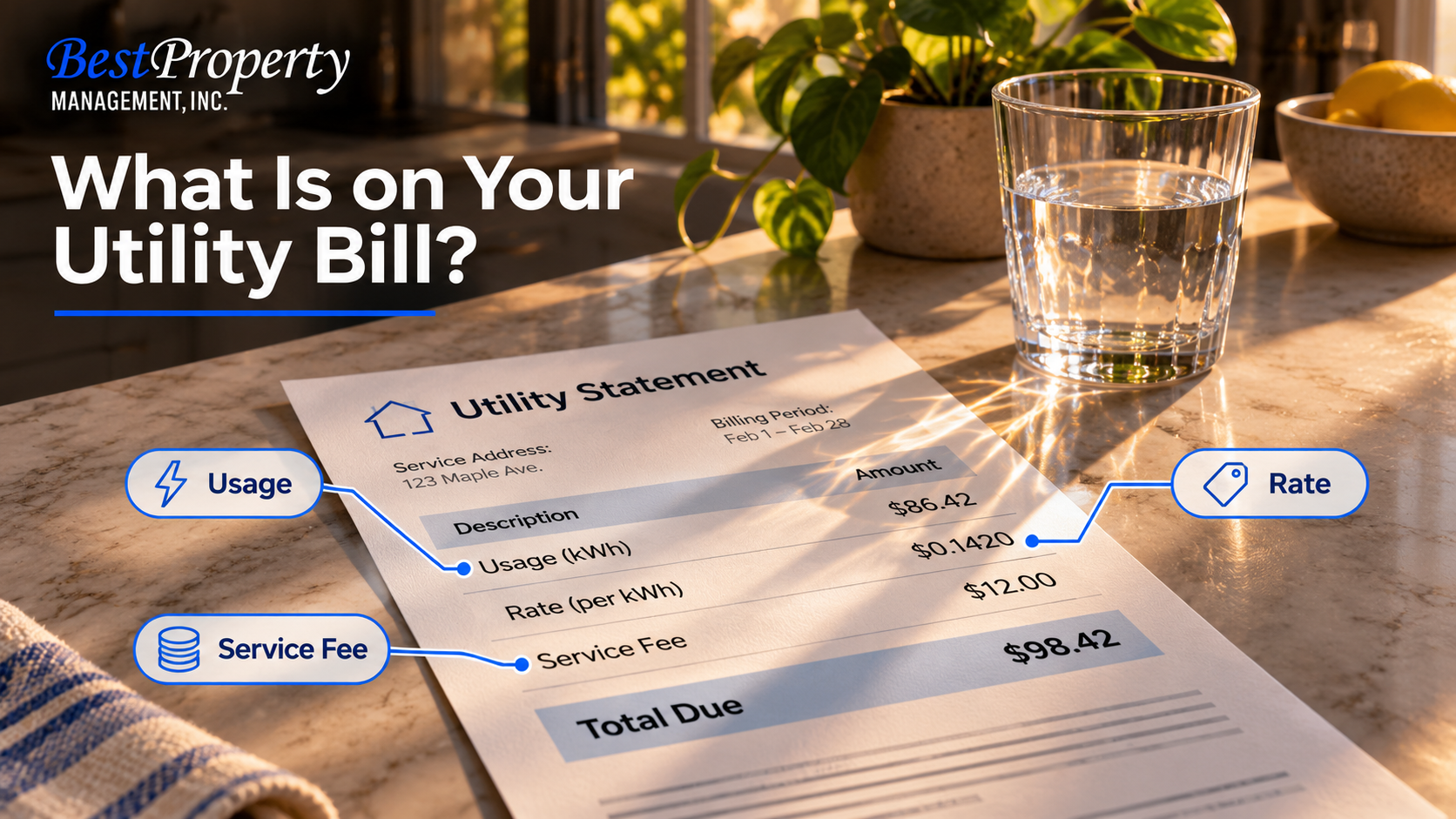
A rental utility bill should be understandable enough to identify the service period, what is being charged, how usage or allocation is calculated, any separate fees and where to ask for a correction. The applicable disclosure and billing rules depend on the property and arrangement.
First identify who is billing you
A direct utility-provider account, a landlord-billed service and a third-party billing company are different arrangements. Find the name of the provider, account contact and party responsible for answering questions.
Then check the service address and billing period. A correct dollar amount on the wrong unit or an overlapping period is still a problem. Move-in and move-out dates can also affect which days belong on an account.
Do not send account credentials or unnecessary financial documents to someone who merely asks by text. Use the verified contact in the lease or official billing record.
Separate consumption from the method of dividing a shared bill
An individually measured bill may show units consumed and a rate. A shared building charge may use an allocation method. Those figures are not interchangeable, so ask which arrangement applies.
For an allocation, request the method relevant to the charge and where it is described in the rental documents. Do not assume that a label such as water usage proves the amount came from a meter assigned to the unit.
The aim is to obtain enough information to understand the calculation without demanding another resident’s private account or household details. Shared information can often be explained without disclosing personal data.
Ask what an administrative fee actually covers
A utility-management or billing fee is different from the utility’s consumption charge. Identify the fee’s amount, frequency and stated purpose. Ask whether it is required and where it was disclosed.
The FTC’s November 2026 rental case includes allegations about undisclosed mandatory fees. That case does not establish that every utility-management charge is unlawful, but it makes clear why a separate label is not a substitute for understandable pricing.
Owners should be able to trace the fee from the offer to the agreement to the bill. If each document calls it something different, the resident has a reasonable question before the arithmetic even begins.
A larger bill can have more than one cause
Check the number of days first, then the rate or allocation information and any added fees. Compare like periods where possible. A winter-to-summer comparison can conceal seasonal differences; a short first bill can make the next normal period look unusually high.
If there are signs of a leak or a continuously running fixture, report the maintenance issue promptly. Do not wait for a billing dispute to be resolved before reporting observable damage or wasted water.
Keep the two investigations connected but distinct: maintenance determines whether something is wrong at the property, while billing review determines whether the amount was calculated and assigned correctly.
| What changed? | Useful question |
|---|---|
| Billing period | Does this bill cover more days or overlap another? |
| Rate or allocation | What calculation was applied? |
| Usage | Is there a documented change or possible leak? |
| Separate fee | Was an additional service charge included? |
| Account assignment | Does this unit and service address match? |
Write a dispute someone can investigate
Identify the bill date, disputed line and reason for the question. Attach the relevant bill and prior comparison with personal account details redacted where they are not needed. Ask what source information will be checked and when to expect an update.
Avoid a vague message saying the bill is wrong without naming the item. Equally, a reply saying the computer calculated it does not resolve a specific question about the inputs.
Do not assume a general article authorizes withholding payment or ignoring a notice. Seek individualized guidance on an unresolved dispute and keep the communication record.
For owners: make the explanation repeatable
A clear billing explanation should not depend on which employee answers the phone. Keep a standard description of the arrangement, required disclosures and escalation route, then apply it to the actual bill rather than sending a canned answer.
When a correction is made, show the affected period and amount. Retain the reason so the same error does not reappear on a later statement.
Questions owners and tenants ask
Is a utility-management fee the same as utility usage?
No. It may be a separate administrative or service charge. Ask for its stated purpose and disclosure.
Does a shared bill always mean the amount is wrong?
No. The relevant question is how the charge is calculated and whether the arrangement follows the agreement and applicable rules.
What should I compare when a bill jumps?
Check the service period, rate or allocation, consumption information, separate fees and correct unit assignment.
Should I report a possible leak while questioning the bill?
Yes. Report observable maintenance symptoms promptly through the designated channel.
Can I demand another tenant’s bill?
Ask for an explanation of your calculation without requesting another resident’s private information.
Does this article determine whether my fee is lawful?
No. The property, contract, billing method and current jurisdictional rules require individual review.
Explore this article series
Rental Junk Fees: What Does the FTC’s $49.75 Million Case Mean for Tenants and Owners?
Advertised Rent vs. Total Monthly Cost: Which Number Should You Compare?
Mandatory Smart-Home Fees: What Are Renters Paying For?
Tenant Reviews: Can a Lease Stop You From Posting a Negative Review?
Related articles
A rental water bill jumps: checking for hidden leaks
Rental fees and the value of service packages
Talk with your local Best Property team
For a property billing question, bring the specific statement and disputed item to your local office. For a possible leak, use the repair channel as well. Find your local office.
Research checked November 12, 2026. General billing-review framework, not a determination of any property’s permissible fees or utility-allocation method. AI-assisted editorial illustration; no actual tenant, client event or property is depicted.
Blog
Company News
Landlord Resources
Landlords
Legal
Linkedin
Local Market Insights
Maintenance & Repairs
Market
Owners
Property
Property Law & Compliance
Property Management
Rental Property
Tenants
Video
FILTER BY EASTBAY & TRI-VALLEY CITIES
AB 1482
AI Property Management
AI Rental Fraud
Antioch Property Management
Applicant Data Security
Applicant Information
Applicant Screening
Applicant Verification
Bank Statement Fraud
Battery Recalls
Brentwood
Brentwood property management
California Insurance
California Landlord Laws
California Property Management
California Rent Increase
Central Valley Property Management
Concord Property Management
Credit Reports
Danville Property Management
Danville rentals
Desert Hot Springs Property Management
Desert Property Maintenance
Desert Rentals
Document Fraud
Dublin property management
E-Bike Safety
East Bay Landlords
East Bay Lease Renewals
East Bay property management
East Bay Rental Market
East Bay Rental Owners
East Bay Rental Property Maintenance
East Bay Rental Property Management
East Bay rental tips
East Bay Rentals
EV Charging
Eviction Notices
Eviction Support
Fair Housing
Fake Pay Stubs
Fall Leasing
find a property manager
Fremont
Fremont property management
full service property management
Full-Service Property Management
Good Tenants
Hayward Property Management
Hayward rentals
Heat Pump Water Heaters
hiring a property manager
HOA Compliance
HOA Rental Management
HOA Rentals
Home Insurance Costs
Human Oversight
Identity Verification
Income Verification
Indian Wells Property Management
Inherited Rental Property
Landlord Compliance
Landlord Data Security
Landlord Insurance
Landlord Resources
Landlord Tips
Lease Renewal Strategy
Lease Renewals
Leasing Fees
Leasing Services
Livermore
Livermore property management
Livermore Rentals
Local Development
Local Market Insights
Local Rental Support
Long-Term Rentals
Luxury Rentals
maintenance coordination
Maintenance Response
Management Services
Manteca Property Management
Milpitas Property Management
Mountain House Property Management
New Housing San Ramon
Newark CA Property Management
Oakley Property Management
Online Rent Payments
Owner Onboarding
owner reporting
Palm Desert Property Management
Palm Springs Area Property Management
Palm Springs Property Management
Palm Springs Rentals
Pittsburg CA Property Management
Pleasanton property management
Pleasanton rentals
Preventive Maintenance
Property Inspections
Property Maintenance
Property Management
Property Management Companies
Property Management Fees
Property Management Services
Property Management Transition
Property Manager
Rancho Mirage Property Management
Real Estate
real estate investing
Redfin Rentals
Remote Property Management
Rent Collection
Rent Control
Rent Reporting
Rent Trends
Rental Application Fraud
Rental Application Privacy
Rental Competition
Rental Fee Transparency
Rental Fees
Rental Fraud
Rental History
Rental Inspections
Rental Internet
rental leasing
Rental Market Analysis
Rental Market Trends
Rental Marketing
Rental Pricing
Rental Property
Rental Property Expenses
Rental Property Maintenance
rental property owners
rental property ROI
Renter Choice
Renter Experience
Repair Coordination
Resident Portal
Residential Leasing
Roommate Management
San Lorenzo Property Management
San Ramon Landlords
San Ramon Orchards
San Ramon property management
San Ramon Rental Market
Screening Red Flags
Seasonal Rentals
Security Deposits
Sell or Rent
Silicon Valley Rentals
single family rentals
Single-Family Rentals
Tenant Background Checks
Tenant Communication
Tenant Complaints
Tenant Expectations
Tenant Issues
Tenant Placement
Tenant Protection Act
Tenant Retention
tenant screening
Tenant Screening Data Security
Tenant Screening Fraud
Tenant Screening Red Flags
Tenant Turnover
Tracy Property Management
Tri-Valley
Tri-Valley Housing Market
Tri-Valley property management
Tri-Valley Rentals
Union City Property Management
Vacation Rental Management
Wildfire Risk
Winter Rental Safety
Zillow Rentals
 FILTER
 SEARCH BLOG