Is Your E-Bike Battery Recalled? How to Check the Model and Serial Number
A headline says an e-bike battery has been recalled. Your bike has the same brand name, but the battery was replaced last year. The brand alone cannot tell you whether this particular pack is covered.
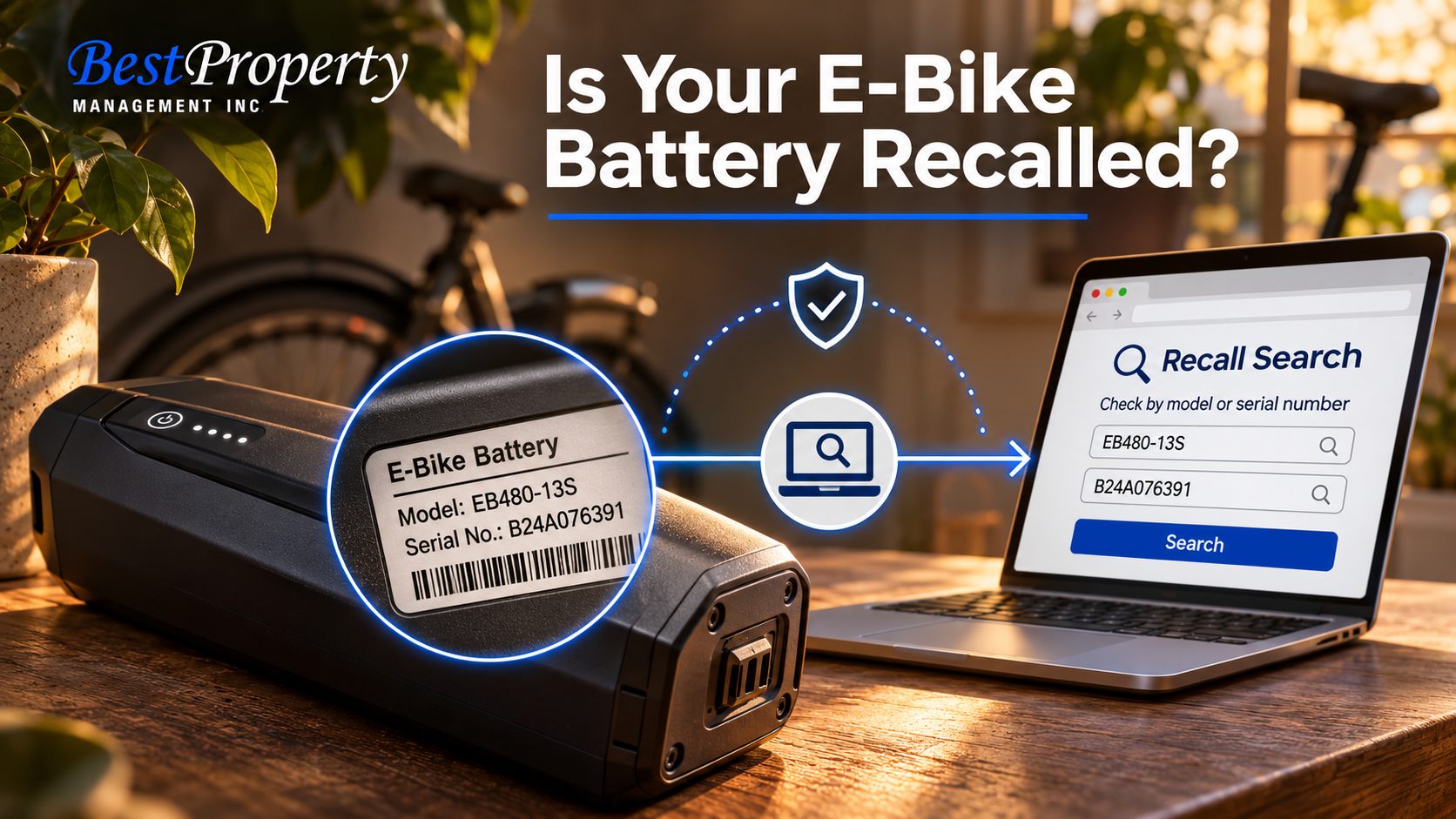
Check the actual device and battery identifiers against CPSC and manufacturer notices, including model, serial or production information where specified. If there is a match, follow that notice’s exact stop-use, remedy and disposal directions.
Identify the battery you have now
Use the product label and your purchase records to identify the battery and device. A replacement pack may not match the equipment originally sold with the bicycle.
Read labels only when it is safe and consistent with the manufacturer instructions. Do not open a battery, dismantle the device or handle equipment showing heat, smoke, leaking or other danger just to find a number.
Save a clear record of the identifiers and purchase source. Keep it private unless a verified manufacturer or recall process needs the information.
Search the official notice, not only a news headline
Begin with the CPSC recall database and the manufacturer’s official safety notices. Search both the bicycle and battery information where relevant.
The CPSC micromobility information center also links recalls and product safety warnings. A warning and a recall are not necessarily the same process, so read what the agency actually instructs consumers to do.
Avoid relying solely on a retailer’s old product listing or a screenshot circulated without a date. The current official notice is the reference for the affected models and next steps.
Match every identifier the notice requires
Compare the exact model, any serial range, production dates and distinguishing features stated in the notice. A similar shape or color is not enough.
If a label is missing or the product history is uncertain, contact the manufacturer or the recall contact listed by CPSC. Do not guess that an unreadable identifier puts the battery outside the affected group.
If no notice is found, that is a search result—not a safety certification. Damage, incorrect charging equipment or unqualified modification can still make the product unsafe.
Follow the remedy for that product
A notice may direct consumers to stop use, contact a specific company, complete a remedy process or follow specialized disposal instructions. Do not assume all recalls offer refunds or replacements.
Use the verified contact information from the official notice. Be cautious about an unsolicited message asking for payment, passwords or unnecessary personal documents to release a supposed recall benefit.
Keep the notice date, your contact record and confirmation of the next step. If the company does not respond, use the agency’s published channels rather than continuing use while waiting.
Do not pass the risk to someone else
Do not sell, donate or give away equipment covered by a stop-use instruction. A resident moving out should not leave a questionable battery for the next occupant or a maintenance employee to discover.
Recall handling may be different from ordinary battery recycling. Contact the local household hazardous-waste program before transporting a damaged, defective or recalled pack, and confirm the particular facility accepts it.
If there is smoke, fire or immediate danger, evacuate and call 911. Do not attempt a disposal trip with an actively hazardous pack.
Owners need a reporting route, not a claim to certify every bicycle
A property can provide official resources and a clear route for residents to report a building safety concern. It should not imply that a quick visual inspection certifies every battery.
Collect only information needed for a legitimate property-policy or safety question. Where a resident reports an affected device, coordinate appropriate next steps without instructing untrained staff to dismantle or transport it.
Keep recall resources current in resident communications. A link to the official database remains more useful than a static list that silently ages.
| Record | Why it matters |
|---|---|
| Actual battery model | May differ from the bicycle brand or original pack |
| Serial or date information | Can define the affected group |
| Official notice URL and date | Identifies the governing instructions |
| Verified remedy contact | Avoids relying on unsolicited messages |
| Completion record | Shows what happened after the match |
Questions owners and tenants ask
Does a recall affect every bicycle from that brand?
Not necessarily. Match the specific identifiers and conditions in the official notice.
What if the battery was replaced?
Check the replacement battery itself, not just the bicycle’s original model.
Can I keep using it while waiting for a reply?
Follow the notice’s instructions, including any immediate stop-use direction.
Does every recall offer a refund?
No. The remedy is specific to the notice and responsible company.
Can a recalled battery go in a normal recycling bin?
No. Follow the notice and contact an appropriate hazardous-waste program before transport.
Does no recall prove the pack is safe?
No. It does not rule out damage, unsuitable charging equipment or other hazards.
Explore this article series
E-Bike Battery Safety in Rentals: What Should Owners and Tenants Know?
Charging an E-Bike in an Apartment: 7 Checks Before You Plug In
E-Bike Storage in California Rentals: Can Landlords Restrict Charging?
E-Bike Battery Disposal: Where Can Renters Take a Damaged or Recalled Battery?
Related articles
Rental home safety during the winter
Emergency planning when the office is closed
Talk with your local Best Property team
For a property-related concern, notify your local office. For a product match, use the CPSC notice and manufacturer’s verified contact; use emergency services for an immediate hazard. Find your local office.
Research checked November 12, 2026. No particular product is declared recalled by this article. Check live official notices for the identifiers and current instructions that apply to your device. AI-assisted editorial illustration; no actual tenant, client event or property is depicted.
Blog
Company News
Landlord Resources
Landlords
Legal
Linkedin
Local Market Insights
Maintenance & Repairs
Market
Owners
Property
Property Law & Compliance
Property Management
Rental Property
Tenants
Video
FILTER BY EASTBAY & TRI-VALLEY CITIES
AB 1482
AI Property Management
AI Rental Fraud
Antioch Property Management
Applicant Data Security
Applicant Information
Applicant Screening
Applicant Verification
Bank Statement Fraud
Battery Recalls
Brentwood
Brentwood property management
California Insurance
California Landlord Laws
California Property Management
California Rent Increase
Central Valley Property Management
Concord Property Management
Credit Reports
Danville Property Management
Danville rentals
Desert Hot Springs Property Management
Desert Property Maintenance
Desert Rentals
Document Fraud
Dublin property management
E-Bike Safety
East Bay Landlords
East Bay Lease Renewals
East Bay property management
East Bay Rental Market
East Bay Rental Owners
East Bay Rental Property Maintenance
East Bay Rental Property Management
East Bay rental tips
East Bay Rentals
EV Charging
Eviction Notices
Eviction Support
Fair Housing
Fake Pay Stubs
Fall Leasing
find a property manager
Fremont
Fremont property management
full service property management
Full-Service Property Management
Good Tenants
Hayward Property Management
Hayward rentals
Heat Pump Water Heaters
hiring a property manager
HOA Compliance
HOA Rental Management
HOA Rentals
Home Insurance Costs
Human Oversight
Identity Verification
Income Verification
Indian Wells Property Management
Inherited Rental Property
Landlord Compliance
Landlord Data Security
Landlord Insurance
Landlord Resources
Landlord Tips
Lease Renewal Strategy
Lease Renewals
Leasing Fees
Leasing Services
Livermore
Livermore property management
Livermore Rentals
Local Development
Local Market Insights
Local Rental Support
Long-Term Rentals
Luxury Rentals
maintenance coordination
Maintenance Response
Management Services
Manteca Property Management
Milpitas Property Management
Mountain House Property Management
New Housing San Ramon
Newark CA Property Management
Oakley Property Management
Online Rent Payments
Owner Onboarding
owner reporting
Palm Desert Property Management
Palm Springs Area Property Management
Palm Springs Property Management
Palm Springs Rentals
Pittsburg CA Property Management
Pleasanton property management
Pleasanton rentals
Preventive Maintenance
Property Inspections
Property Maintenance
Property Management
Property Management Companies
Property Management Fees
Property Management Services
Property Management Transition
Property Manager
Rancho Mirage Property Management
Real Estate
real estate investing
Redfin Rentals
Remote Property Management
Rent Collection
Rent Control
Rent Reporting
Rent Trends
Rental Application Fraud
Rental Application Privacy
Rental Competition
Rental Fee Transparency
Rental Fees
Rental Fraud
Rental History
Rental Inspections
Rental Internet
rental leasing
Rental Market Analysis
Rental Market Trends
Rental Marketing
Rental Pricing
Rental Property
Rental Property Expenses
Rental Property Maintenance
rental property owners
rental property ROI
Renter Choice
Renter Experience
Repair Coordination
Resident Portal
Residential Leasing
Roommate Management
San Lorenzo Property Management
San Ramon Landlords
San Ramon Orchards
San Ramon property management
San Ramon Rental Market
Screening Red Flags
Seasonal Rentals
Security Deposits
Sell or Rent
Silicon Valley Rentals
single family rentals
Single-Family Rentals
Tenant Background Checks
Tenant Communication
Tenant Complaints
Tenant Expectations
Tenant Issues
Tenant Placement
Tenant Protection Act
Tenant Retention
tenant screening
Tenant Screening Data Security
Tenant Screening Fraud
Tenant Screening Red Flags
Tenant Turnover
Tracy Property Management
Tri-Valley
Tri-Valley Housing Market
Tri-Valley property management
Tri-Valley Rentals
Union City Property Management
Vacation Rental Management
Wildfire Risk
Winter Rental Safety
Zillow Rentals
 FILTER
 SEARCH BLOG