Bay Area Water Heater Rules: What Changed in November 2026 for Rental Owners?
A water heater does not read the regulatory calendar before it fails. That is why the Bay Area’s November 2026 rule change matters most as a planning question: what would happen if this property’s equipment stopped working next week?
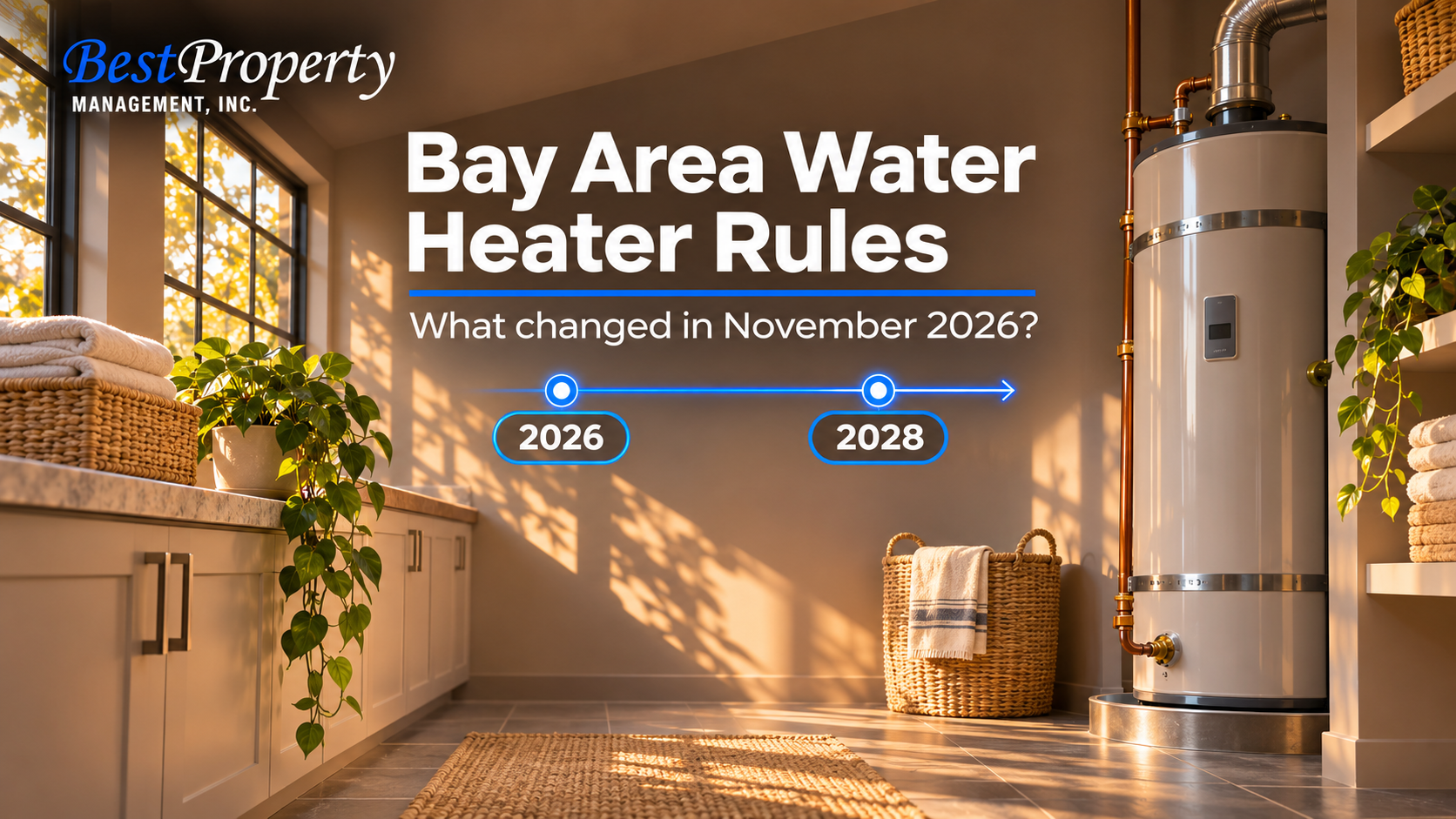
The Bay Area Air District adopted water-heater rule amendments on November 4, 2026. The residential replacement compliance date moves to January 1, 2028, with different provisions for multifamily, affordable housing and qualifying exceptions. The rule does not require every working water heater to be removed now.
What changed—and what did not
The district’s November 4 announcement describes an amended schedule for its zero-nitrogen-oxide water-heater requirements. The previous 2027 residential date is no longer the right shorthand for planning affected replacements.
A replacement standard and a forced early replacement are different things. Owners should not order a new unit solely because an online headline says a deadline is approaching. First establish whether the existing equipment is working safely, which rule category applies and what a permitted replacement would require.
Zero-NOx describes an emissions standard. A heat pump water heater is an important compliance option, but calling the entire rule a universal gas ban obscures the actual equipment categories, dates and exceptions. Use the district’s building-appliance rule resources, rather than a sales headline, for that determination.
The property’s location comes before its equipment list
The air district boundary is not the same as Best Property’s service territory. A requirement affecting a Bay Area address should not automatically be applied to a Tracy or Palm Springs property. Even the phrase Bay Area is too loose for a compliance file: record the actual address and jurisdiction.
Ask the contractor to identify the air district, local permitting authority, equipment type and applicable replacement date on the proposal. A written answer is much more useful than a general assurance that everything will be compliant.
Three questions that keep the timeline straight
Is this a working unit being evaluated for a planned upgrade, or a failed unit requiring an urgent response? Is it individual residential equipment or a shared system? Does the property fall into a special category or qualify for a documented exception? These questions can lead to different paths.
The amendments include later timing for multifamily and affordable-housing applications and provisions addressing specified constraints. Do not assume every rental qualifies for the later date, or that a tight closet automatically earns an exemption. Have the applicable category and any exception confirmed against the adopted rule.
| Question | Record before approving work |
|---|---|
| Where is the property? | Address, air district and permitting authority |
| What serves the residents? | Individual or shared equipment, model and fuel |
| Why replace it now? | Failure, safety finding or planned upgrade |
| Which provisions apply? | Applicable date, category and documented exception process |
Build a replacement plan while the water is still hot
Start with a modest equipment inventory: location, model, approximate age if documented, capacity, ownership and accessible maintenance records. A photograph of the model plate taken safely by an authorized person can prevent an unproductive first contractor visit.
Then commission a site assessment. Electrical capacity, installation space, airflow, condensate drainage and service access can affect a heat-pump installation. None of these questions should be resolved by a tenant opening a panel or improvising a drain.
A useful proposal separates the appliance from supporting work. That lets the owner see whether the project includes electrical changes, permits, plumbing, access work or association approval. It also gives the manager something concrete to schedule.
An emergency needs a response plan, not a debate about headlines
A tenant reporting no hot water should receive clear reporting instructions and an assessment path. Record when the problem started, whether it affects the entire home and whether there is a leak, odor, smoke or another immediate hazard. Do not ask the resident to repair or relight unfamiliar equipment.
The rule amendments address emergency situations, but an emergency provision is not a blanket exemption from future obligations. The contractor and district should confirm the available temporary or replacement route. Document that advice rather than making a promise based on a summary article.
For the operational side, use a defined emergency repair reporting process. State the next update time even when the final completion time is not yet known.
Check rebates before signing the purchase order
A rebate advertisement may describe a homeowner program, an expired offering or a building type that does not match this rental. Some programs require eligibility review or a reservation before installation. A discount that disappears after the invoice is paid is not a dependable project budget.
BayREN’s multifamily program is one place to begin for eligible buildings. Confirm current enrollment, utility territory, unit count, income requirements and qualifying equipment directly with the program. Separate the full project cost from any incentive that remains conditional.
What belongs in the owner’s approval packet
Keep the packet short enough to use: site assessment, itemized proposal, permit responsibilities, the applicable rule path, resident access plan, incentive conditions and a contingency for changes discovered during work. Save final inspection and warranty records after completion.
The decision should be visible in the maintenance history. Future staff need to know why this model was selected, what supporting work was completed and which documentation still matters. That is more valuable than a folder containing only the paid invoice.
Questions owners and tenants ask
Do all Bay Area rental water heaters need replacement now?
No. The rule concerns affected replacements and has different dates and provisions. A working unit is not automatically due for removal because of the November 2026 amendments.
Is January 2028 the deadline for every building?
No. Equipment category, building type, location and qualifying provisions matter. Obtain a property-specific determination against the adopted rule.
Does a heat pump water heater always require a new electrical panel?
No universal answer applies. A qualified professional must assess the selected equipment, existing circuits, panel capacity and code requirements.
Can a tenant arrange the replacement independently?
Report the problem and follow the authorized repair process. Owners, managers, contractors and sometimes an association must coordinate permission, access and permits.
Are rebates guaranteed for rental owners?
No. Eligibility, reservations, installation requirements and available funding vary. Confirm the program before purchase.
Does this Bay Area update apply to Tracy?
Do not assume it does. Identify the air district and local requirements for the property’s actual address.
What should an owner do first?
Create an equipment record and request a qualified site assessment before an emergency forces rushed decisions.
Explore this article series
Is Your Rental Ready for a Heat Pump Water Heater? 7 Things to Check
Water Heater Replacement in a Rental: What Happens When Hot Water Stops?
Heat Pump Water Heater Rebates: What Can Bay Area Rental Owners Apply For?
Condo Water Heater Replacement: Who Needs to Approve the Work?
Related articles
A practical guide to East Bay rental maintenance
Brentwood preventive rental maintenance
Talk with your local Best Property team
Planning an equipment replacement? Bring the property’s current maintenance record and contractor findings so the conversation can focus on the actual work, resident access and approval responsibilities. Find your local office.
Research checked November 12, 2026. Rule summary based on Bay Area Air District resources; applicability and exceptions require property-specific confirmation. Incentive availability can change. AI-assisted editorial illustration; no actual tenant, client event or property is depicted.
Blog
Company News
Landlord Resources
Landlords
Legal
Linkedin
Local Market Insights
Maintenance & Repairs
Market
Owners
Property
Property Law & Compliance
Property Management
Rental Property
Tenants
Video
FILTER BY EASTBAY & TRI-VALLEY CITIES
AB 1482
AI Property Management
AI Rental Fraud
Antioch Property Management
Applicant Data Security
Applicant Information
Applicant Screening
Applicant Verification
Bank Statement Fraud
Battery Recalls
Brentwood
Brentwood property management
California Insurance
California Landlord Laws
California Property Management
California Rent Increase
Central Valley Property Management
Concord Property Management
Credit Reports
Danville Property Management
Danville rentals
Desert Hot Springs Property Management
Desert Property Maintenance
Desert Rentals
Document Fraud
Dublin property management
E-Bike Safety
East Bay Landlords
East Bay Lease Renewals
East Bay property management
East Bay Rental Market
East Bay Rental Owners
East Bay Rental Property Maintenance
East Bay Rental Property Management
East Bay rental tips
East Bay Rentals
EV Charging
Eviction Notices
Eviction Support
Fair Housing
Fake Pay Stubs
Fall Leasing
find a property manager
Fremont
Fremont property management
full service property management
Full-Service Property Management
Good Tenants
Hayward Property Management
Hayward rentals
Heat Pump Water Heaters
hiring a property manager
HOA Compliance
HOA Rental Management
HOA Rentals
Home Insurance Costs
Human Oversight
Identity Verification
Income Verification
Indian Wells Property Management
Inherited Rental Property
Landlord Compliance
Landlord Data Security
Landlord Insurance
Landlord Resources
Landlord Tips
Lease Renewal Strategy
Lease Renewals
Leasing Fees
Leasing Services
Livermore
Livermore property management
Livermore Rentals
Local Development
Local Market Insights
Local Rental Support
Long-Term Rentals
Luxury Rentals
maintenance coordination
Maintenance Response
Management Services
Manteca Property Management
Milpitas Property Management
Mountain House Property Management
New Housing San Ramon
Newark CA Property Management
Oakley Property Management
Online Rent Payments
Owner Onboarding
owner reporting
Palm Desert Property Management
Palm Springs Area Property Management
Palm Springs Property Management
Palm Springs Rentals
Pittsburg CA Property Management
Pleasanton property management
Pleasanton rentals
Preventive Maintenance
Property Inspections
Property Maintenance
Property Management
Property Management Companies
Property Management Fees
Property Management Services
Property Management Transition
Property Manager
Rancho Mirage Property Management
Real Estate
real estate investing
Redfin Rentals
Remote Property Management
Rent Collection
Rent Control
Rent Reporting
Rent Trends
Rental Application Fraud
Rental Application Privacy
Rental Competition
Rental Fee Transparency
Rental Fees
Rental Fraud
Rental History
Rental Inspections
Rental Internet
rental leasing
Rental Market Analysis
Rental Market Trends
Rental Marketing
Rental Pricing
Rental Property
Rental Property Expenses
Rental Property Maintenance
rental property owners
rental property ROI
Renter Choice
Renter Experience
Repair Coordination
Resident Portal
Residential Leasing
Roommate Management
San Lorenzo Property Management
San Ramon Landlords
San Ramon Orchards
San Ramon property management
San Ramon Rental Market
Screening Red Flags
Seasonal Rentals
Security Deposits
Sell or Rent
Silicon Valley Rentals
single family rentals
Single-Family Rentals
Tenant Background Checks
Tenant Communication
Tenant Complaints
Tenant Expectations
Tenant Issues
Tenant Placement
Tenant Protection Act
Tenant Retention
tenant screening
Tenant Screening Data Security
Tenant Screening Fraud
Tenant Screening Red Flags
Tenant Turnover
Tracy Property Management
Tri-Valley
Tri-Valley Housing Market
Tri-Valley property management
Tri-Valley Rentals
Union City Property Management
Vacation Rental Management
Wildfire Risk
Winter Rental Safety
Zillow Rentals
 FILTER
 SEARCH BLOG