Condo Water Heater Replacement: Who Needs to Approve the Work?
The water heater sits inside the condominium, so the owner assumes it is a straightforward replacement. Then the contractor mentions a shared electrical room, an exterior vent or a drain route crossing common space. The approval question has changed.
Condo water heater replacement can require coordination among the unit owner, association, qualified contractor and permitting authority. The governing documents, equipment ownership and actual scope—not the appliance’s location alone—determine which approvals to investigate.
Find out what the unit actually owns
Start with the association’s governing and maintenance documents. A unit-level appliance, a shared central system and the lines serving several homes are different situations. Do not infer ownership solely because something is accessible from one unit.
Ask the association or its manager for the relevant provisions and current submission process. If responsibility is disputed, the owner should obtain a property-specific interpretation before treating a general article as authority.
A photo, model number and simple description of the proposed work can make the inquiry easier. Keep private resident information out of the approval packet unless it is genuinely needed.
Map every boundary the work crosses
A like-for-like appliance swap and a project changing electrical service, drainage, penetrations or equipment location may trigger different review. Ask the contractor to identify each proposed alteration rather than using the phrase replacement as if it explains everything.
Shared shutoffs, restricted equipment rooms, parking access and working-hour limits can affect the schedule. These are not minor details if a technician arrives and cannot reach the required space.
For a heat-pump proposal, have the site assessment address sound, airflow and condensate as well as power. An association’s aesthetic approval does not establish technical suitability.
Give each participant one clear job
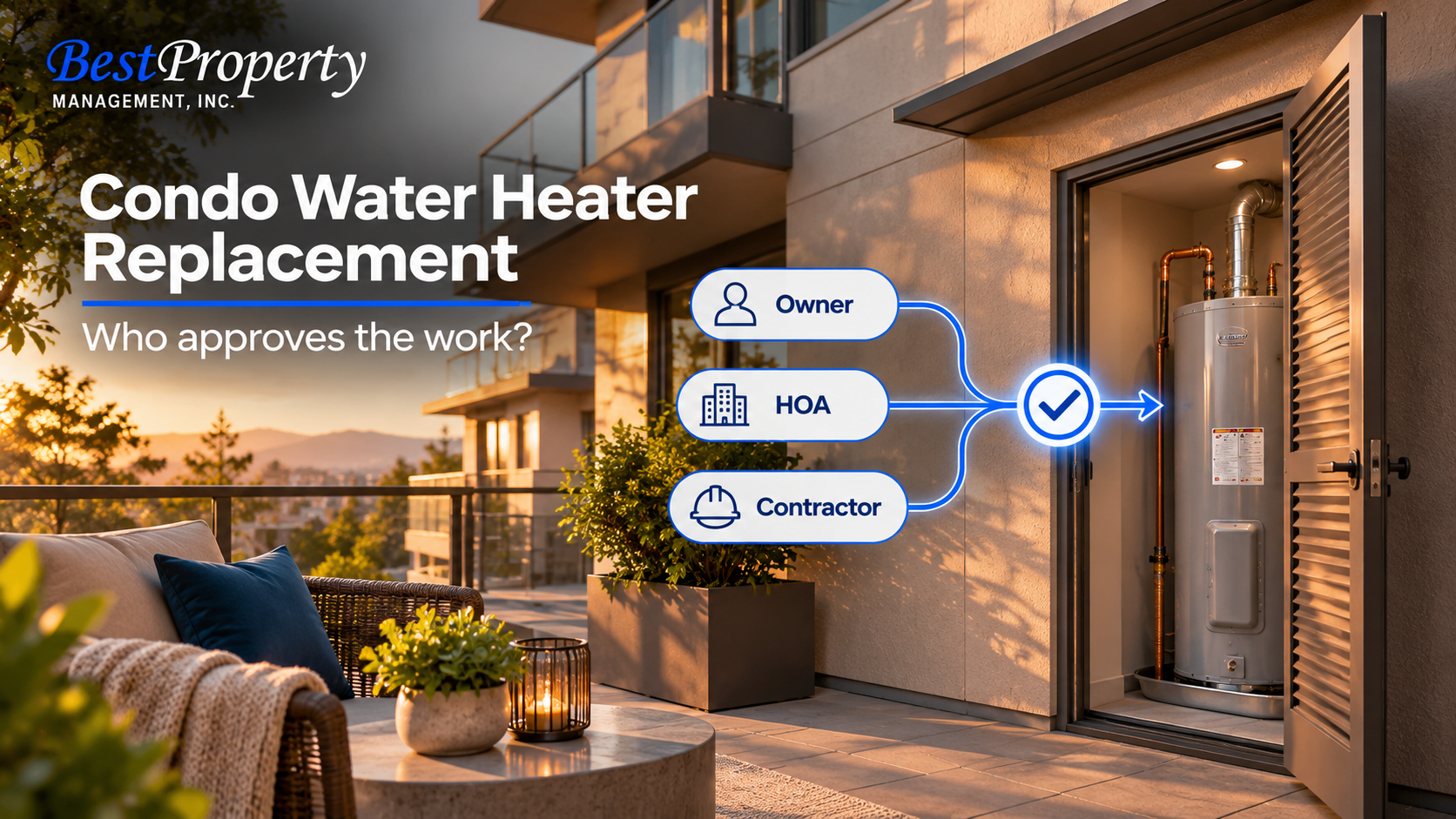
The owner authorizes the owner’s work and expenditure. The association addresses matters within its authority under the governing documents. The contractor develops and performs a compliant scope within its qualifications. The permitting authority administers applicable permits and inspections.
A property manager can coordinate information and access, but should not imply that management approval replaces an association decision or a city permit. A short responsibility table helps keep those distinctions visible.
| Participant | Question to resolve |
|---|---|
| Unit owner | What work and cost am I authorizing? |
| Association | Which shared elements or approvals are involved? |
| Contractor | What is the complete technically suitable scope? |
| Permitting authority | Which permits and inspections apply? |
| Property manager and resident | How will access and service interruption be coordinated? |
Submit a scope, not just a product brochure
A useful packet identifies the unit, equipment, location, proposed modifications, access needs and expected service interruption. Include drawings or contractor details when the association requires them. A glossy appliance brochure rarely answers how the work affects the building.
Ask the contractor to identify insurance or licensing documentation requested by the association. Confirm who is responsible for obtaining approval and what counts as permission to proceed.
Keep the approved version. If the installer later changes the location or supporting work, determine whether that change needs renewed review before treating the original approval as sufficient.
If the heater fails before approval is complete
Use the association’s emergency contact process and the property’s repair channel. Explain the actual failure and any safety issue. Do not assume urgent work automatically overrides every shared-system restriction.
At the same time, the resident’s loss of hot water needs an active response. Coordinate qualified assessment, access and updates while the responsible parties resolve the installation route. Obtain specific advice where habitability or responsibility questions are unresolved.
For Bay Area properties, confirm the applicable Air District replacement provisions. A general emergency allowance should not be treated as an association approval or permit.
Leave a record the next owner or manager can use
Save the final approved scope, association correspondence, permits, inspection results, model details and warranty. Record any ongoing maintenance obligation or access arrangement connected to shared space.
The next failure is easier to manage when staff can see where the equipment is, who owns it and what was approved. The alternative is rebuilding the same conversation from scattered emails every few years.
Questions owners and tenants ask
Does every condo replacement need HOA approval?
Not necessarily. Check the governing documents and scope. Changes involving shared elements or systems may need review even when the appliance is inside a unit.
Does HOA approval replace a permit?
No. Association approval and public permitting address different requirements.
Can a property manager authorize all the work?
Only within the manager’s actual authority. Owner, association and permitting responsibilities remain distinct.
Who pays for a shared water heater?
That depends on equipment ownership and the governing documents. Obtain a property-specific determination.
What if the association is slow to respond?
Use the documented escalation or emergency process and continue coordinating the resident’s service issue. Do not assume silence is approval.
What should be saved after the work?
Keep the approved scope, association decisions, permits, inspections, equipment details and warranty information together.
Explore this article series
Bay Area Water Heater Rules: What Changed in November 2026 for Rental Owners?
Is Your Rental Ready for a Heat Pump Water Heater? 7 Things to Check
Water Heater Replacement in a Rental: What Happens When Hot Water Stops?
Heat Pump Water Heater Rebates: What Can Bay Area Rental Owners Apply For?
Related articles
Fremont condo management: owner and HOA repairs
San Ramon maintenance approval limits
Talk with your local Best Property team
If your rental is in an association, start with the governing documents and contractor findings. Your local team can help organize the approval and resident-access questions. Find your local office.
Research checked November 12, 2026. Condominium responsibilities vary by governing documents, installation scope and jurisdiction. No universal HOA approval or cost-allocation rule is assumed. AI-assisted editorial illustration; no actual tenant, client event or property is depicted.
Blog
Company News
Landlord Resources
Landlords
Legal
Linkedin
Local Market Insights
Maintenance & Repairs
Market
Owners
Property
Property Law & Compliance
Property Management
Rental Property
Tenants
Video
FILTER BY EASTBAY & TRI-VALLEY CITIES
AB 1482
AI Property Management
AI Rental Fraud
Antioch Property Management
Applicant Data Security
Applicant Information
Applicant Screening
Applicant Verification
Bank Statement Fraud
Battery Recalls
Brentwood
Brentwood property management
California Insurance
California Landlord Laws
California Property Management
California Rent Increase
Central Valley Property Management
Concord Property Management
Credit Reports
Danville Property Management
Danville rentals
Desert Hot Springs Property Management
Desert Property Maintenance
Desert Rentals
Document Fraud
Dublin property management
E-Bike Safety
East Bay Landlords
East Bay Lease Renewals
East Bay property management
East Bay Rental Market
East Bay Rental Owners
East Bay Rental Property Maintenance
East Bay Rental Property Management
East Bay rental tips
East Bay Rentals
EV Charging
Eviction Notices
Eviction Support
Fair Housing
Fake Pay Stubs
Fall Leasing
find a property manager
Fremont
Fremont property management
full service property management
Full-Service Property Management
Good Tenants
Hayward Property Management
Hayward rentals
Heat Pump Water Heaters
hiring a property manager
HOA Compliance
HOA Rental Management
HOA Rentals
Home Insurance Costs
Human Oversight
Identity Verification
Income Verification
Indian Wells Property Management
Inherited Rental Property
Landlord Compliance
Landlord Data Security
Landlord Insurance
Landlord Resources
Landlord Tips
Lease Renewal Strategy
Lease Renewals
Leasing Fees
Leasing Services
Livermore
Livermore property management
Livermore Rentals
Local Development
Local Market Insights
Local Rental Support
Long-Term Rentals
Luxury Rentals
maintenance coordination
Maintenance Response
Management Services
Manteca Property Management
Milpitas Property Management
Mountain House Property Management
New Housing San Ramon
Newark CA Property Management
Oakley Property Management
Online Rent Payments
Owner Onboarding
owner reporting
Palm Desert Property Management
Palm Springs Area Property Management
Palm Springs Property Management
Palm Springs Rentals
Pittsburg CA Property Management
Pleasanton property management
Pleasanton rentals
Preventive Maintenance
Property Inspections
Property Maintenance
Property Management
Property Management Companies
Property Management Fees
Property Management Services
Property Management Transition
Property Manager
Rancho Mirage Property Management
Real Estate
real estate investing
Redfin Rentals
Remote Property Management
Rent Collection
Rent Control
Rent Reporting
Rent Trends
Rental Application Fraud
Rental Application Privacy
Rental Competition
Rental Fee Transparency
Rental Fees
Rental Fraud
Rental History
Rental Inspections
Rental Internet
rental leasing
Rental Market Analysis
Rental Market Trends
Rental Marketing
Rental Pricing
Rental Property
Rental Property Expenses
Rental Property Maintenance
rental property owners
rental property ROI
Renter Choice
Renter Experience
Repair Coordination
Resident Portal
Residential Leasing
Roommate Management
San Lorenzo Property Management
San Ramon Landlords
San Ramon Orchards
San Ramon property management
San Ramon Rental Market
Screening Red Flags
Seasonal Rentals
Security Deposits
Sell or Rent
Silicon Valley Rentals
single family rentals
Single-Family Rentals
Tenant Background Checks
Tenant Communication
Tenant Complaints
Tenant Expectations
Tenant Issues
Tenant Placement
Tenant Protection Act
Tenant Retention
tenant screening
Tenant Screening Data Security
Tenant Screening Fraud
Tenant Screening Red Flags
Tenant Turnover
Tracy Property Management
Tri-Valley
Tri-Valley Housing Market
Tri-Valley property management
Tri-Valley Rentals
Union City Property Management
Vacation Rental Management
Wildfire Risk
Winter Rental Safety
Zillow Rentals
 FILTER
 SEARCH BLOG