Can You Charge an EV From a Regular Outlet at a Rental?
There is a regular outlet in the garage. Your vehicle came with charging equipment. It is easy to assume that plugging in is the only decision left.
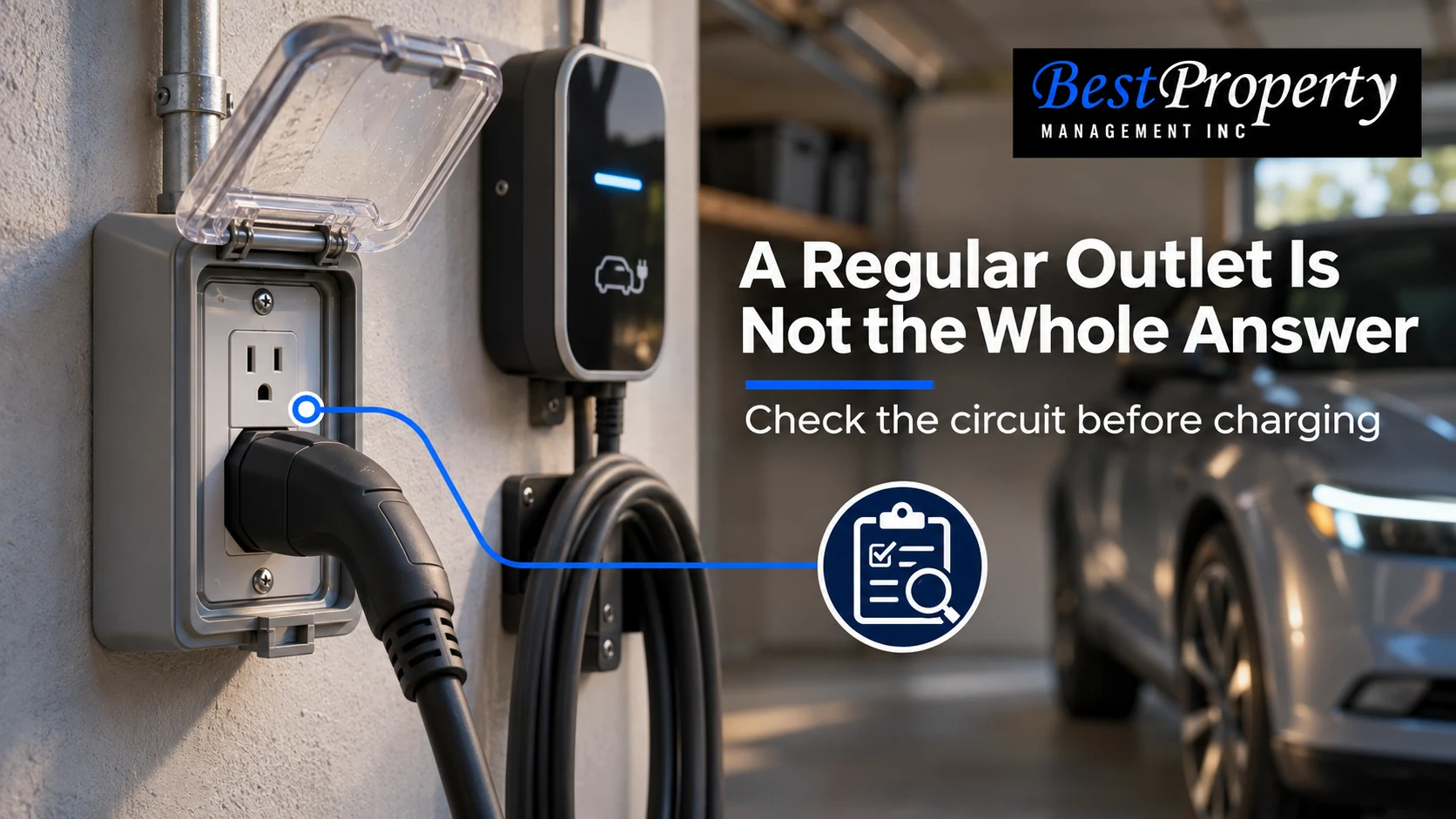
A standard outlet does not establish that EV charging is permitted or suitable at that location. The actual equipment instructions, electrical conditions, power account and cable route need attention before use.
This article is part of our rental EV charging guide. It is a planning checklist, not instructions to inspect wiring, test circuits or modify an electrical system yourself.
Understand what Level 1 means
The EPA’s home EV charging guide describes Level 1 charging with 120-volt power and Level 2 with 240-volt power. Level 1 is generally slower, but an actual charging result depends on the vehicle, equipment and conditions.
That description is not a safety approval for a specific receptacle. A plug fitting into an outlet says little about the circuit’s condition, other loads or the installation’s suitability for the proposed use.
Check the vehicle and charging-equipment instructions. Obtain qualified electrical advice about the actual site rather than assuming a standard-looking garage outlet is ready for prolonged charging.
Confirm whose outlet and power it is
A garage outlet might be connected to the resident’s utility account, an owner’s account or shared building power. Identify that arrangement before use.
Permission to park near an outlet does not automatically include permission to consume common-area electricity or use another resident’s supply. Ask the responsible property contact to clarify both access and payment.
For a condominium or shared garage, our condo charging approval guide explains why the owner and association may need to coordinate. Avoid treating an unlocked outlet cover as an invitation to use the power.
Ask for a qualified site assessment
A qualified electrician can evaluate the proposed use and determine what work, if any, is needed. That review may address the actual circuit, condition, equipment requirements and applicable installation rules.
Residents should not remove outlet covers, open panels, change breakers or perform load tests to prepare a request. Owners should not rely solely on a vehicle salesperson’s assurance that ordinary power will be fine.
Our California charger-request guide covers the legal and permission side. Its coverage questions are separate from the electrical assessment. A statutory request process does not establish the condition of a particular circuit.
Treat the cable route as part of the plan
Even where charging equipment is otherwise appropriate, the cable must be usable within manufacturer instructions and the authorized site arrangement. A route across a walkway, doorway or another parking space raises questions that need resolution.
Do not improvise an extension cord, power strip or adapter chain to overcome an unsuitable location. If the supplied equipment does not reach appropriately, ask about another authorized solution rather than making the cord longer by guesswork.
Do not place equipment where vehicles, doors or stored items can damage it. Follow the manufacturer’s requirements for weather exposure, support and positioning. A product advertised for outdoor use still needs to be used as directed.
Know what to do when something seems wrong
Follow the equipment’s instructions for a fault or warning. A damaged cable, unusual heat, sparking or a burning smell should not become a condition you work around to finish charging.
Stop use if safe, avoid the hazard and obtain appropriate help. Immediate danger calls for moving to safety and contacting emergency services or the relevant emergency utility contact. Do not rely on an ordinary maintenance ticket for a fire or active electrical hazard.
For a non-emergency issue, record the equipment message and what you observed through the approved reporting channel. Do not repeatedly reset equipment or alter the circuit to clear a recurring fault.
Our recurring repair guide explains why a connected history helps the next qualified person assess a problem.
Compare the actual daily need with the approved setup
A charging plan should fit the resident’s driving and available charging time. Avoid promising that every driver will recover a particular number of miles overnight.
If the approved setup does not meet the household’s needs, consider the next authorized step. That may involve a different installation proposal or suitable charging away from home. Do not compensate for inadequate charging by using equipment outside its instructions.
The rental charging cost guide helps compare the complete arrangement: assessment, equipment, electricity, service and eventual removal. A low equipment cost should not hide an unresolved electrical or permission question.
Keep a short written charging record
A simple record can identify the approved location, equipment, responsible account and support route. It should also preserve the qualified assessment and any relevant installation or use conditions.
| Before charging | Confirm | Do not assume |
|---|---|---|
| Permission | Authorized outlet, space and use | Parking permission covers all nearby power |
| Suitability | Qualified advice and product instructions | A standard outlet proves readiness |
| Route | Safe, authorized cable arrangement | An extension solves a reach problem |
| Payment | Actual electricity billing method | Shared power is included |
| Fault response | Current instructions and contact | Repeated resets are a repair |
Keep personal account passwords out of that record. If the equipment or parking arrangement changes, revisit the relevant permissions and requirements.
For a Best Property-managed home, contact the office serving the property about its actual arrangement and maintenance process. A regular outlet may be part of a workable charging plan, but it is not the whole answer.
Frequently Asked Questions
Does a regular garage outlet guarantee EV charging is safe?
No. The outlet’s appearance does not establish circuit condition, capacity or suitability. Follow manufacturer instructions and obtain qualified electrical advice.
Is Level 1 charging the same as Level 2?
No. Level 1 uses 120-volt power while Level 2 uses 240-volt power. Actual performance depends on the vehicle, equipment and installation.
Can I use a common-area outlet because it is near my stall?
Do not assume permission. Confirm who controls the outlet, which account supplies it and what use and billing arrangement is authorized.
Can I add an extension cord to reach the car?
Do not improvise an extension or adapter arrangement. If the equipment does not reach appropriately within its instructions, seek another authorized solution.
Should I inspect the breaker panel myself?
No. This checklist does not call for opening panels, testing circuits or changing breakers. Use a qualified electrician for the proposed electrical assessment.
How many miles will I add overnight?
There is no universal promise. Results depend on the vehicle, equipment, conditions and charging time. Evaluate the actual setup against your driving needs.
What if the charging plug becomes unusually hot?
Stop use if safe and obtain appropriate help. Treat smoke, sparking, burning smells or another immediate hazard through the relevant emergency route.
What should be documented for an approved setup?
Keep the authorized location, equipment requirements, qualified assessment, billing method and fault-reporting route. Do not include private account credentials.
Related Articles
Fremont Condo Property Management: Who Handles Tenant Repairs and HOA Responsibilities? For shared-building responsibility questions before using common systems.
Fremont Rental Property Maintenance: Should You Repair, Replace or Monitor a Recurring Problem? For documenting recurring equipment warnings.
Rental Income: Why Are You Taking Home Less? 5 Costs to Check For keeping ongoing electricity and service costs understandable.
What Is Included in a San Ramon Property Management Agreement? Fees, Leasing, Maintenance and Termination Terms For defining who may authorize work and operating arrangements.
Blog
Company News
Landlord Resources
Landlords
Legal
Linkedin
Local Market Insights
Maintenance & Repairs
Market
Owners
Property
Property Law & Compliance
Property Management
Rental Property
Tenants
Video
FILTER BY EASTBAY & TRI-VALLEY CITIES
AB 1482
AI Property Management
AI Rental Fraud
Antioch Property Management
Applicant Data Security
Applicant Information
Applicant Screening
Applicant Verification
Bank Statement Fraud
Brentwood
Brentwood property management
California Insurance
California Landlord Laws
California Property Management
California Rent Increase
Central Valley Property Management
Concord Property Management
Credit Reports
Danville Property Management
Danville rentals
Desert Hot Springs Property Management
Desert Property Maintenance
Desert Rentals
Document Fraud
Dublin property management
East Bay Landlords
East Bay Lease Renewals
East Bay property management
East Bay Rental Market
East Bay Rental Owners
East Bay Rental Property Maintenance
East Bay Rental Property Management
East Bay rental tips
East Bay Rentals
EV Charging
Eviction Notices
Eviction Support
Fair Housing
Fake Pay Stubs
Fall Leasing
find a property manager
Fremont
Fremont property management
full service property management
Full-Service Property Management
Good Tenants
Hayward Property Management
Hayward rentals
hiring a property manager
HOA Compliance
HOA Rental Management
HOA Rentals
Home Insurance Costs
Human Oversight
Identity Verification
Income Verification
Indian Wells Property Management
Inherited Rental Property
Landlord Compliance
Landlord Data Security
Landlord Insurance
Landlord Resources
Landlord Tips
Lease Renewal Strategy
Lease Renewals
Leasing Fees
Leasing Services
Livermore
Livermore property management
Livermore Rentals
Local Development
Local Market Insights
Local Rental Support
Long-Term Rentals
Luxury Rentals
maintenance coordination
Maintenance Response
Management Services
Manteca Property Management
Milpitas Property Management
Mountain House Property Management
New Housing San Ramon
Newark CA Property Management
Oakley Property Management
Online Rent Payments
Owner Onboarding
owner reporting
Palm Desert Property Management
Palm Springs Area Property Management
Palm Springs Property Management
Palm Springs Rentals
Pittsburg CA Property Management
Pleasanton property management
Pleasanton rentals
Preventive Maintenance
Property Inspections
Property Maintenance
Property Management
Property Management Companies
Property Management Fees
Property Management Services
Property Management Transition
Property Manager
Rancho Mirage Property Management
Real Estate
real estate investing
Redfin Rentals
Remote Property Management
Rent Collection
Rent Control
Rent Trends
Rental Application Fraud
Rental Application Privacy
Rental Competition
Rental Fees
Rental Fraud
Rental History
Rental Inspections
Rental Internet
rental leasing
Rental Market Analysis
Rental Market Trends
Rental Marketing
Rental Pricing
Rental Property
Rental Property Expenses
Rental Property Maintenance
rental property owners
rental property ROI
Renter Choice
Renter Experience
Repair Coordination
Resident Portal
Residential Leasing
Roommate Management
San Lorenzo Property Management
San Ramon Landlords
San Ramon Orchards
San Ramon property management
San Ramon Rental Market
Screening Red Flags
Seasonal Rentals
Security Deposits
Sell or Rent
Silicon Valley Rentals
single family rentals
Single-Family Rentals
Tenant Background Checks
Tenant Communication
Tenant Complaints
Tenant Expectations
Tenant Issues
Tenant Placement
Tenant Protection Act
Tenant Retention
tenant screening
Tenant Screening Data Security
Tenant Screening Fraud
Tenant Screening Red Flags
Tenant Turnover
Tracy Property Management
Tri-Valley
Tri-Valley Housing Market
Tri-Valley property management
Tri-Valley Rentals
Union City Property Management
Vacation Rental Management
Wildfire Risk
Winter Rental Safety
Zillow Rentals
 FILTER
 SEARCH BLOG