Musty Smell in a Rental: What Should You Report Before It Spreads?
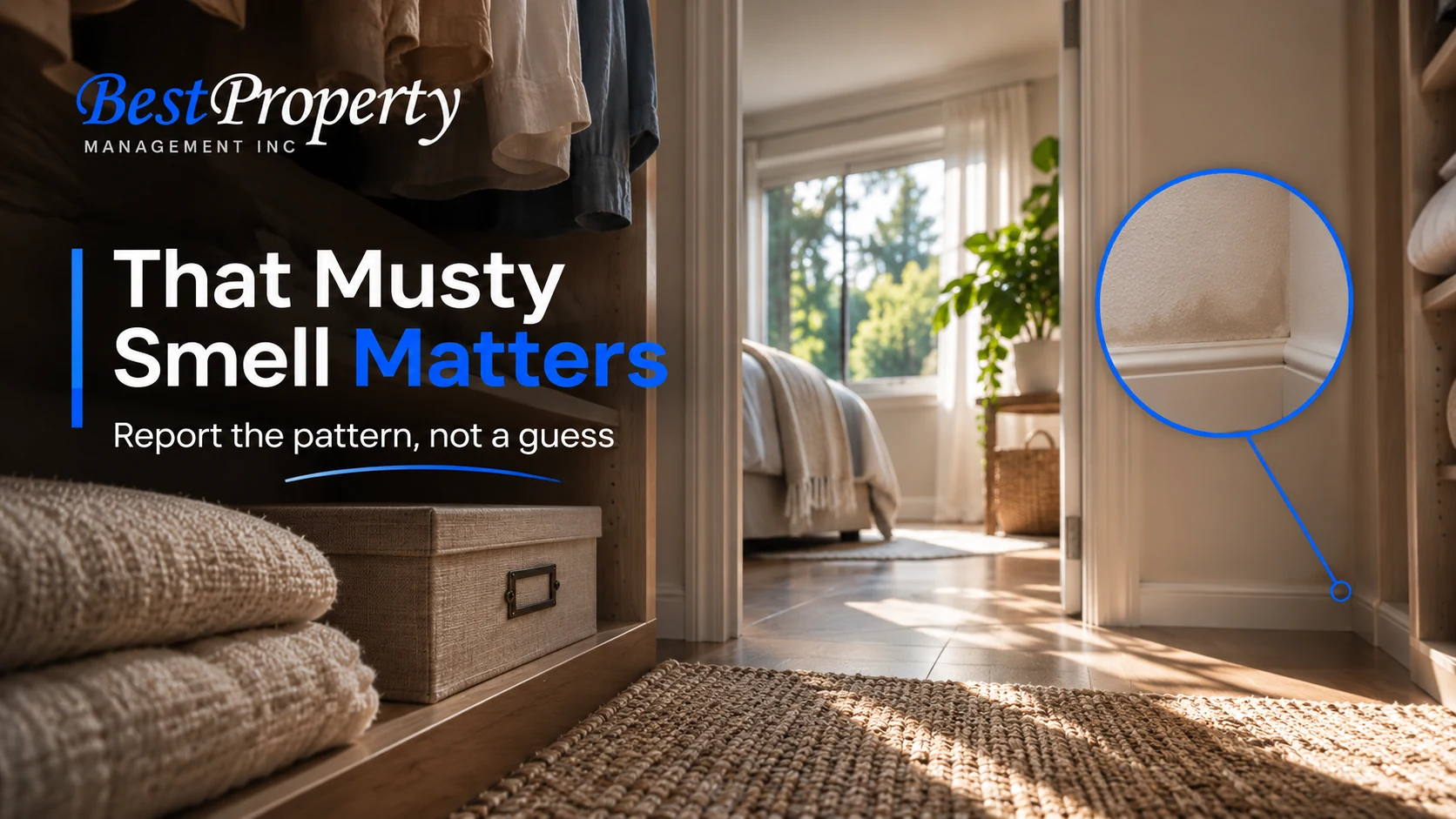
A musty smell appears when you open a closet. You cannot see an active leak, and the room looks mostly normal. Should you wait for a visible stain or send a maintenance request now?
Report a persistent or recurring musty odor with the location, timing and any signs of dampness. You do not need to identify a mold type before reporting a concern. An odor alone also does not establish the source or severity.
This guide builds on our indoor winter rental checklist. It helps renters communicate an observation and owners organize a response without turning a symptom into an unsupported diagnosis.
Describe what you notice, not what you assume
Start with the room and the specific area. A closet against an exterior wall, a cabinet below a sink and a bedroom corner are different locations with different inspection questions.
Note when the odor is strongest. Does it follow rain, a shower, a laundry cycle or a period when the home was closed? If you notice no pattern, say that. Include any visible dampness or changed surface, but do not move into an unsafe area to investigate.
Avoid statements such as “this is toxic black mold” based on a dark spot or a smell. A more useful message says what you actually observed and asks for assessment. That preserves the concern without pretending the answer is already known.
Add the moisture history
The EPA’s mold and moisture guide emphasizes addressing moisture. A smell report is therefore more useful when it includes relevant leak or dampness history.
Mention a recent plumbing incident, previous roof leak or prior repair in the same area if you know about it. Attach the earlier case number instead of relying on someone to remember a phone call from months ago.
A photo can document a visible change, but it cannot capture every odor or establish conditions inside a wall. Do not cut into a surface, lift fixed flooring or disturb suspected material to produce stronger evidence. An appropriate inspection can determine the next step.
Keep active hazards separate
An active leak near electrical equipment, a sagging water-filled ceiling or another immediate hazard needs the appropriate urgent response. Avoid the affected area and contact the responsible emergency services, utility or property contact as the situation requires.
For an ordinary non-emergency report, use the approved maintenance channel and ask for acknowledgment. If that channel is unavailable, use the property’s backup contact. Our resident portal outage guide explains why a digital submission is not the same as confirmed human receipt.
Health concerns also deserve the right contact. If someone experiences symptoms or has a medical vulnerability, seek advice from a healthcare professional. A property-management blog cannot determine whether a particular exposure caused symptoms or whether an individual should remain in a room.
Avoid hiding or disturbing the problem
Painting a spot or adding a strong fragrance may change the appearance or smell without addressing the source. Do not treat that as proof the condition is resolved.
Avoid mixing cleaning products or disturbing suspect material to investigate. Follow any appropriate instructions from the responsible professional and the property’s management contact. If belongings are damp, document the situation and ask how to keep the assessment area accessible without spreading material or putting yourself at risk.
This is not a DIY mold-remediation guide. The California Department of Public Health’s mold resources offer state information, while the correct local agency handles applicable property inspection or enforcement questions.
Send one organized report
A clear report can be factual and direct:
“I first noticed a persistent musty odor in the hall closet on Thursday. The lower wall beside the floor appears discolored, and the odor was stronger after the weekend rain. I have not opened or cleaned the wall. Please confirm the assessment and access arrangements.”
Adapt that structure to the actual facts. Do not copy a rain connection or visible stain into your message if it did not happen.
| Observation | Helpful detail | Why it matters |
|---|---|---|
| Odor | Location and recurrence | Helps focus the visit |
| Visible dampness | Surface and safe dated photo | Preserves the observed change |
| Earlier repair | Date and case number | Connects the history |
| Access limitation | Pets, schedule or affected area | Supports an authorized visit |
Keep the response and appointment details together. If the odor changes or the condition spreads, update the same case with the new observation and use a more urgent route if the circumstances now require it.
What a useful assessment record should answer
Owners should ask what was observed, what source was found or remains suspected and what work or further assessment is recommended. Distinguish a confirmed finding from a possibility.
A report that only says “cleaned area” may not answer whether a recurring moisture source was identified. A report that recommends another inspection should not be treated as a completed resolution. Our recurring maintenance guide covers the value of preserving that distinction.
A resident can ask for the practical next step: whether access is needed again, whether an area should be avoided under professional instructions and how to report a recurrence. A good response does not need to promise an outcome before the assessment has occurred.
Plan follow-up instead of guessing from one visit
After the appropriate work, keep track of whether the odor or dampness returns. Report the new date and the same location so the service history remains connected. Do not declare the home clear of every possible issue based only on a changed smell.
If the concern is not being addressed, ask the responsible local housing or code-enforcement agency about the applicable process and consider qualified legal advice. Do not assume that withholding rent or arranging a deduction is automatically appropriate; remedies depend on facts and law.
For a Best Property-managed home, contact the local office and use its current reporting instructions. Our property maintenance services, bathroom ventilation guide and rental inspection overview show how observations, access and follow-up fit together. Early, factual reporting helps the right person decide what the home needs.
Frequently Asked Questions
Should I report a musty smell if I cannot see mold?
Yes, a persistent or recurring odor is a useful observation to report. Include its location and timing without claiming to know the source or severity.
Can smell or color identify a dangerous mold type?
Do not rely on smell or color for that conclusion. An appropriate assessment and, for individual health questions, a healthcare professional are the relevant next steps.
What should I photograph?
Photograph visible changes from a safe position if appropriate. Do not open walls, disturb suspect material or enter a hazardous area to gather evidence.
Should I paint over a discolored patch?
Do not conceal a recurring damp area before it is assessed. A change in appearance does not establish that the moisture source has been corrected.
What if there was a leak in the same location last month?
Include the date and prior case number. A connected history can help the assessor consider whether the current observation relates to an earlier condition.
Does a musty smell automatically allow rent withholding?
Do not assume that. Legal remedies depend on the facts and applicable law. Seek qualified advice rather than unilaterally changing payments based on an online checklist.
Who handles a health concern related to dampness?
A healthcare professional should address individual symptoms and medical risks. The property contact coordinates the relevant property assessment and maintenance process.
What should happen if the smell returns after service?
Update the same case with the recurrence date and current observations. Ask what remains to be assessed and use the appropriate urgent route if new hazards appear.
Related Articles
Fremont Rental Property Maintenance: Should You Repair, Replace or Monitor a Recurring Problem? For connecting repeated symptoms to the existing repair history.
Best Guide to Rental Property Inspections in the East Bay: Timing, Reports and Owner Oversight For understanding the purpose and limits of a rental inspection.
Why Did the Water Bill Jump? 5 Hidden Leaks Worth Checking For reporting possible leaks with useful observations.
East Bay Rental Property Maintenance: Does Faster Response Help Reduce Tenant Turnover? For improving the communication that supports a maintenance response.
Blog
Company News
Landlord Resources
Landlords
Legal
Linkedin
Local Market Insights
Maintenance & Repairs
Market
Owners
Property
Property Law & Compliance
Property Management
Rental Property
Tenants
Video
FILTER BY EASTBAY & TRI-VALLEY CITIES
AB 1482
AI Property Management
AI Rental Fraud
Antioch Property Management
Applicant Data Security
Applicant Information
Applicant Screening
Applicant Verification
Bank Statement Fraud
Brentwood
Brentwood property management
California Insurance
California Landlord Laws
California Property Management
California Rent Increase
Central Valley Property Management
Concord Property Management
Credit Reports
Danville Property Management
Danville rentals
Desert Hot Springs Property Management
Desert Property Maintenance
Desert Rentals
Document Fraud
Dublin property management
East Bay Landlords
East Bay Lease Renewals
East Bay property management
East Bay Rental Market
East Bay Rental Owners
East Bay Rental Property Maintenance
East Bay Rental Property Management
East Bay rental tips
East Bay Rentals
EV Charging
Eviction Notices
Eviction Support
Fair Housing
Fake Pay Stubs
Fall Leasing
find a property manager
Fremont
Fremont property management
full service property management
Full-Service Property Management
Good Tenants
Hayward Property Management
Hayward rentals
hiring a property manager
HOA Compliance
HOA Rental Management
HOA Rentals
Home Insurance Costs
Human Oversight
Identity Verification
Income Verification
Indian Wells Property Management
Inherited Rental Property
Landlord Compliance
Landlord Data Security
Landlord Insurance
Landlord Resources
Landlord Tips
Lease Renewal Strategy
Lease Renewals
Leasing Fees
Leasing Services
Livermore
Livermore property management
Livermore Rentals
Local Development
Local Market Insights
Local Rental Support
Long-Term Rentals
Luxury Rentals
maintenance coordination
Maintenance Response
Management Services
Manteca Property Management
Milpitas Property Management
Mountain House Property Management
New Housing San Ramon
Newark CA Property Management
Oakley Property Management
Online Rent Payments
Owner Onboarding
owner reporting
Palm Desert Property Management
Palm Springs Area Property Management
Palm Springs Property Management
Palm Springs Rentals
Pittsburg CA Property Management
Pleasanton property management
Pleasanton rentals
Preventive Maintenance
Property Inspections
Property Maintenance
Property Management
Property Management Companies
Property Management Fees
Property Management Services
Property Management Transition
Property Manager
Rancho Mirage Property Management
Real Estate
real estate investing
Redfin Rentals
Remote Property Management
Rent Collection
Rent Control
Rent Trends
Rental Application Fraud
Rental Application Privacy
Rental Competition
Rental Fees
Rental Fraud
Rental History
Rental Inspections
Rental Internet
rental leasing
Rental Market Analysis
Rental Market Trends
Rental Marketing
Rental Pricing
Rental Property
Rental Property Expenses
Rental Property Maintenance
rental property owners
rental property ROI
Renter Choice
Renter Experience
Repair Coordination
Resident Portal
Residential Leasing
Roommate Management
San Lorenzo Property Management
San Ramon Landlords
San Ramon Orchards
San Ramon property management
San Ramon Rental Market
Screening Red Flags
Seasonal Rentals
Security Deposits
Sell or Rent
Silicon Valley Rentals
single family rentals
Single-Family Rentals
Tenant Background Checks
Tenant Communication
Tenant Complaints
Tenant Expectations
Tenant Issues
Tenant Placement
Tenant Protection Act
Tenant Retention
tenant screening
Tenant Screening Data Security
Tenant Screening Fraud
Tenant Screening Red Flags
Tenant Turnover
Tracy Property Management
Tri-Valley
Tri-Valley Housing Market
Tri-Valley property management
Tri-Valley Rentals
Union City Property Management
Vacation Rental Management
Wildfire Risk
Winter Rental Safety
Zillow Rentals
 FILTER
 SEARCH BLOG