Palm Desert Long-Term Rental Management: How Can Owners Monitor Income and Repairs From Away?
Palm Desert owners can oversee a long-term rental from away by agreeing on a regular statement, clear repair authority and follow-up that connects each work order to photos, an invoice and the owner account. Confirm who is available locally, which issues trigger an immediate update and how you can get records when a decision cannot wait.
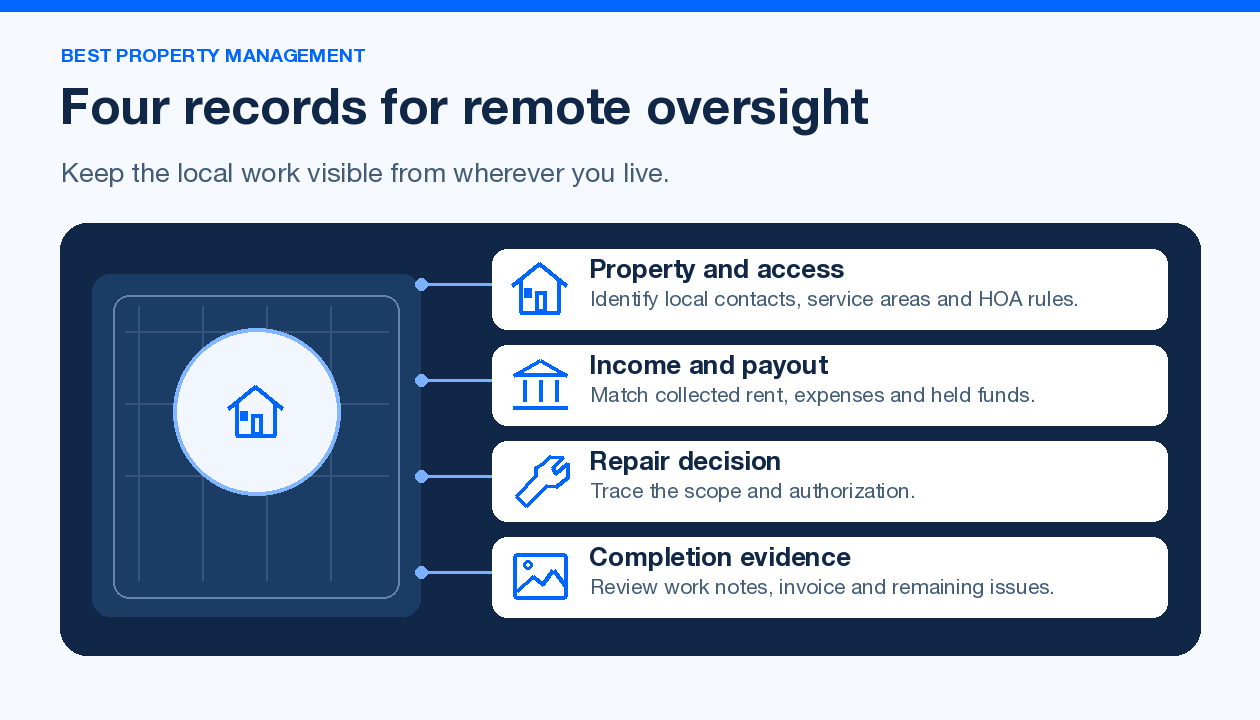
You can review a month’s rent from anywhere. The harder part is knowing what happened at the house after someone reported a problem. If a message says the air conditioning was serviced, can you see what the contractor found, what work was authorized and whether the tenant still has an issue? A remote management arrangement should answer those questions without requiring an owner visit.
What should you be able to see from out of town?
Ask for the reporting schedule, account access and method for obtaining supporting records. A useful monthly package identifies rent received, paid expenses, held funds and distributions. Ask where you can see unpaid balances, open work and recent changes that might not be reflected in the current statement.
Request a redacted example from the prospective manager. Follow one transaction from the statement to its source. If you need a vendor invoice, ask where it is stored and who can explain a charge. Also confirm whether you can download your records and how corrections are identified.
Our remote property management guide addresses broader oversight questions. The Palm Springs area management guide provides context for comparing regional service. Ask the firm which services and local arrangements it offers specifically for your Palm Desert address.
Who handles urgent issues when you are away?
Ask who receives tenant requests, who coordinates local work and who covers any absence. Verify the agreed response process and the communication channel for a time-sensitive issue. An owner who lives in another time zone should discuss when an immediate call is appropriate and who can serve as a backup decision maker.
In a Palm Desert home, cooling, irrigation or other exterior systems may require a property-specific plan. List the equipment and existing vendor arrangements for your house, and ask which documents or warranties the manager needs. Discuss access to shutoffs and service areas as appropriate. The manager and qualified vendors should determine how to handle an actual condition.
Read the agreement’s emergency and ordinary repair provisions. Discuss what work can proceed within the manager’s authority and the records you should expect afterward. Clear authority and clear evidence let the local contact respond while keeping the absent owner informed.
What should an approval request include?
Ask for the observed condition, reasonably available evidence, proposed scope, estimate and expected next step. If the first visit is diagnostic, identify what that visit should establish and whether the repair will require separate authorization.
For example, a recurring cooling complaint might lead to an initial service visit. Ask how the contractor’s findings will be documented, whether there is an existing warranty and who will confirm the tenant’s issue was addressed. A request for approval should tell you whether you are authorizing evaluation, specific work or further investigation.
Agree how to record the decision. Confirm what counts as an approval and how changes in scope or cost are reported. See the remote reporting example for Tracy owners for a practical approach to combining financial and repair oversight from another location.
How do you confirm a repair was completed?
Request the completion date, work performed, appropriate photos or service report and invoice. Identify any remaining condition and the responsible party. If the original problem was intermittent, ask what was tested or observed and whether a follow-up is scheduled. A closed invoice can still leave an unanswered tenant issue.
| Stage | What the owner can request | What it establishes |
|---|---|---|
| Report | Date, location and observed problem. | The issue that prompted the work. |
| Authorization | Scope, estimate and approval or emergency record. | Who authorized the next step. |
| Visit | Work order and contractor findings. | What was investigated or changed. |
| Closeout | Completion evidence, invoice and any remaining issue. | What can be checked after the visit. |
| Accounting | Statement entry and work reference. | Where the cost appears in reporting. |
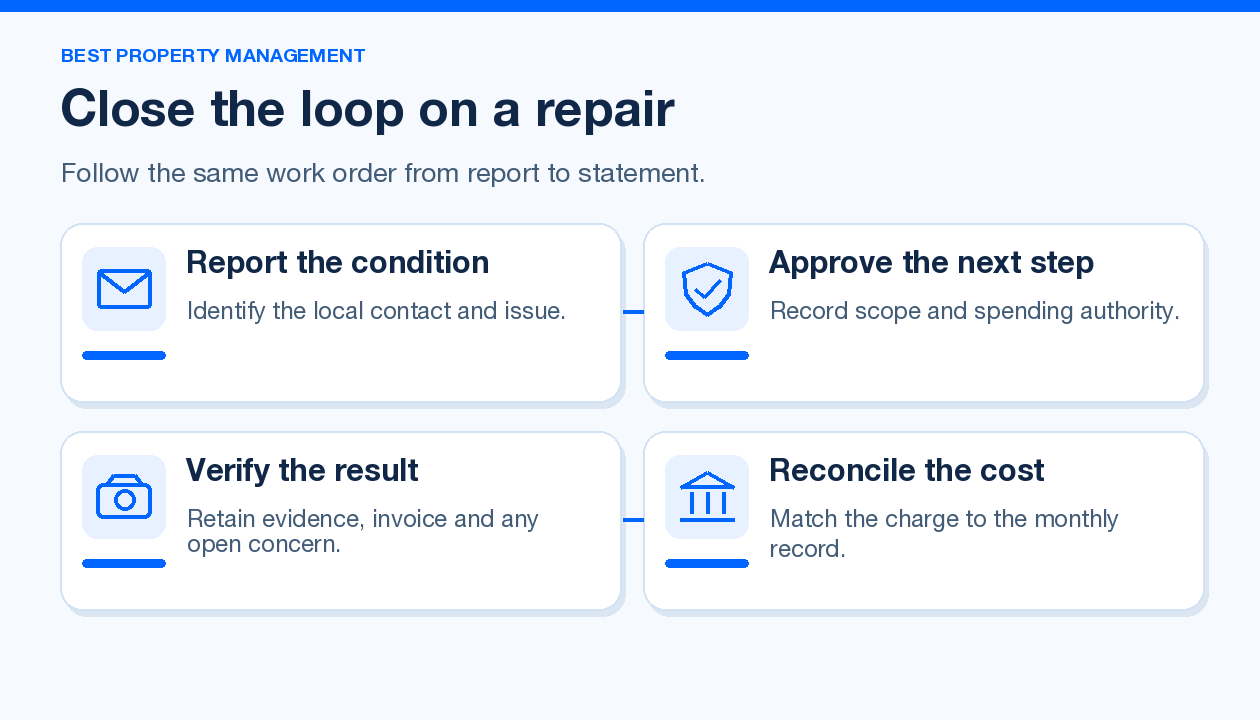
Tie the invoice to the original work order. The evidence should let you follow the sequence even if you were offline during the visit. Our inspection and oversight guide explains how to document conditions that may require later follow-up.
Which local access and association duties need to be assigned?
If the home is in an association, ask who receives notices, who arranges vendor access and whether work requires any separate authorization. Confirm what the owner needs to handle directly. Document access restrictions, parking and any recurring yard or exterior services. Apply the details that actually affect the property.
For an occupied home, tenant communication and lawful access need to be coordinated with the applicable agreements and requirements. Ask who schedules visits and protects credentials. Store keys and access codes through a suitable process. Include any equipment manuals, warranty contacts or service notes that will help a local person understand the house.
When renting a home long-term, confirm the lease and ongoing management scope for that use. Ask the firm which work it will undertake during a continuing tenancy and which work applies when the property becomes vacant.
What should a remote owner review each month?
Start with three things. Confirm rent activity, check any unusual expense and review open work or decisions. If the statement includes held funds, identify why they remain and how the balance relates to the agreement. Match the payout to the bank receipt as an additional check.
Ask for an exception report or an update when something falls outside the normal cycle. Examples are an unresolved repair, a missing record or a lease decision approaching its deadline. Keep a short list with who owns the next step and when the owner expects a response.
Occasionally review how the process is working. If repeated reports leave the same question unanswered, define the record you need. You might ask for a work reference on invoices or for a separate open-items list. That is a more actionable request than asking for “more transparency.”
What should you ask before signing with a Palm Desert manager?
Describe the home, lease status, recurring service arrangements and your availability. Ask the company to walk through a hypothetical urgent repair and one ordinary month. Confirm what the tenant sees, what arrives in your account and which decisions remain with you.
Agree on reporting, expense authorization, backup contacts and local access before the company takes over. Ask how a closing report and document transfer work if the arrangement ends. An owner who lives away should be able to verify each important step without reconstructing events from separate messages.
What else do rental owners ask?
Can I manage oversight without visiting Palm Desert each month?
A local service arrangement can help. Agree on reporting, access, repair authority, completion evidence and escalation, and review the records on a regular schedule.
What should I ask about cooling system repairs?
Ask how the tenant reports a problem, who arranges the local assessment, how approvals work and what evidence the owner receives after the visit.
How do I know if the tenant’s issue was resolved?
Ask for the work completed, relevant verification and any remaining concern. Track unresolved items and a date for the next update.
What if the home is in an HOA?
Clarify access, service boundaries, notices and required approvals for the actual property. Confirm who communicates with the association and when you are involved.
Do I need a backup decision maker?
Discuss one if your availability is limited. Record how that party may act, how to reach them and where the decision should be documented.
Is the monthly statement enough for remote oversight?
Use it alongside ledgers, work orders and exception updates. Each record answers a different question about what happened.
Related articles for rental property owners
Best Guide to Remote Rental Property Management in the East Bay and Tri-Valley
Tracy Remote Property Management: How Can You Track Rent, Repairs and Inspections From Out of Town?
Best Guide to Rental Property Inspections in the East Bay: Timing, Reports and Owner Oversight
What should you discuss with Best Property?
Bring the address, lease status, vendor arrangements and your availability for decisions. Ask how local coordination, urgent calls and monthly reports would work for your Palm Desert long-term rental. See the Palm Desert property management page. Review Best Property’s property management services service or contact the Best Property team.
Editorial cover is AI-assisted and illustrative. Check the agreement and the rules that apply to your property.
Blog
Company News
Landlord Resources
Landlords
Legal
Linkedin
Local Market Insights
Maintenance & Repairs
Market
Owners
Property
Property Law & Compliance
Property Management
Rental Property
Tenants
Video
FILTER BY EASTBAY & TRI-VALLEY CITIES
AB 1482
AI Property Management
AI Rental Fraud
Antioch Property Management
Applicant Data Security
Applicant Information
Applicant Screening
Applicant Verification
Bank Statement Fraud
Battery Recalls
Brentwood
Brentwood property management
California Insurance
California Landlord Laws
California Property Management
California Rent Increase
Central Valley Property Management
Concord Property Management
Credit Reports
Danville Property Management
Danville rentals
Desert Hot Springs Property Management
Desert Property Maintenance
Desert Rentals
Document Fraud
Dublin property management
E-Bike Safety
East Bay Landlords
East Bay Lease Renewals
East Bay property management
East Bay Rental Market
East Bay Rental Owners
East Bay Rental Property Maintenance
East Bay Rental Property Management
East Bay rental tips
East Bay Rentals
EV Charging
Eviction Notices
Eviction Support
Fair Housing
Fake Pay Stubs
Fall Leasing
find a property manager
Fremont
Fremont property management
full service property management
Full-Service Property Management
Good Tenants
Hayward Property Management
Hayward rentals
Heat Pump Water Heaters
hiring a property manager
HOA Compliance
HOA Rental Management
HOA Rentals
Home Insurance Costs
Human Oversight
Identity Verification
Income Verification
Indian Wells Property Management
Inherited Rental Property
Landlord Compliance
Landlord Data Security
Landlord Insurance
Landlord Resources
Landlord Tips
Lease Renewal Strategy
Lease Renewals
Leasing Fees
Leasing Services
Livermore
Livermore property management
Livermore Rentals
Local Development
Local Market Insights
Local Rental Support
Long-Term Rentals
Luxury Rentals
maintenance coordination
Maintenance Response
Management Services
Manteca Property Management
Milpitas Property Management
Mountain House Property Management
New Housing San Ramon
Newark CA Property Management
Oakley Property Management
Online Rent Payments
Owner Onboarding
owner reporting
Palm Desert Property Management
Palm Springs Area Property Management
Palm Springs Property Management
Palm Springs Rentals
Pittsburg CA Property Management
Pleasanton property management
Pleasanton rentals
Preventive Maintenance
Property Inspections
Property Maintenance
Property Management
Property Management Companies
Property Management Fees
Property Management Services
Property Management Transition
Property Manager
Rancho Mirage Property Management
Real Estate
real estate investing
Redfin Rentals
Remote Property Management
Rent Collection
Rent Control
Rent Reporting
Rent Trends
Rental Application Fraud
Rental Application Privacy
Rental Competition
Rental Fee Transparency
Rental Fees
Rental Fraud
Rental History
Rental Inspections
Rental Internet
rental leasing
Rental Market Analysis
Rental Market Trends
Rental Marketing
Rental Pricing
Rental Property
Rental Property Expenses
Rental Property Maintenance
rental property owners
rental property ROI
Renter Choice
Renter Experience
Repair Coordination
Resident Portal
Residential Leasing
Roommate Management
San Lorenzo Property Management
San Ramon Landlords
San Ramon Orchards
San Ramon property management
San Ramon Rental Market
Screening Red Flags
Seasonal Rentals
Security Deposits
Sell or Rent
Silicon Valley Rentals
single family rentals
Single-Family Rentals
Tenant Background Checks
Tenant Communication
Tenant Complaints
Tenant Expectations
Tenant Issues
Tenant Placement
Tenant Protection Act
Tenant Retention
tenant screening
Tenant Screening Data Security
Tenant Screening Fraud
Tenant Screening Red Flags
Tenant Turnover
Tracy Property Management
Tri-Valley
Tri-Valley Housing Market
Tri-Valley property management
Tri-Valley Rentals
Union City Property Management
Vacation Rental Management
Wildfire Risk
Winter Rental Safety
Zillow Rentals
 FILTER
 SEARCH BLOG