Property Maintenance: Did the Chatbot Actually Submit Your Repair Request?
A chatbot saying “we have received your request” does not necessarily mean a repair has been assigned. Confirm the work-order reference, current status and next action before assuming a vendor is on the way.
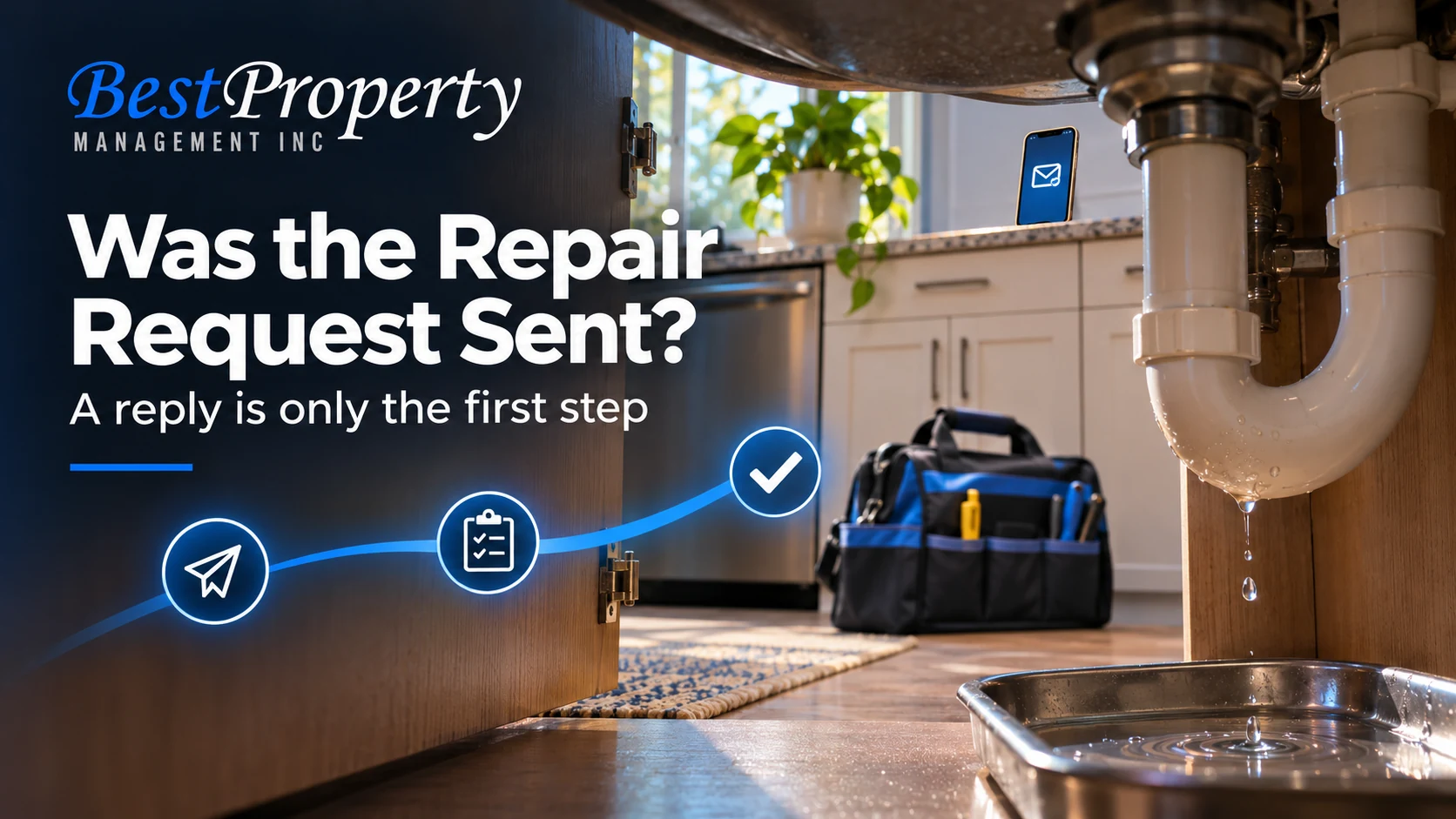
A leaking sink creates a real-world problem. An automated reply creates a communication record. Good property maintenance connects the two, but the handoff can fail if a message is incomplete, the address is wrong or a follow-up never reaches the person coordinating the repair.
The 2027 Buildium industry report discusses the growing role of technology in management operations. That is a reason to examine the workflow, not evidence that every chatbot loses repairs. The useful question is what happened to this particular request.
Five steps separate a message from a completed repair
| Step | What it means | What to ask |
|---|---|---|
| Received | Your message reached a channel | Can you identify the request? |
| Logged | An actionable work order exists | What is its reference and description? |
| Assigned | A person or vendor owns the next action | Who is coordinating the work? |
| Access arranged | The visit has a workable entry plan | What appointment or notice applies? |
| Resolved | Work and follow-up are documented | What was completed and is the problem gone? |
A request can be legitimately waiting for a part or owner authorization. That is different from a request that has no responsible person. A clear status should explain the distinction without promising a completion time nobody has confirmed.
What information makes a repair request actionable?
Describe the location, the symptom and when it occurs. “Water appears inside the cabinet when the kitchen faucet runs” gives the coordinator more to work with than “plumbing problem.” Explain whether the water is still running, whether it is spreading and whether electrical equipment is nearby.
Include safe photos when they help. Do not climb, dismantle equipment or touch wet electrical fixtures to produce better evidence. Keep the original submission date and a copy of the text.
- Identify the rental and the specific room or fixture.
- State when the issue began and whether it is continuous.
- Describe any immediate safety concern.
- Provide the approved contact and scheduling information.
- Refer to previous work if the same symptom has returned.
Our rental maintenance guide places this reporting step within preventive work, vendor coordination and owner oversight. A detailed message helps, but residents should not be expected to diagnose the defect themselves.
What if the bot asks the same question repeatedly?
First check whether the channel is asking for a missing required field. If you already supplied it, stop starting new conversations. Reference the original submission and request a person to review the full history.
For example: “This is follow-up on request 123, submitted Monday. The leak is still active. Please confirm the work-order status and the next action. I have attached a current photo through the approved portal.”
That is a sample message, not an actual Best Property case or a promise about response time. Its value is that it gives the next person a date, a reference and a change in condition.
Escalate a changed situation, not just an unanswered notification
An intermittent drip becoming an active leak changes the repair priority. So does a new electrical smell, loss of essential service or water reaching another unit. Make the change explicit when using the verified urgent reporting procedure.
If there is immediate danger, use the appropriate emergency service and move to safety. Do not rely on an unread portal ticket. Follow property-specific emergency instructions and do not attempt a hazardous repair.
Once safe, connect the emergency report to the original request. That helps the office understand the sequence and prevents two separate records from making the response look complete when one part remains unresolved.
Owners should measure the handoff, not the number of replies
A fast acknowledgment is useful, but it is not the same as a fast repair. Ask for a sample showing the report, triage, authorization, vendor contact, access arrangement, invoice and resolution. Protect resident privacy when reviewing records.
Look for a specific owner of the next step. “Vendor notified” may mean an email was sent, while “appointment confirmed” means something more concrete. If authorization is pending, the owner needs to know what decision is required and what happens if the condition worsens.
Our article on maintenance response and tenant retention explains why communication and follow-through belong together. A tenant can tolerate a clearly explained parts delay more easily than a sequence of cheerful messages with no plan.
Close the loop after the visit
A vendor leaving the property is not always the end of the issue. Ask what work was performed, whether another visit is needed and how to report a recurring symptom. Residents can confirm whether the original problem appears resolved without certifying the technical quality of work they cannot inspect.
If the same problem returns, reference the previous work order. A pattern may call for a repair-versus-replacement review rather than another isolated ticket. Our recurring rental repair guide describes the evidence owners should consider.
For the correct current maintenance and urgent reporting procedure, contact the responsible team through Best Property Management’s office directory. Save those instructions before you need them. The goal is one coherent case history, from the first report to a verified next step.
Review our property-maintenance services when discussing how reporting, coordination and follow-up fit the actual management arrangement.
If the problem is reaching the responsible person, use our guide to requesting human rental support. For a closure, review holiday emergency planning before assuming the routine channel is staffed.
Frequently Asked Questions
Does an instant reply mean a maintenance work order was created?
Not necessarily. The message may acknowledge receipt without creating or completing an actionable work order. Ask for the reference number, current status and responsible coordinator rather than inferring progress from the speed of the reply.
What should I do if I never receive a request number?
Save the original submission and follow up through the approved channel. Ask the office to confirm whether a work order exists and how it is identified. Some systems use a different reference format, so the absence of a number alone does not prove the request was lost.
Should I submit a second ticket if the first one is unanswered?
Refer to the original ticket when possible so the history stays together. If the situation has become urgent, use the verified urgent reporting procedure and describe the change. Do not wait for routine portal support during an immediate safety emergency.
What photos should accompany a repair request?
Provide a safe overall view and a closer view of the visible symptom when useful. Avoid personal documents and unrelated belongings. Do not open electrical equipment, climb onto a roof or enter an unsafe area to obtain a photo.
Can a chatbot decide whether a repair is an emergency?
Software may collect information, but residents should follow the property’s verified emergency instructions and use emergency services for immediate danger. A generic automated classification should not be the sole basis for ignoring a worsening safety concern.
Does vendor assignment mean an appointment is confirmed?
No. Assignment, vendor acceptance and access scheduling are separate steps. Ask whether the visit has been confirmed, what access procedure applies and how changes will be communicated.
What should owners review when requests keep getting stuck?
Review several complete cases rather than response counts alone. Identify where information, authorization, vendor scheduling or completion verification stops. The solution may involve clearer responsibility or better escalation, not simply faster automated replies.
How should I report a repair that failed again?
Reference the previous work order, explain when the symptom returned and provide safe current evidence. Ask whether the new report will be linked to the earlier repair so the coordinator can evaluate the pattern.
Related Articles
Best Guide to Rental Property Maintenance in the East Bay: How Owners Prevent Expensive Repairs and Tenant Complaints Understand the full maintenance process behind each work order.
East Bay Rental Property Maintenance: Does Faster Response Help Reduce Tenant Turnover? See why speed and communication both influence the rental experience.
Fremont Rental Property Maintenance: Should You Repair, Replace or Monitor a Recurring Problem? Know when repeat tickets should trigger a repair-versus-replacement review.
Tracy Rental Property Maintenance: How Should You Set Repair Approval Limits? Learn how owner approval limits affect repair coordination.
Blog
Company News
Landlord Resources
Landlords
Legal
Linkedin
Local Market Insights
Maintenance & Repairs
Market
Owners
Property
Property Law & Compliance
Property Management
Rental Property
Tenants
Video
FILTER BY EASTBAY & TRI-VALLEY CITIES
AB 1482
AI Property Management
AI Rental Fraud
Antioch Property Management
Applicant Data Security
Applicant Information
Applicant Screening
Applicant Verification
Bank Statement Fraud
Brentwood
Brentwood property management
California Insurance
California Landlord Laws
California Property Management
California Rent Increase
Central Valley Property Management
Concord Property Management
Credit Reports
Danville Property Management
Danville rentals
Desert Hot Springs Property Management
Desert Property Maintenance
Desert Rentals
Document Fraud
Dublin property management
East Bay Landlords
East Bay Lease Renewals
East Bay property management
East Bay Rental Market
East Bay Rental Owners
East Bay Rental Property Maintenance
East Bay Rental Property Management
East Bay rental tips
East Bay Rentals
EV Charging
Eviction Notices
Eviction Support
Fair Housing
Fake Pay Stubs
Fall Leasing
find a property manager
Fremont
Fremont property management
full service property management
Full-Service Property Management
Good Tenants
Hayward Property Management
Hayward rentals
hiring a property manager
HOA Compliance
HOA Rental Management
HOA Rentals
Home Insurance Costs
Human Oversight
Identity Verification
Income Verification
Indian Wells Property Management
Inherited Rental Property
Landlord Compliance
Landlord Data Security
Landlord Insurance
Landlord Resources
Landlord Tips
Lease Renewal Strategy
Lease Renewals
Leasing Fees
Leasing Services
Livermore
Livermore property management
Livermore Rentals
Local Development
Local Market Insights
Local Rental Support
Long-Term Rentals
Luxury Rentals
maintenance coordination
Maintenance Response
Management Services
Manteca Property Management
Milpitas Property Management
Mountain House Property Management
New Housing San Ramon
Newark CA Property Management
Oakley Property Management
Online Rent Payments
Owner Onboarding
owner reporting
Palm Desert Property Management
Palm Springs Area Property Management
Palm Springs Property Management
Palm Springs Rentals
Pittsburg CA Property Management
Pleasanton property management
Pleasanton rentals
Preventive Maintenance
Property Inspections
Property Maintenance
Property Management
Property Management Companies
Property Management Fees
Property Management Services
Property Management Transition
Property Manager
Rancho Mirage Property Management
Real Estate
real estate investing
Redfin Rentals
Remote Property Management
Rent Collection
Rent Control
Rent Trends
Rental Application Fraud
Rental Application Privacy
Rental Competition
Rental Fees
Rental Fraud
Rental History
Rental Inspections
Rental Internet
rental leasing
Rental Market Analysis
Rental Market Trends
Rental Marketing
Rental Pricing
Rental Property
Rental Property Expenses
Rental Property Maintenance
rental property owners
rental property ROI
Renter Choice
Renter Experience
Repair Coordination
Resident Portal
Residential Leasing
Roommate Management
San Lorenzo Property Management
San Ramon Landlords
San Ramon Orchards
San Ramon property management
San Ramon Rental Market
Screening Red Flags
Seasonal Rentals
Security Deposits
Sell or Rent
Silicon Valley Rentals
single family rentals
Single-Family Rentals
Tenant Background Checks
Tenant Communication
Tenant Complaints
Tenant Expectations
Tenant Issues
Tenant Placement
Tenant Protection Act
Tenant Retention
tenant screening
Tenant Screening Data Security
Tenant Screening Fraud
Tenant Screening Red Flags
Tenant Turnover
Tracy Property Management
Tri-Valley
Tri-Valley Housing Market
Tri-Valley property management
Tri-Valley Rentals
Union City Property Management
Vacation Rental Management
Wildfire Risk
Winter Rental Safety
Zillow Rentals
 FILTER
 SEARCH BLOG