Water Heater Replacement in a Rental: What Happens When Hot Water Stops?
The shower goes cold. The kitchen tap does too. For a resident, the immediate concern is getting hot water back—not choosing a replacement technology or interpreting an air-district announcement.
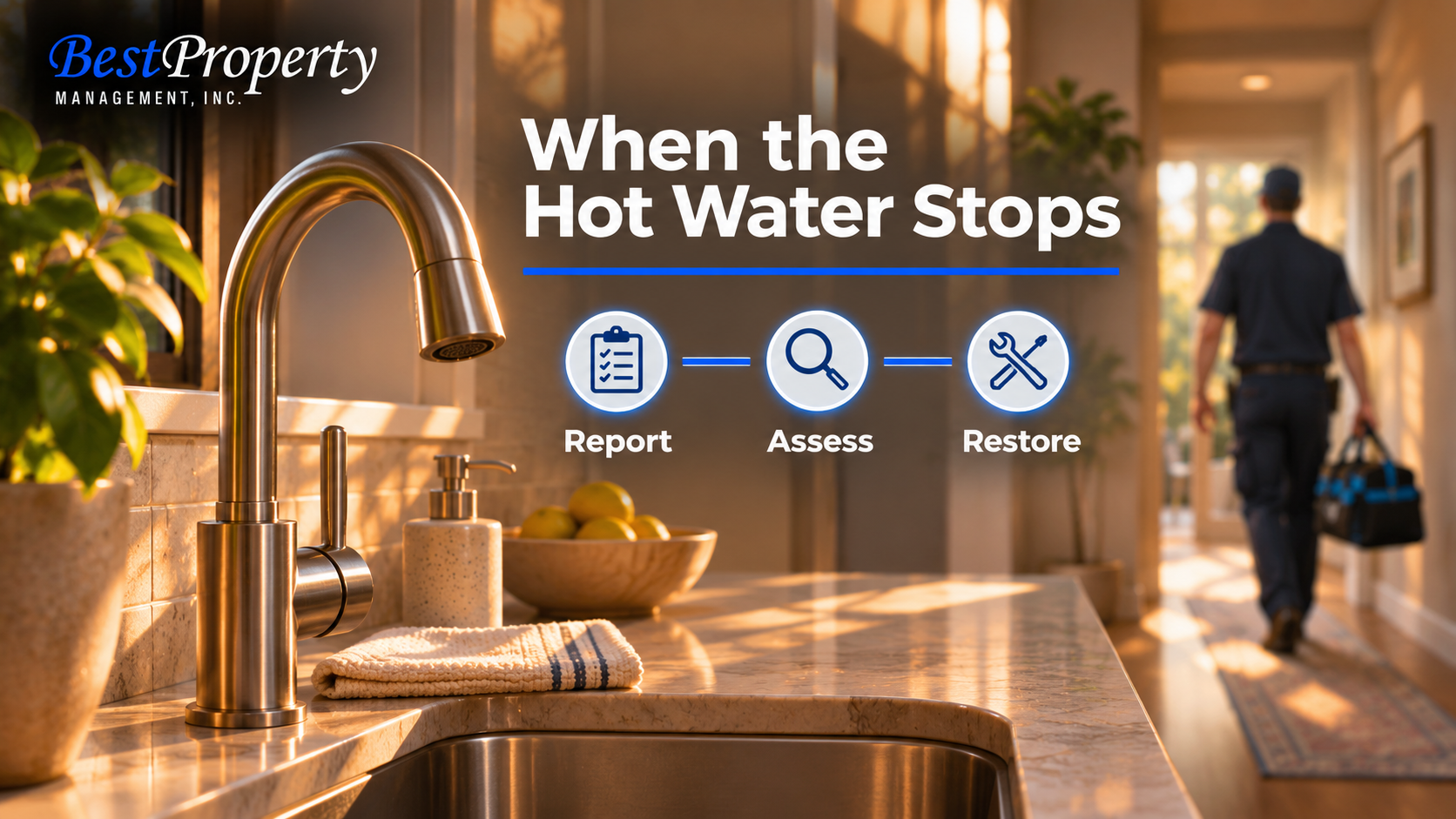
Report the loss of hot water promptly through the property’s repair channel, describe any immediate hazard and leave diagnosis to a qualified professional. The manager should coordinate assessment, owner decisions, lawful access and clear updates while a suitable repair or replacement is arranged.
Send a report that helps someone act
Include the property address and unit, when the problem began, whether every hot-water fixture is affected and whether there is visible leaking. Describe what you can observe safely. A short, precise message is better than a confident guess about a broken component.
If there is smoke, a gas odor, an active fire or another immediate danger, move to safety and use the appropriate emergency service. Do not wait for a routine portal response. Do not open equipment, adjust wiring or attempt an unfamiliar relighting procedure.
Use the designated after-hours route when the office is closed. A social-media comment or message to an old employee may not reach the person responsible for dispatch.
Acknowledge the problem before promising a completion time
A useful first response confirms receipt, identifies the next step and says when the resident will receive another update. It should not promise a same-day replacement before a contractor has assessed the fault and equipment availability.
Record who is assigned to the case. The resident should not have to repeat the entire story every time an employee changes shifts. An owner also needs a concise explanation of the issue and the approval needed, rather than a string of forwarded messages.
Assessment separates repair from replacement
No hot water does not prove the tank itself has failed. A qualified professional should identify the cause, relevant safety conditions and a suitable repair or replacement. Ask for findings, not just a price.
When replacement is recommended, document the equipment, supporting work, permits, available schedule and any options that genuinely affect the decision. Keep uncertain items visible. An estimate can be useful without pretending every condition behind a wall is already known.
The existing rental maintenance guide provides the broader recordkeeping framework; the urgent case still needs a named person moving it forward.
Where Bay Area replacement rules fit into an emergency
The November 2026 Bay Area Air District amendments changed the implementation schedule and include provisions for emergency circumstances. That does not make every failed unit an unrestricted replacement or every property subject to an identical date.
Ask the contractor to confirm the property’s applicable building-appliance rule path, including whether a temporary provision is relevant and what follow-up it requires. Keep that determination in the project record.
The immediate need for hot water and the obligation to use an appropriate installation have to be handled together. Neither is a reason to leave the other undefined.
Keep resident logistics separate from the purchase decision
The resident needs to know the access window, expected interruption, any preparation instructions and the contact for changes. The owner needs the approval amount, scope and unresolved choices. A contractor needs access and authorization to perform the agreed work.
Where a disruption creates additional habitability or accommodation questions, obtain property-specific guidance. Do not give tenants a blanket instruction to withhold rent, deduct repairs or use unapproved equipment based on a general article.
If a contractor is delayed, provide a real update. Even a clear explanation that a part has not arrived is better than silence followed by a missed visit.
Close the repair when service is verified
Completion involves more than a new appliance appearing in the closet. Record the work performed, final inspection when required, warranty information and any remaining follow-up. Ask the resident whether service has been restored through the normal communication channel.
Save the new model and installation details so the next maintenance decision begins with accurate information. If the same symptom returns, connect it to the previous work order instead of creating an unrelated record.
| Stage | Useful record |
|---|---|
| Report | Start time, affected fixtures and observed hazards |
| Assessment | Findings and repair or replacement recommendation |
| Authorization | Approved scope and responsible decision-maker |
| Scheduling | Access, interruption and update contact |
| Closeout | Restored service, inspections and warranty information |
Questions owners and tenants ask
Does no hot water always mean a new water heater?
No. A qualified assessment is needed to identify the cause and appropriate repair.
Should tenants attempt to fix the heater?
No. Report observable symptoms and use the authorized repair process. Do not undertake unfamiliar electrical, gas or equipment work.
What should happen outside office hours?
Use the designated after-hours repair channel. For immediate danger, move to safety and contact emergency services.
Can a manager guarantee the same completion time for every repair?
No. Diagnosis, safe access, equipment, permits and contractor availability differ. The communication plan should still be clear.
Does an emergency remove all replacement requirements?
No. Any applicable emergency provision needs confirmation and documentation, including required follow-up.
What should residents keep?
Keep the original report, responses, scheduled access information and a record of when service returned.
Explore this article series
Bay Area Water Heater Rules: What Changed in November 2026 for Rental Owners?
Is Your Rental Ready for a Heat Pump Water Heater? 7 Things to Check
Heat Pump Water Heater Rebates: What Can Bay Area Rental Owners Apply For?
Condo Water Heater Replacement: Who Needs to Approve the Work?
Related articles
Holiday rental emergencies and after-hours planning
Rental property maintenance: preventing expensive repairs
Talk with your local Best Property team
For an active maintenance issue, use your property’s designated repair contact. For planning and owner approval questions, your local office can help coordinate the next conversation. Find your local office.
Research checked November 12, 2026. General operational guidance; repair obligations and any temporary arrangements require attention to the actual property, circumstances and current law. AI-assisted editorial illustration; no actual tenant, client event or property is depicted.
Blog
Company News
Landlord Resources
Landlords
Legal
Linkedin
Local Market Insights
Maintenance & Repairs
Market
Owners
Property
Property Law & Compliance
Property Management
Rental Property
Tenants
Video
FILTER BY EASTBAY & TRI-VALLEY CITIES
AB 1482
AI Property Management
AI Rental Fraud
Antioch Property Management
Applicant Data Security
Applicant Information
Applicant Screening
Applicant Verification
Bank Statement Fraud
Battery Recalls
Brentwood
Brentwood property management
California Insurance
California Landlord Laws
California Property Management
California Rent Increase
Central Valley Property Management
Concord Property Management
Credit Reports
Danville Property Management
Danville rentals
Desert Hot Springs Property Management
Desert Property Maintenance
Desert Rentals
Document Fraud
Dublin property management
E-Bike Safety
East Bay Landlords
East Bay Lease Renewals
East Bay property management
East Bay Rental Market
East Bay Rental Owners
East Bay Rental Property Maintenance
East Bay Rental Property Management
East Bay rental tips
East Bay Rentals
EV Charging
Eviction Notices
Eviction Support
Fair Housing
Fake Pay Stubs
Fall Leasing
find a property manager
Fremont
Fremont property management
full service property management
Full-Service Property Management
Good Tenants
Hayward Property Management
Hayward rentals
Heat Pump Water Heaters
hiring a property manager
HOA Compliance
HOA Rental Management
HOA Rentals
Home Insurance Costs
Human Oversight
Identity Verification
Income Verification
Indian Wells Property Management
Inherited Rental Property
Landlord Compliance
Landlord Data Security
Landlord Insurance
Landlord Resources
Landlord Tips
Lease Renewal Strategy
Lease Renewals
Leasing Fees
Leasing Services
Livermore
Livermore property management
Livermore Rentals
Local Development
Local Market Insights
Local Rental Support
Long-Term Rentals
Luxury Rentals
maintenance coordination
Maintenance Response
Management Services
Manteca Property Management
Milpitas Property Management
Mountain House Property Management
New Housing San Ramon
Newark CA Property Management
Oakley Property Management
Online Rent Payments
Owner Onboarding
owner reporting
Palm Desert Property Management
Palm Springs Area Property Management
Palm Springs Property Management
Palm Springs Rentals
Pittsburg CA Property Management
Pleasanton property management
Pleasanton rentals
Preventive Maintenance
Property Inspections
Property Maintenance
Property Management
Property Management Companies
Property Management Fees
Property Management Services
Property Management Transition
Property Manager
Rancho Mirage Property Management
Real Estate
real estate investing
Redfin Rentals
Remote Property Management
Rent Collection
Rent Control
Rent Reporting
Rent Trends
Rental Application Fraud
Rental Application Privacy
Rental Competition
Rental Fee Transparency
Rental Fees
Rental Fraud
Rental History
Rental Inspections
Rental Internet
rental leasing
Rental Market Analysis
Rental Market Trends
Rental Marketing
Rental Pricing
Rental Property
Rental Property Expenses
Rental Property Maintenance
rental property owners
rental property ROI
Renter Choice
Renter Experience
Repair Coordination
Resident Portal
Residential Leasing
Roommate Management
San Lorenzo Property Management
San Ramon Landlords
San Ramon Orchards
San Ramon property management
San Ramon Rental Market
Screening Red Flags
Seasonal Rentals
Security Deposits
Sell or Rent
Silicon Valley Rentals
single family rentals
Single-Family Rentals
Tenant Background Checks
Tenant Communication
Tenant Complaints
Tenant Expectations
Tenant Issues
Tenant Placement
Tenant Protection Act
Tenant Retention
tenant screening
Tenant Screening Data Security
Tenant Screening Fraud
Tenant Screening Red Flags
Tenant Turnover
Tracy Property Management
Tri-Valley
Tri-Valley Housing Market
Tri-Valley property management
Tri-Valley Rentals
Union City Property Management
Vacation Rental Management
Wildfire Risk
Winter Rental Safety
Zillow Rentals
 FILTER
 SEARCH BLOG