Is Your Rental Ready for a Heat Pump Water Heater? 7 Things to Check
The appliance price is the easiest number to find. The harder question is whether that appliance can be installed properly in the space your rental actually has. A readiness check makes the first contractor quote considerably more useful.
Before approving a heat pump water heater installation, have a qualified professional check seven things: hot-water demand, physical space, electrical supply, airflow, condensate drainage, sound and approvals. This is a planning checklist, not a do-it-yourself installation guide.
1. Start with the residents’ hot-water needs
Record the number of bathrooms, existing equipment capacity and any documented pattern of running out of hot water. A replacement should be selected for the home’s needs and the equipment’s performance, not simply because its tank looks the same size.
Explain unusual demand to the contractor: a shared laundry, a large soaking tub or a central system serving several homes can change the assessment. Avoid collecting personal household details that are irrelevant to sizing.
2. Measure the actual installation space
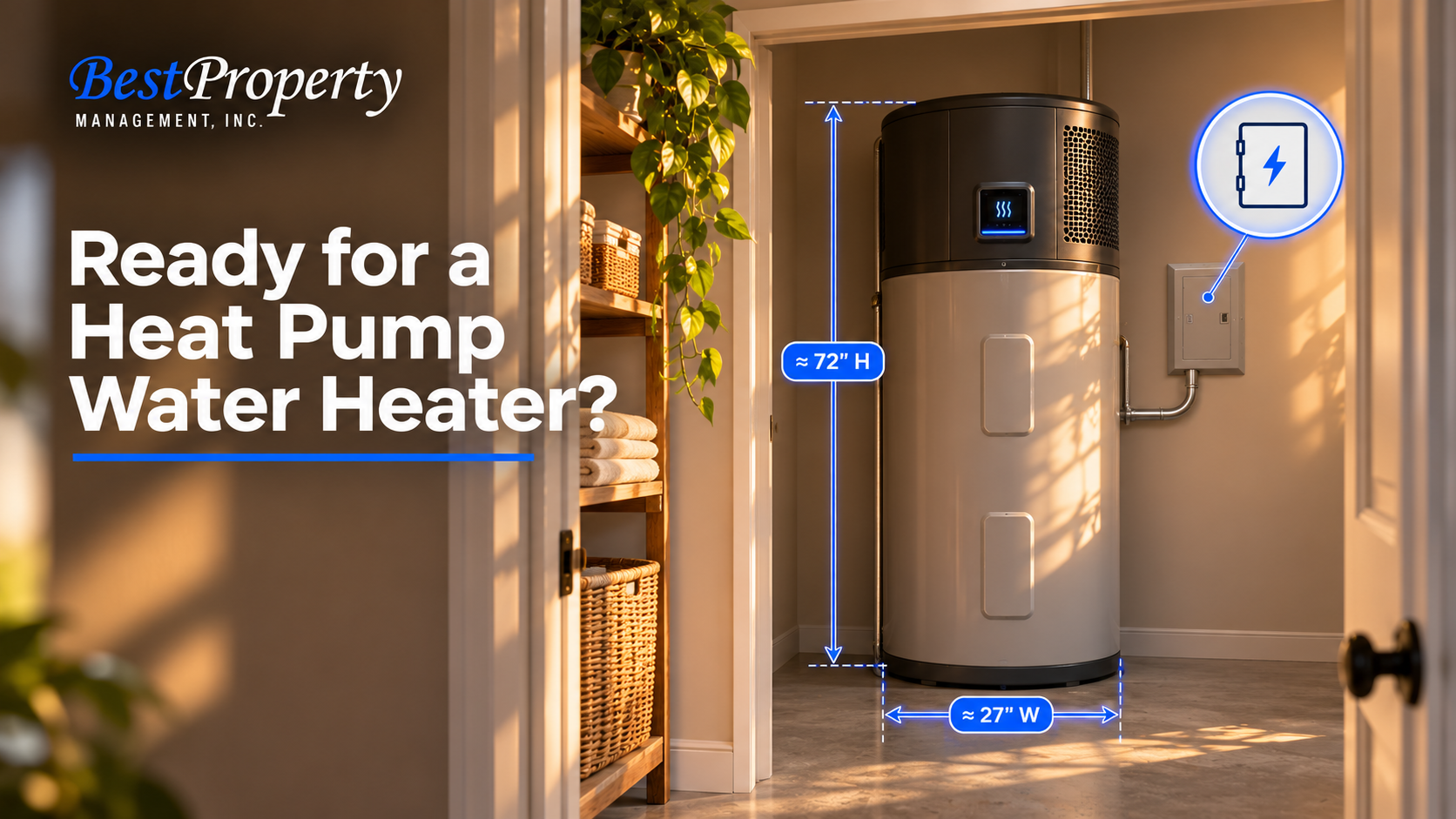
A closet has more constraints than its floor dimensions. The proposal should account for height, doors, access, required clearances and how an old unit will be removed. Ask whether service can be performed without dismantling surrounding cabinetry.
Have the contractor check the selected manufacturer’s installation requirements. A product that fits through the doorway does not necessarily have the ventilation or service space it needs once the door closes.
3. Confirm power before assuming an upgrade
Heat pump products have different electrical requirements. A qualified electrician or appropriately licensed contractor should assess the particular model, circuit and available capacity. Do not assume every installation needs a panel replacement; do not assume a nearby receptacle is suitable either.
Ask the quote to state what electrical work is included and who obtains the permit. A vague allowance for electrical can leave a large unresolved decision until installation day. Tenants should not open service panels, test wiring or use extension cords as a workaround.
4. Resolve airflow and 5. condensate drainage
Heat pump water heaters move heat from surrounding air into water. Installation location, surrounding temperature and the manufacturer’s airflow requirements therefore matter. An enclosed niche may need a different approach from an open garage.
The assessment should also show where condensate goes and how that route will be maintained. A drain plan belongs in the scope of work, not in a conversation after the new unit is in place. Water should not be discharged where it creates damage or a slipping hazard.
For current regional rule context, consult the Bay Area Air District’s building-appliance resources. Compliance timing does not replace these installation checks.
6. Think about sound from the resident’s side of the wall
A technically available location can still be a poor practical choice next to a sleeping area. Ask about the selected model’s published sound information, placement and any permitted installation measures that address vibration.
Do not promise silent operation. Instead, explain where the equipment will go and how a resident should report unexpected noise after installation. The handover should distinguish ordinary operation from a problem requiring a service visit.
7. Put approvals and access on the same schedule
The owner, property manager, contractor, city and association may each control a different part of the project. Establish which approvals are required, who requests them and what must happen before work starts.
Residents need an access notice and a realistic description of any interruption to hot water. Owners need an itemized scope and a clear decision point for additional work. These are different communications; sending a contractor estimate to everyone is not a substitute for either one.
A useful scope records equipment, supporting work, permit and inspection responsibility, disposal, warranty documentation and the person responsible for closing the project. Ask rebate questions before approving the order.
| Item on the quote | Question to resolve |
|---|---|
| Appliance | Which exact model and why is it suitable? |
| Supporting work | What electrical, drain or access work is included? |
| Approvals | Who handles permits and any association review? |
| Resident plan | What interruption and access are expected? |
| Closeout | Who provides final inspection and warranty records? |
Questions owners and tenants ask
Can the existing gas-water-heater location always be reused?
No. The selected equipment’s space, airflow, drainage and electrical requirements need assessment.
Should I buy the appliance before the site visit?
A site assessment and any required incentive reservation should come first. Buying early can limit suitable options.
Can the tenant check electrical capacity?
The tenant can report the existing situation. Electrical assessment and modifications belong with qualified professionals.
Will a larger tank solve every hot-water problem?
No. Sizing, recovery performance, controls, plumbing and the actual cause of the problem need evaluation.
What if the property has an HOA?
Check approval requirements for equipment location, shared systems, penetrations and exterior changes before authorizing the final scope.
Where should the completed assessment go?
Keep it with the property’s maintenance records, approved scope, permits, inspection and warranty information.
Explore this article series
Bay Area Water Heater Rules: What Changed in November 2026 for Rental Owners?
Water Heater Replacement in a Rental: What Happens When Hot Water Stops?
Heat Pump Water Heater Rebates: What Can Bay Area Rental Owners Apply For?
Condo Water Heater Replacement: Who Needs to Approve the Work?
Related articles
Recurring rental repairs: replace or monitor?
Setting rental maintenance approval limits
Talk with your local Best Property team
A replacement decision is easier when the quote answers the site’s actual constraints. Ask your local team how to coordinate assessment, owner approval and resident access. Find your local office.
Research checked November 12, 2026. Installation requirements vary by manufacturer, property and permitting authority. Technical suitability must be confirmed by qualified professionals. AI-assisted editorial illustration; no actual tenant, client event or property is depicted.
Blog
Company News
Landlord Resources
Landlords
Legal
Linkedin
Local Market Insights
Maintenance & Repairs
Market
Owners
Property
Property Law & Compliance
Property Management
Rental Property
Tenants
Video
FILTER BY EASTBAY & TRI-VALLEY CITIES
AB 1482
AI Property Management
AI Rental Fraud
Antioch Property Management
Applicant Data Security
Applicant Information
Applicant Screening
Applicant Verification
Bank Statement Fraud
Battery Recalls
Brentwood
Brentwood property management
California Insurance
California Landlord Laws
California Property Management
California Rent Increase
Central Valley Property Management
Concord Property Management
Credit Reports
Danville Property Management
Danville rentals
Desert Hot Springs Property Management
Desert Property Maintenance
Desert Rentals
Document Fraud
Dublin property management
E-Bike Safety
East Bay Landlords
East Bay Lease Renewals
East Bay property management
East Bay Rental Market
East Bay Rental Owners
East Bay Rental Property Maintenance
East Bay Rental Property Management
East Bay rental tips
East Bay Rentals
EV Charging
Eviction Notices
Eviction Support
Fair Housing
Fake Pay Stubs
Fall Leasing
find a property manager
Fremont
Fremont property management
full service property management
Full-Service Property Management
Good Tenants
Hayward Property Management
Hayward rentals
Heat Pump Water Heaters
hiring a property manager
HOA Compliance
HOA Rental Management
HOA Rentals
Home Insurance Costs
Human Oversight
Identity Verification
Income Verification
Indian Wells Property Management
Inherited Rental Property
Landlord Compliance
Landlord Data Security
Landlord Insurance
Landlord Resources
Landlord Tips
Lease Renewal Strategy
Lease Renewals
Leasing Fees
Leasing Services
Livermore
Livermore property management
Livermore Rentals
Local Development
Local Market Insights
Local Rental Support
Long-Term Rentals
Luxury Rentals
maintenance coordination
Maintenance Response
Management Services
Manteca Property Management
Milpitas Property Management
Mountain House Property Management
New Housing San Ramon
Newark CA Property Management
Oakley Property Management
Online Rent Payments
Owner Onboarding
owner reporting
Palm Desert Property Management
Palm Springs Area Property Management
Palm Springs Property Management
Palm Springs Rentals
Pittsburg CA Property Management
Pleasanton property management
Pleasanton rentals
Preventive Maintenance
Property Inspections
Property Maintenance
Property Management
Property Management Companies
Property Management Fees
Property Management Services
Property Management Transition
Property Manager
Rancho Mirage Property Management
Real Estate
real estate investing
Redfin Rentals
Remote Property Management
Rent Collection
Rent Control
Rent Reporting
Rent Trends
Rental Application Fraud
Rental Application Privacy
Rental Competition
Rental Fee Transparency
Rental Fees
Rental Fraud
Rental History
Rental Inspections
Rental Internet
rental leasing
Rental Market Analysis
Rental Market Trends
Rental Marketing
Rental Pricing
Rental Property
Rental Property Expenses
Rental Property Maintenance
rental property owners
rental property ROI
Renter Choice
Renter Experience
Repair Coordination
Resident Portal
Residential Leasing
Roommate Management
San Lorenzo Property Management
San Ramon Landlords
San Ramon Orchards
San Ramon property management
San Ramon Rental Market
Screening Red Flags
Seasonal Rentals
Security Deposits
Sell or Rent
Silicon Valley Rentals
single family rentals
Single-Family Rentals
Tenant Background Checks
Tenant Communication
Tenant Complaints
Tenant Expectations
Tenant Issues
Tenant Placement
Tenant Protection Act
Tenant Retention
tenant screening
Tenant Screening Data Security
Tenant Screening Fraud
Tenant Screening Red Flags
Tenant Turnover
Tracy Property Management
Tri-Valley
Tri-Valley Housing Market
Tri-Valley property management
Tri-Valley Rentals
Union City Property Management
Vacation Rental Management
Wildfire Risk
Winter Rental Safety
Zillow Rentals
 FILTER
 SEARCH BLOG